

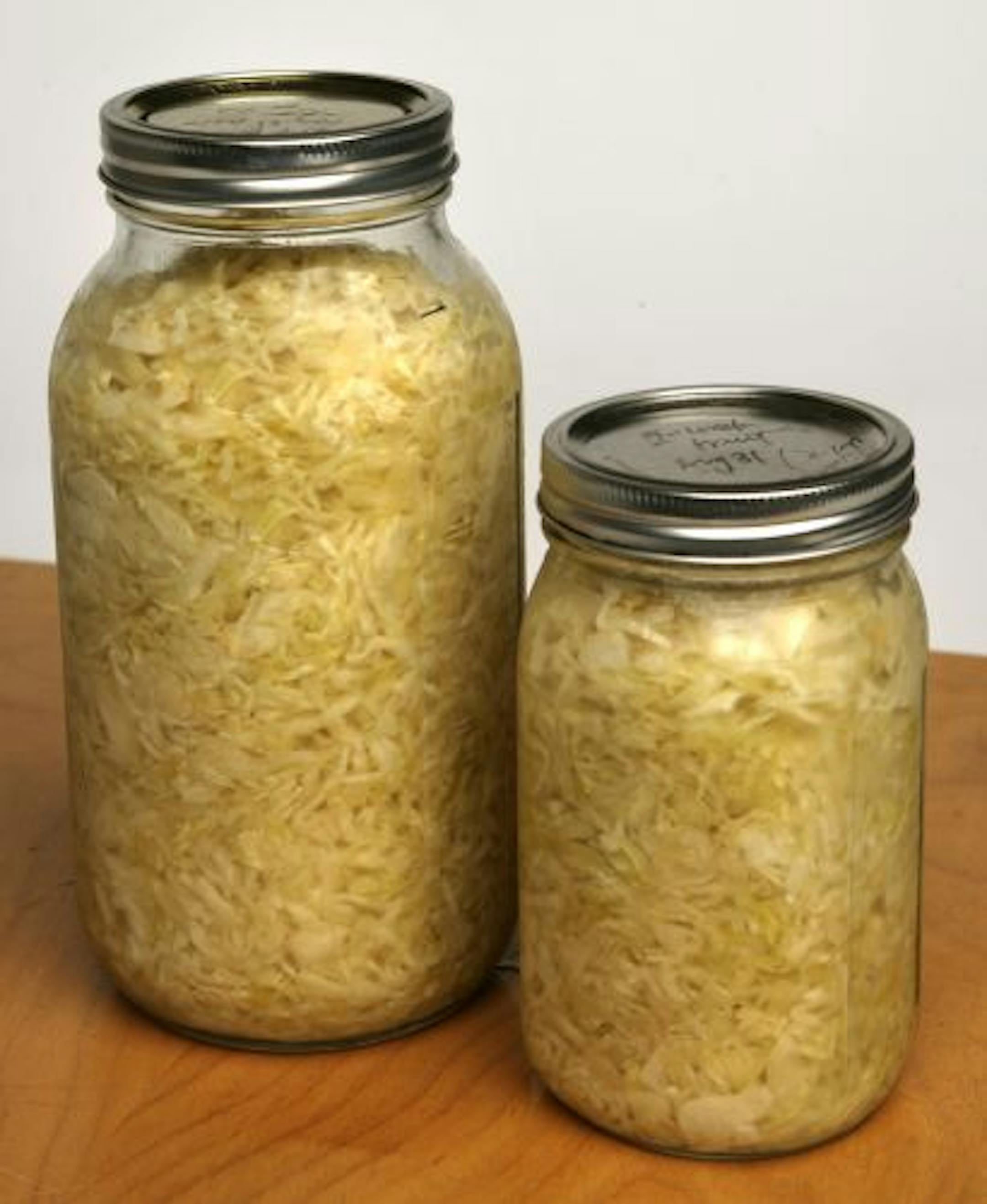
The recipe for homemade sauerkraut is a one-liner, a simple ratio to commit to memory: five pounds cabbage, three tablespoons salt.
Mix those two -- swiftly or sloppily, in a plastic bucket or a ceramic crock, with hope or with skepticism -- and you've effectively launched your own homemade sauerkraut. From that point nature takes over, converting a humble head of cabbage into a golden tangle of threads -- tart and addictive, adamant and alive.
If you're new to homemade kraut, expect the first taste to bring on a tingling rush, the tangy thrill that fermentation enthusiasts crave. Bright and racy where the commercial versions tend to taste overcooked and bottom-of-the-barrel, anybody who carries even a smidgen of passion for the pickled end of the universe will greet their own homemade kraut as if it were heaven-sent.
Nutritionists tout the health benefits of its live cultures, but I make sauerkraut strictly to satisfy my insatiable sourtooth. Like everyone else in my family, I have an appetite for acidity that cannot be met by vinegar alone.
Launched with my grandmother's bubbling brined pickles, and fed by kimchi and kombucha in adulthood, my palate needs to feel the occasional fizz of fermentation to feel complete.
Perfect for the season
Thankfully, naturally fermented kraut spells great fall cooking. I throw handfuls of it into coleslaw, stuff tufts into the pockets of homemade Reubens slicked with spicy mayonnaise and, when faced with a surplus, I will pour a quart of sauerkraut into a pan, bury all kinds of meats in it and set it to mellow out and exchange juices in the oven all day long. After four or five hours, the pan of tamed kraut and soft, tangy meat both impresses and nourishes a crowd.
Yet my relationship to the living crock hasn't been all fun and games. During the past six or seven years there have been successes, but also some malodorous missteps.

