

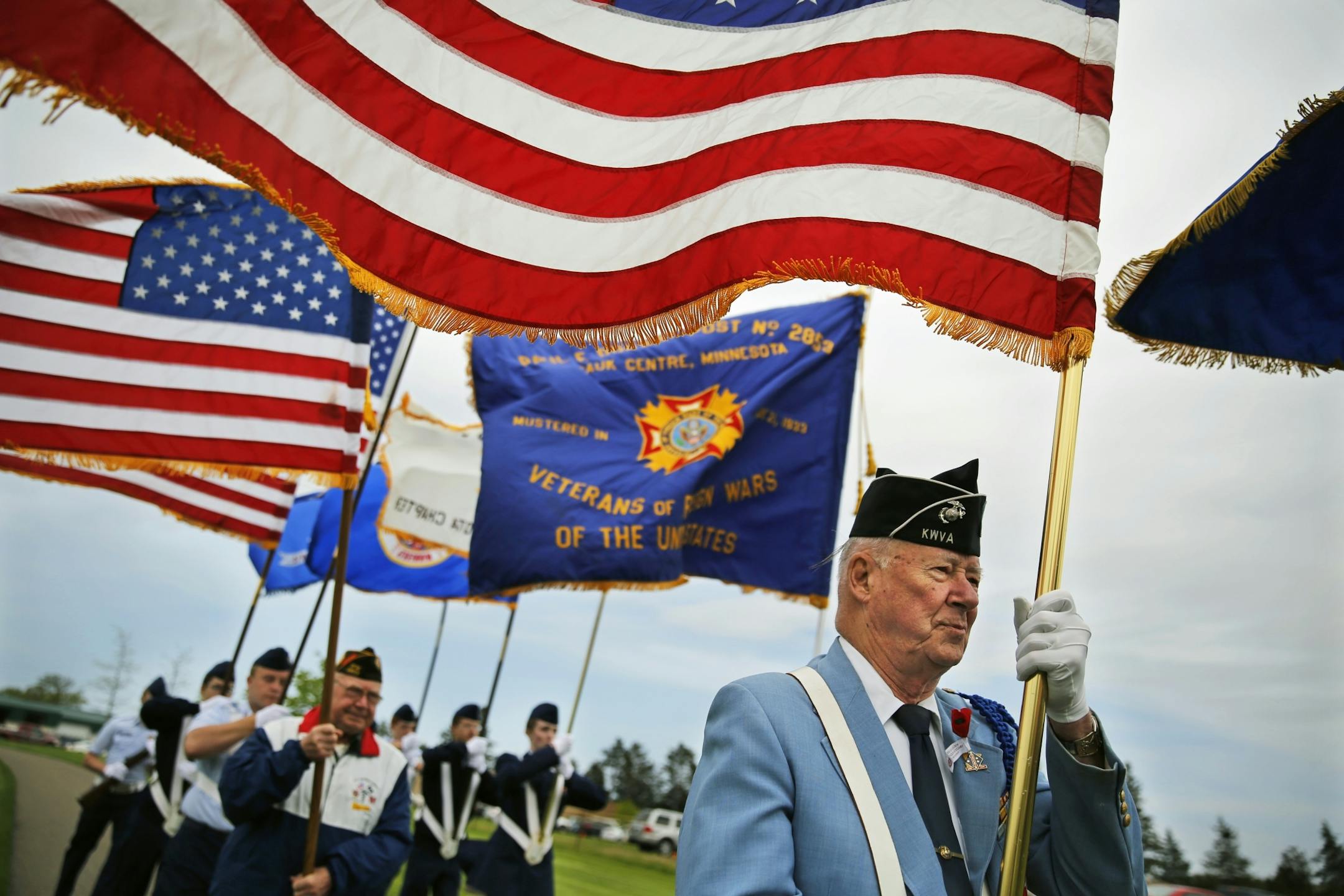
As Memorial Day arrives, I think in particular of Korean War veterans, the veterans of the "Forgotten War." Their sacrifices became the solid foundation of today's free and prosperous South Korea.
Sacrifices in the Korean War were recently highlighted: Emil Kapaun, an army chaplain, was posthumously awarded the Medal of Honor by President Obama on April 10.
Kapaun chose to stay to care for the wounded when the Chinese overran his unit. He raised hope among prisoners of war. He devoted himself to the wounded; he stole food at the warehouse for hungry men; he washed the undergarments of the dead and distributed them to those who could not move. When Kapaun was dying, 1st Lt. Ray M. (Mike) Dowe Jr. cried. Dowe later told of the chaplain's deeds to the Saturday Evening Post ("The Ordeal of Chaplain Kapaun" appeared on Jan. 16, 1954).
The nation recognizes Kapaun's deeds as an individual case of heroism. But the nation as a whole should do more to promote the legacy of the Korean War: protecting the freedom of South Koreans; establishing the security of both South Korea and Japan, enabling them to become pillars of the free world, and helping South Korea become a role model for many developing countries, to name a few.
To help fellow Americans understand the Korean War, many veterans have told their stories. On May 15, six members of Minnesota Korean War Veterans Chapter No. 1 greeted three groups of students at the Minnesota Korean War Memorial on the State Capitol grounds. The students were from Farnsworth Aerospace Elementary Magnet School, Humboldt High School and St. Paul Open School.
The veterans, in their 80s, fielded questions from the young people. A fourth-grader asked: "Were you scared?" A high school student wanted to know: "What was the Korean War?" Another inquired: "Did [South] Korea help the U.S. fight in the war?" The veterans thanked the teachers for bringing students so that they learned something about the Korean War. Three teachers told me that they did not learn about the Korean War in school.
In the Korean theater, 1,789,000 Americans served; 36,568 died, and 103,284 were hospitalized with wounds. The war cost the United States $341 billion in today's dollars. Among Minnesotans, 94,964 served; 171 were listed missing; 1,500 were wounded, and 752 died.
I believe that the Korean War should be well-covered in American history books. Students should understand this story.


