

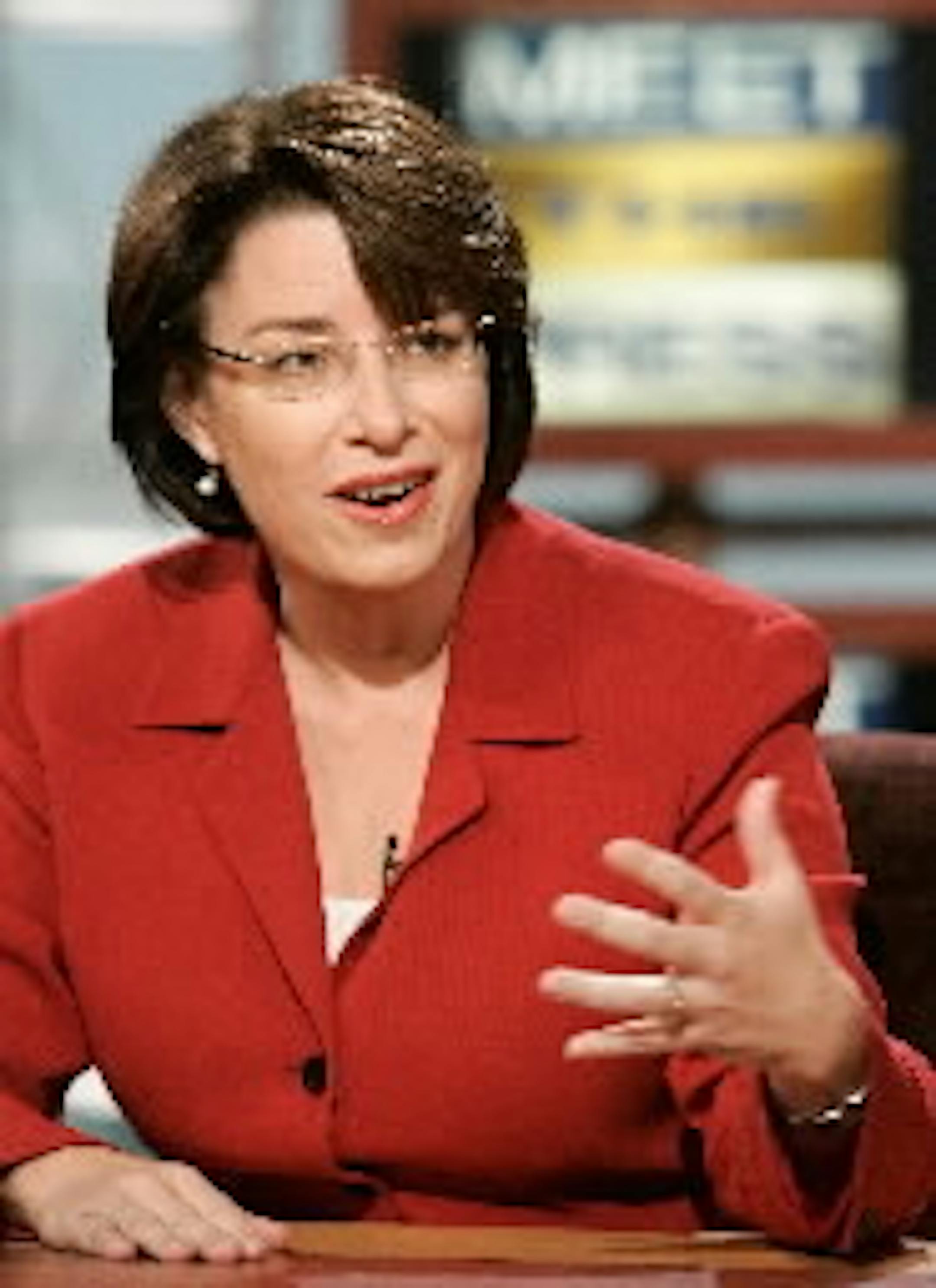
WASHINGTON - As President Obama mulls a replacement for retiring Supreme Court Justice John Paul Stevens, he is said to be open to someone from outside the world of "abstract legal theory" -- perhaps a lawyer with an Ivy League pedigree, but one grounded in people's lives who brings a measure of diversity to the court.
To some experts, that sounds a lot like Sen. Amy Klobuchar, D-Minn.
Except she says she's not interested. Even if she were, the theory goes, she's all but ruled out by the fact that her nomination would give Gov. Tim Pawlenty a chance to send a Republican to the U.S. Senate to replace her.
Klobuchar surfacing in the Washington name game does say something about the dynamics of the modern-day Supreme Court nomination process, where politics and personal biography count at least as much as judicial qualifications. It also underscores the threat of a long, drawn-out confirmation battle, which some analysts believe will pressure Obama to pick a moderate.
So in the political prism of Washington, the case for Klobuchar goes like this: centrist voting record, check. Yale, University of Chicago Law School education, check. Ex-prosecutor with law-and-order credentials, check. Popular with Senate Democrats and Republicans alike, check. A woman, check. Plus, she would give the high court its only Midwesterner and its only Protestant.
"She checks some demographic boxes as a woman and someone who is relatively young," said Washington attorney Tom Goldstein. He was one of the first to put Klobuchar's name in play through his influential SCOTUS blog, which is devoted to the Supreme Court. It doesn't hurt, Goldstein said, that she's "incredibly articulate."
The main ingredient that the 49-year-old, first-term senator is missing is that she's never been a judge, which would make her a rarity among modern Supreme Court nominees. One exception was the late Chief Justice Earl Warren, a former California governor whom Obama has called a judicial hero of his.
Before last year's nomination of Justice Sonya Sotomayor, now one of two women on the court, Obama said he was looking for a justice who "isn't about some abstract legal theory. ... It is also about how our laws affect the daily realities of people's lives."


