

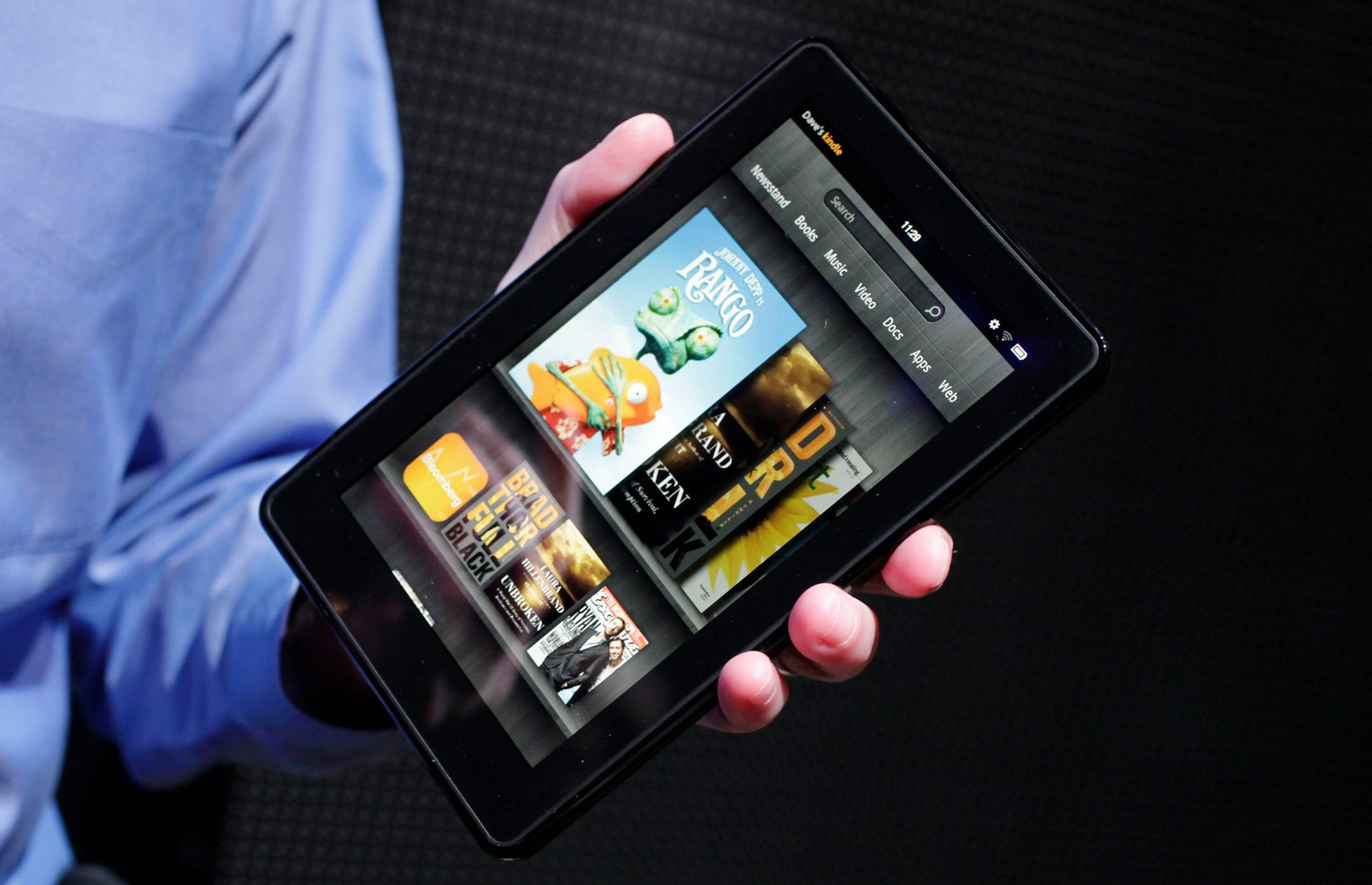
If you compare the Kindle Fire to an iPad, you're going to be disappointed. But if you treat it like an e-reader with a lot more bells and whistles, you'll be pleasantly surprised.
Amazon's first entry into the tablet market arrived with much fanfare last month. It didn't take long for some in the tech world to dub it an "iPad killer," especially given the $199 price tag. And the device has flown off the virtual shelves; 5 million could be sold by year's end, according to estimates.
But an iPad killer? Not by a long shot.
The iPad -- and especially the iPad 2 -- has capabilities the Kindle Fire could only dream about (cameras for Skype, just for starters). Plus, it operates on Apple's rock-solid operating system.
But video chatting with my grandmother or gazing at the solar system wasn't what interested me about the Kindle Fire. I wanted to check e-mail, browse the Web and read e-books -- you know, about 80 percent of what people want to do when they use a tablet.
On those fronts, the Kindle Fire doesn't disappoint. You can check e-mail, get on Facebook, listen to Pandora and watch a movie on Netflix.
Some have criticized the Kindle Fire as being nothing more than an expensive storefront for Amazon, but there are plenty of third-party options available.
One of the most celebrated features of the Kindle Fire is its Silk browser, which is supposed to offer super-fast Web browsing, but I wasn't impressed. Web pages felt slow to load and looked cramped on the Kindle Fire's 7-inch screen. Load times were faster than on a smartphone, but nowhere near what a beefier tablet could manage.


