

WASHINGTON – The most powerful part of President Joe Biden's climate agenda — a program to rapidly replace the nation's coal and gas-fired power plants with wind, solar and nuclear energy — will likely be dropped from the massive budget bill pending in Congress, according to congressional staffers and lobbyists familiar with the matter.
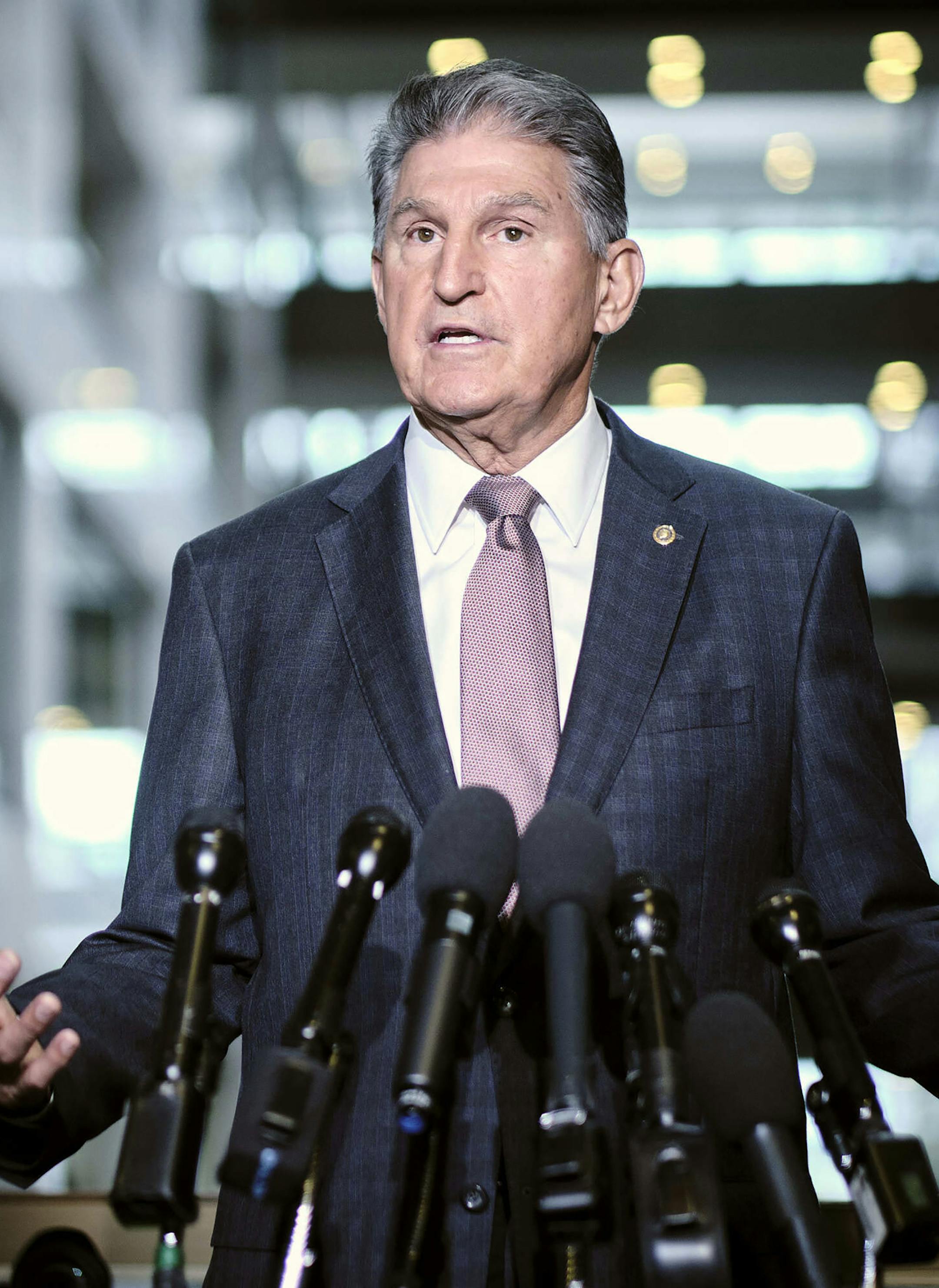
Sen. Joe Manchin, the Democrat from coal-rich West Virginia whose vote is crucial to passage of the bill, has told the White House that he strongly opposes the clean electricity program, according to three of those people. As a result, White House staffers are now rewriting the legislation without that climate provision, and are trying to cobble together a mix of other policies that could also cut emissions.
A spokesman for the Biden administration declined to comment. A spokeswoman for Manchin did not respond to an e-mailed request for comment.
The $150 billion clean electricity program was the muscle behind Biden's ambitious climate agenda. It would reward utilities that switched from burning fossil fuels to renewable energy sources, and penalize those that do not.
Experts have said that the policy over the next decade would dramatically reduce the greenhouse gases that are heating the planet and that it would be the strongest climate change policy ever enacted by the United States.
"This is absolutely the most important climate policy in the package," said Leah Stokes, an expert on climate policy, who has been advising Senate Democrats on how to craft the program. "We fundamentally need it to meet our climate goals. That's just the reality. And now we can't. So this is pretty sad."
The setback also means Biden will have a weakened hand when he travels to Glasgow in two weeks for a major United Nations climate change summit.
He had hoped to point to the clean electricity program as evidence that the U.S., the world's largest historic emitter of planet-warming pollution, was serious about changing course and leading a global effort to fight climate change. Biden has vowed that the United States will cut its emissions 50% from 2005 levels by 2030.


