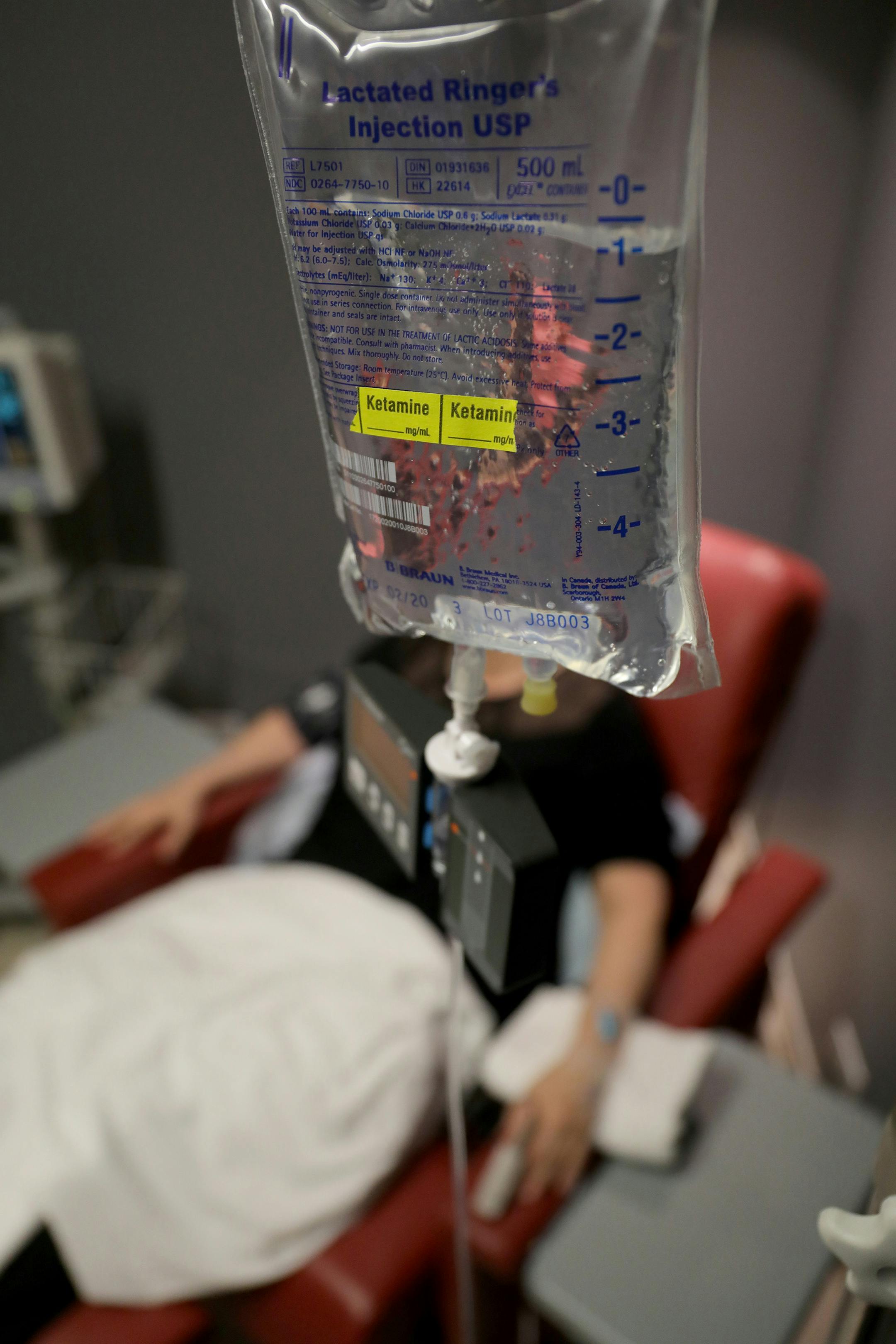
In late 2022, Sarah Gutilla’s treatment-resistant depression had grown so severe, she was actively contemplating suicide. Raised in foster care, the 34-year-old’s childhood was marked by physical violence, sexual abuse, and drug use, leaving her with life-threatening mental scars.
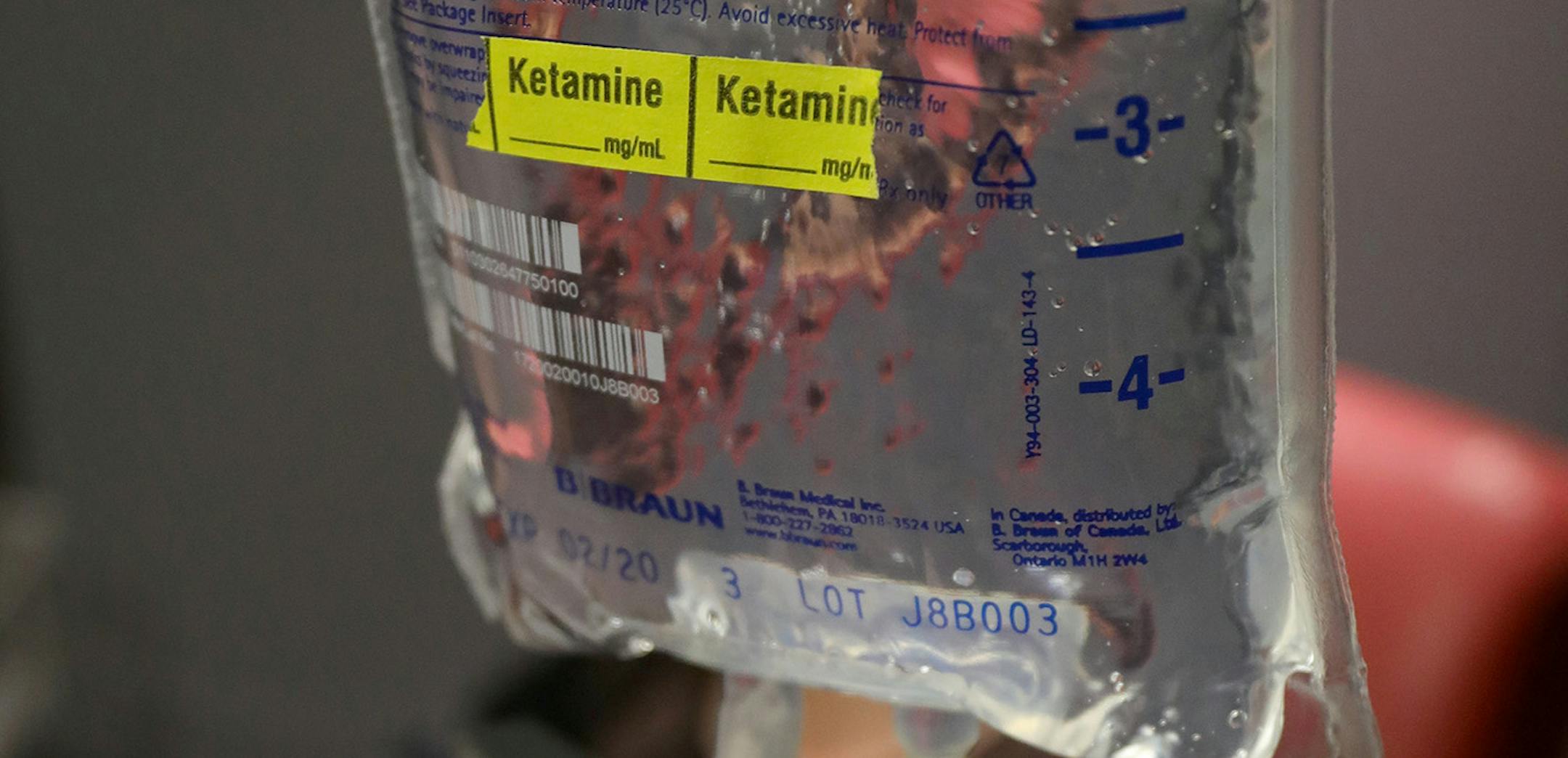
Out of desperation, her husband scraped together $600 for the first of six rounds of intravenous ketamine therapy at Ketamine Clinics Los Angeles, which administers the generic anesthetic for off-label uses such as treating depression. When Gutilla got into an Uber for the 75-mile drive to Los Angeles, it was the first time she had left her home in Llano, California, in two years. The results, she said, were instant.
“The amount of relief I felt after the first treatment was what I think ‘normal’ is supposed to feel like,” she said. “I’ve never felt so OK, and so at peace.”
For-profit ketamine clinics have proliferated over the past few years, offering infusions for a wide array of mental health issues, including obsessive-compulsive disorder, depression, and anxiety. Although the off-label use of ketamine hydrochloride, a Schedule III drug approved by the FDA as an anesthetic in 1970, was considered radical just a decade ago, now between 500 and 750 ketamine clinics have cropped up across the nation.
Market researcher Grand View Research pegged industry revenues at $3.1 billion in 2022, and projects them to more than double to $6.9 billion by 2030. Most insurance doesn’t cover ketamine for mental health, so patients must pay out-of-pocket.
While it’s legal for doctors to prescribe ketamine, the FDA hasn’t approved it for mental health treatment, which means that individual practitioners must develop their own treatment protocols. The result is wide variability among providers, with some favoring gradual, low-dosage treatments while others advocate larger amounts that can induce hallucinations, as the drug is psychedelic at the right doses.
“Ketamine is the wild West,” said Dustin Robinson, the managing principal of Iter Investments, a venture capital firm specializing in hallucinogenic drug treatments.
Ketamine practitioners stress that the drug’s emergence as a mental health treatment is driven by a desperate need. Depression is the leading cause of disability in the United States for individuals ages 15-44, according to the National Institute of Mental Health, and around 25% of adults experience a diagnosable mental disorder in any given year.