

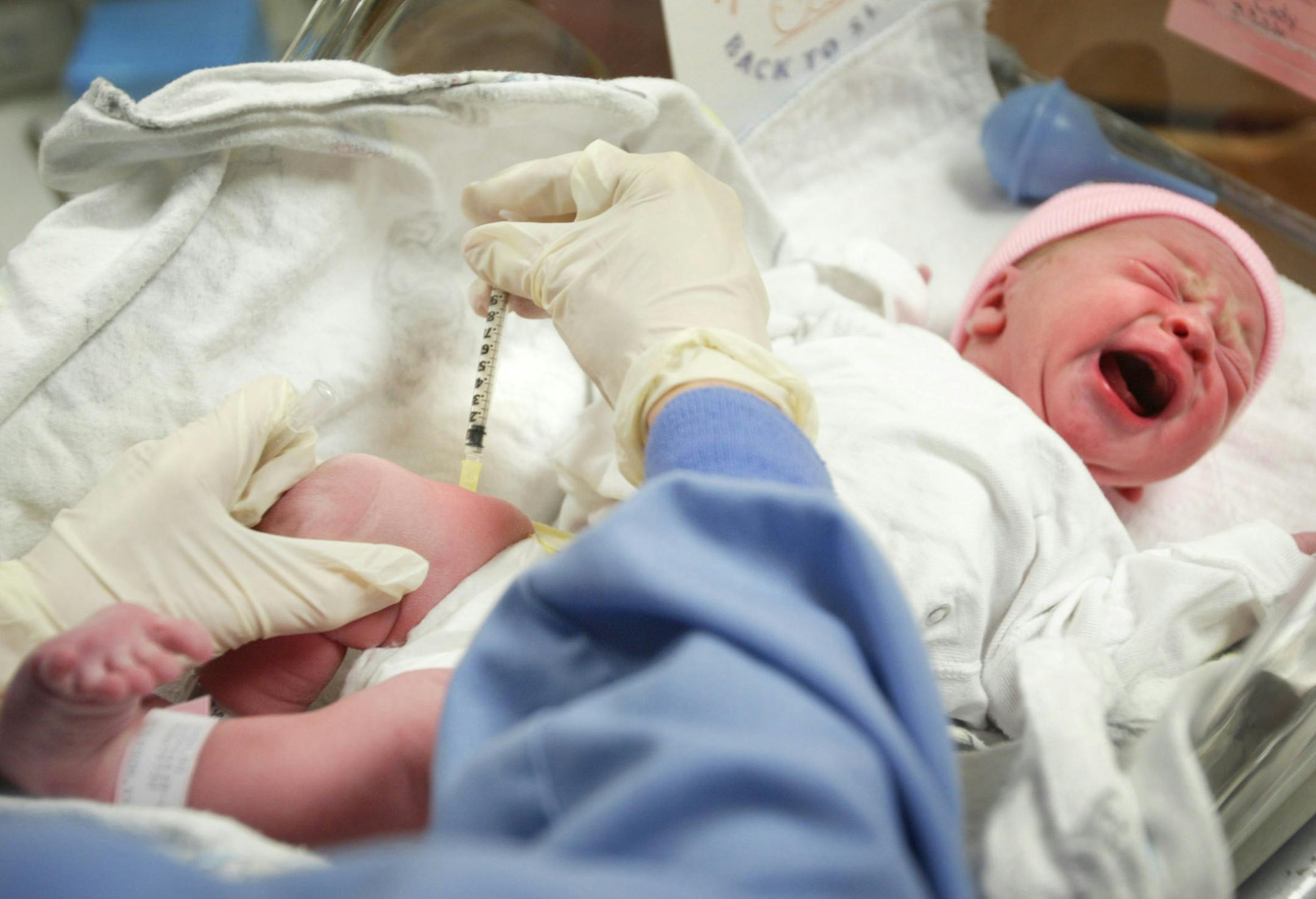
A federal vaccine advisory committee convened Thursday in Atlanta to discuss whether newborns should still get the hepatitis B vaccine on the day they’re born.
For decades, the government has advised that all babies be vaccinated against the liver infection right after birth. The shots are widely considered to be a public health success for preventing thousands of illnesses.
But U.S. Health Secretary Robert F. Kennedy Jr.’s committee is considering whether to recommend the birth dose only for babies whose mothers test positive, which would mark a return to a public health strategy that was abandoned more than three decades ago. For other babies, it will be up to the parents and their doctors to decide if a birth dose is appropriate.
Committee member Vicky Pebsworth said a work group was tasked in September with evaluating whether a birth dose is necessary when mothers tested negative for hepatitis B.
‘’We need to address stakeholder and parent dissatisfaction" with the current recommendation, she said.
The committee makes recommendations to the director of the Centers for Disease Control and Prevention on how already approved vaccines should be used. CDC directors almost always adopted the committee’s recommendations, which were widely heeded by doctors and guide vaccination programs. But the agency currently has no director, leaving acting director Jim O’Neill to decide.
Kennedy, a leading anti-vaccine activist before he became the nation’s top health official, fired the entire 17-member panel earlier this year and replaced it with a group that includes several anti-vaccine voices.
The panel has made several decisions that angered major medical groups.


