As a surfer-snowboarder based in San Diego, the idea of traveling to the American West come winter never crossed my mind. In fact, with the first flutter of a snowflake, I habitually head to the hills for ski season — be it Mammoth, Big Bear or an unfamiliar mountain far from home. Setting fresh tracks with hiking boots rather than a snowboard seemed a waste of precious powder.
Until of course, I had a couch affair with "Yellowstone." The Paramount Network series visually took me to the outer range of Montana where cowboys are as branded as the cattle they drive and the horses they break.
In all my years, never had a Hollywood product inspired me to pivot my winter plans for an unknown destination. But somehow Yellowstone succeeded. I became one with the Dutton family ranch, turning the fictitious drama into a biopic in my mind, longing to visit this agrarian West where locals fought to keep the wild wild.
And thus, the trip planning began. It started with dropping pins onto Google Maps, followed by research on flights, lodging, availability and the best time to avoid the crowds (not to be confused with "the best time to visit").
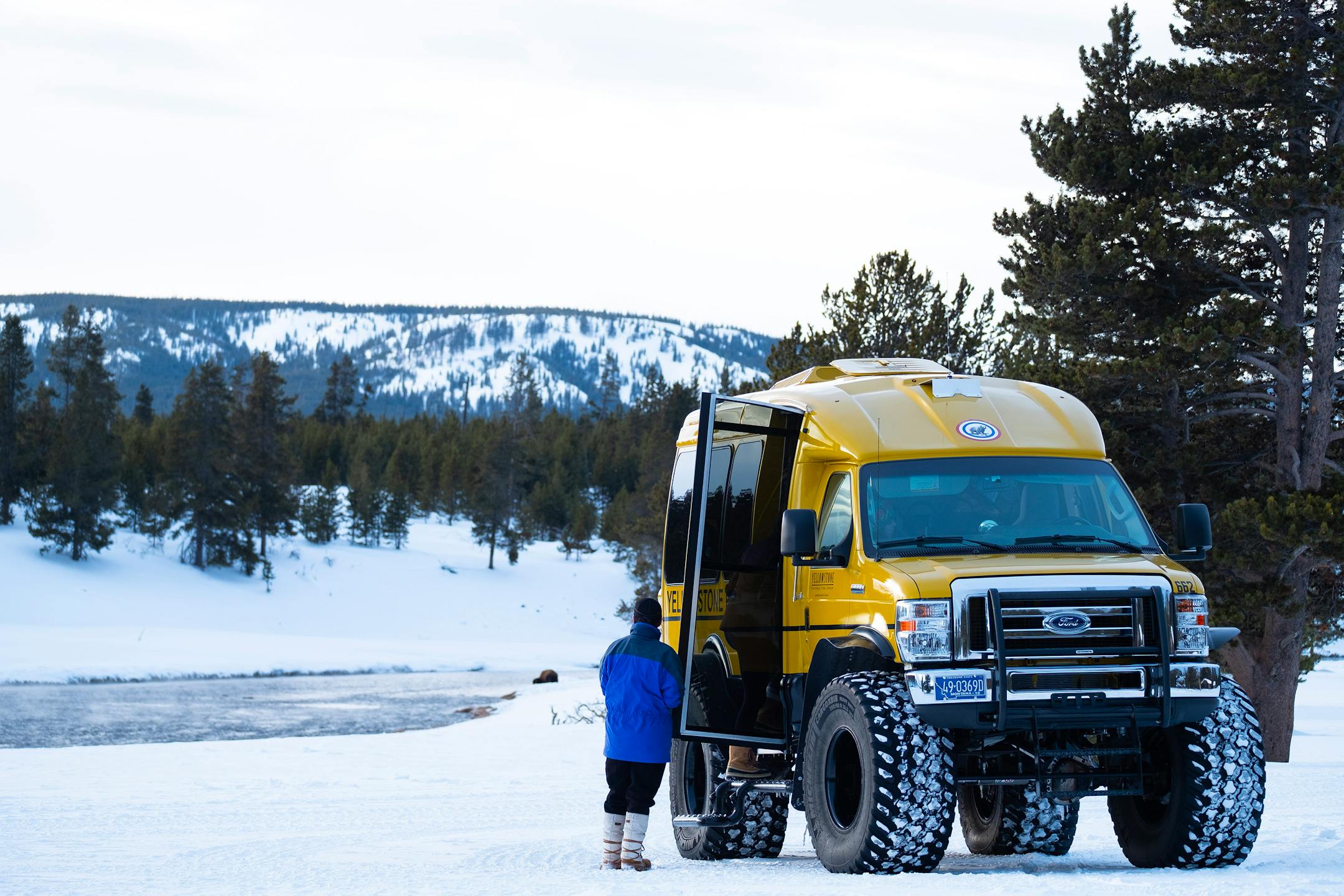
More than 4 million people explore Yellowstone National Park annually, most of whom visit in summer. I wanted to experience Yellowstone in its purest, most perfect form. So, winter it was, with husband in tow because, frankly, the man helps me see the world in color. To further thin out human contact, we chose to travel midweek.
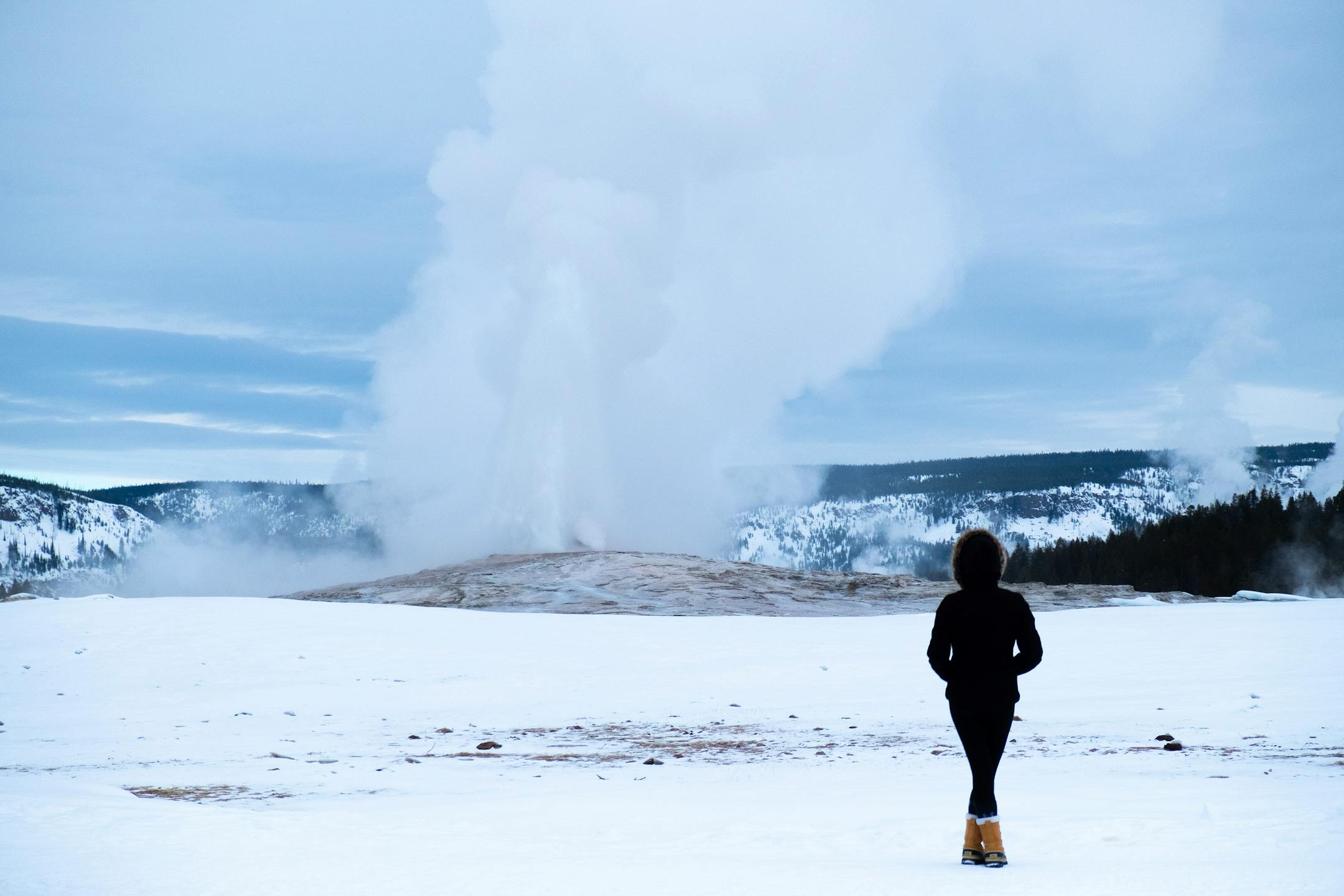
Rumor had it that December through early March was the best time to witness fire and ice. That's when geysers, hot springs, mud pots and steam vents turn into geothermal thespians during freezing temperatures. Naturally, the TV version had me longing to see a wolf in a snowy meadow (maybe even stalking an elk or two). If that was on the cards for this journey, I'd consider it a successful trip.
Until then, we'd have to settle for just the elk (unstalked of course), as well as deer and hawks that greeted us as we entered the corridor near Paradise Valley. Marking the north gateway was the Roosevelt Arch dating to 1903. Inscribed in the cornerstone was, "For the benefit and enjoyment of the people."
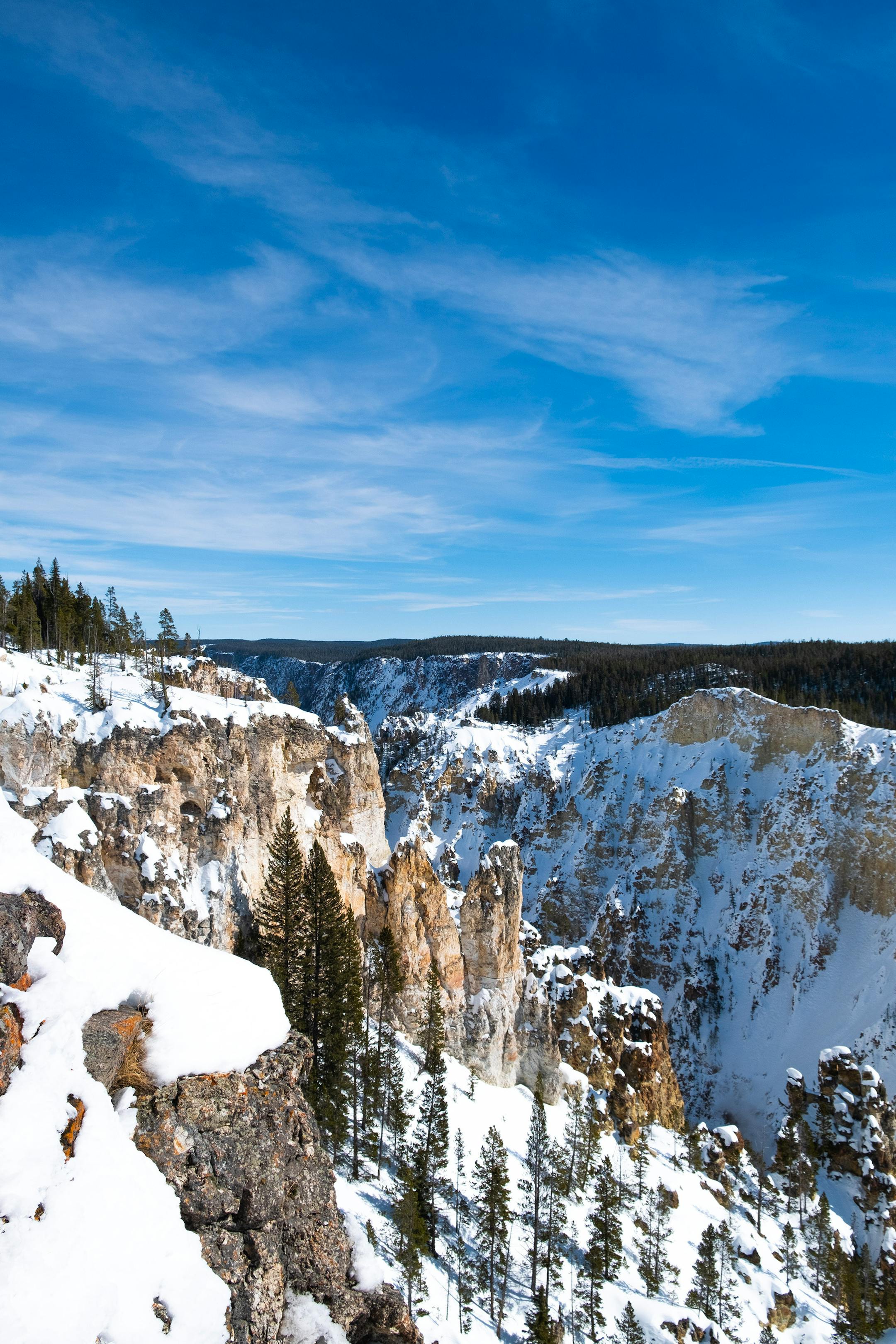
Exactly 150 years after Yellowstone was founded in 1872, those words still rang true. Even before it was named the world's first national park, Yellowstone's 2.2 million acres served as a refuge for Native Americans who foraged its land and waters. As history goes, decades of tragedy bruised the park with overhunting, devastating fires and introduction of nonnative species.