

The U.S. and NATO were right to send a strong signal of support to Ukraine, which faces an alarming buildup of Russian troops along its eastern border. Hopefully it will convince the Kremlin that the cost of an incursion necessitates a diplomatic, not military, outcome of a crisis Moscow created.
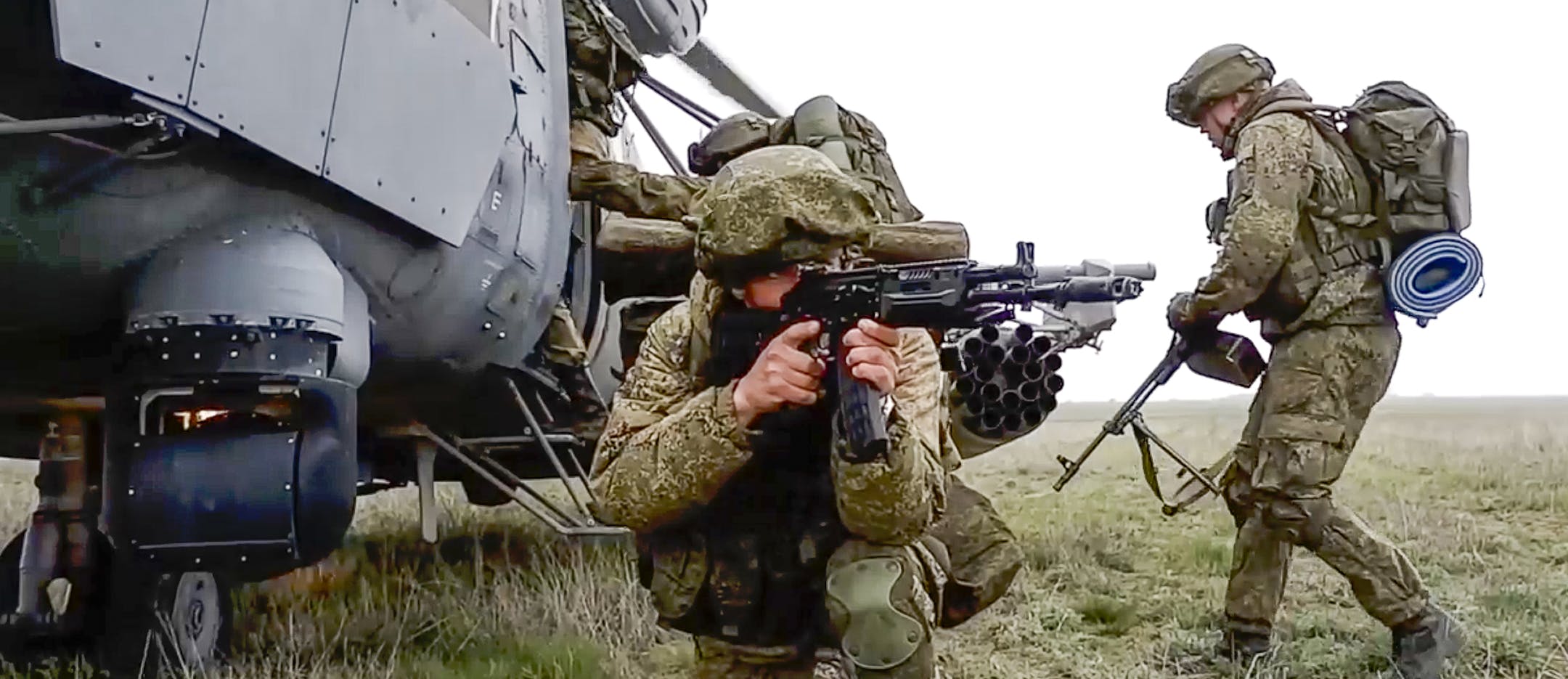
Before the apparent beginning of at least a partial drawdown in forces announced on Thursday, Russia had added upward of 80,000 troops and a significant amount of materiel near the border in the biggest buildup since 2014, when it illegally cleaved Crimea and supported separatists in Eastern Ukraine. The grinding conflict has left about 14,000 dead, including civilians, and devolved into a stalemate that threatens to turn into a full-scale war.
Among Russia's justifications for its repeated violations of Ukraine's sovereignty is the need to protect Russian-speaking citizens. But they were not endangered in any way by Kiev, and it's Ukrainians who need the protection from predatory President Vladimir Putin, who continues to seek regional hegemony over independent nations that were once imprisoned in the Soviet Union.
"The U.S. stands firmly behind the sovereignty and the territorial integrity of Ukraine," Secretary of State Antony Blinken told Ukrainian Foreign Minister Dmytro Kuleba last week.
In a well-choreographed confab with NATO leaders, Blinken traveled to Brussels last week along with Secretary of Defense Lloyd Austin, who announced that the U.S. was not only canceling the troop drawdown in Europe announced by former President Donald Trump, it was adding about 500 personnel to Germany in a move that gives credence to President Joe Biden's pledge to strengthen the Western alliance. "These forces will strengthen deterrence and defense in Europe," Austin told the German defense minister. "They will augment our existing abilities to prevent conflict and, if necessary, fight and win."
Preventing conflict is best accomplished by sending an unambiguous signal to Putin that the West finds Russia's bellicosity unacceptable. That message was echoed by NATO Secretary-General Jens Stoltenberg, who said last week, "Russia must end this military buildup in and around Ukraine, stop its provocations and de-escalate immediately."
Ukraine is not a NATO nation, although it clearly appears to want to join the alliance — and for good reason considering its vulnerability to Russia. Putin is vehemently opposed to that, but the decision should be dictated by Ukraine and member countries — not by a meddling Moscow. Putin's aggression isn't only a test for Ukraine, but for the U.S., too. There are three possible reasons for the buildup, and they are not necessarily mutually exclusive, Ivo Daalder, former U.S. ambassador to NATO, told an editorial writer.
Russia might be "trying to intimidate the U.S. to see what the U.S. would do," said Daalder, who is now the president of the Chicago Council on Global Affairs. "To what extent does the U.S. have the capacity to put the allies on notice and toward a unified posture?" Daalder added that it could be "meant to be a show of force to take the measure of Joe Biden."


