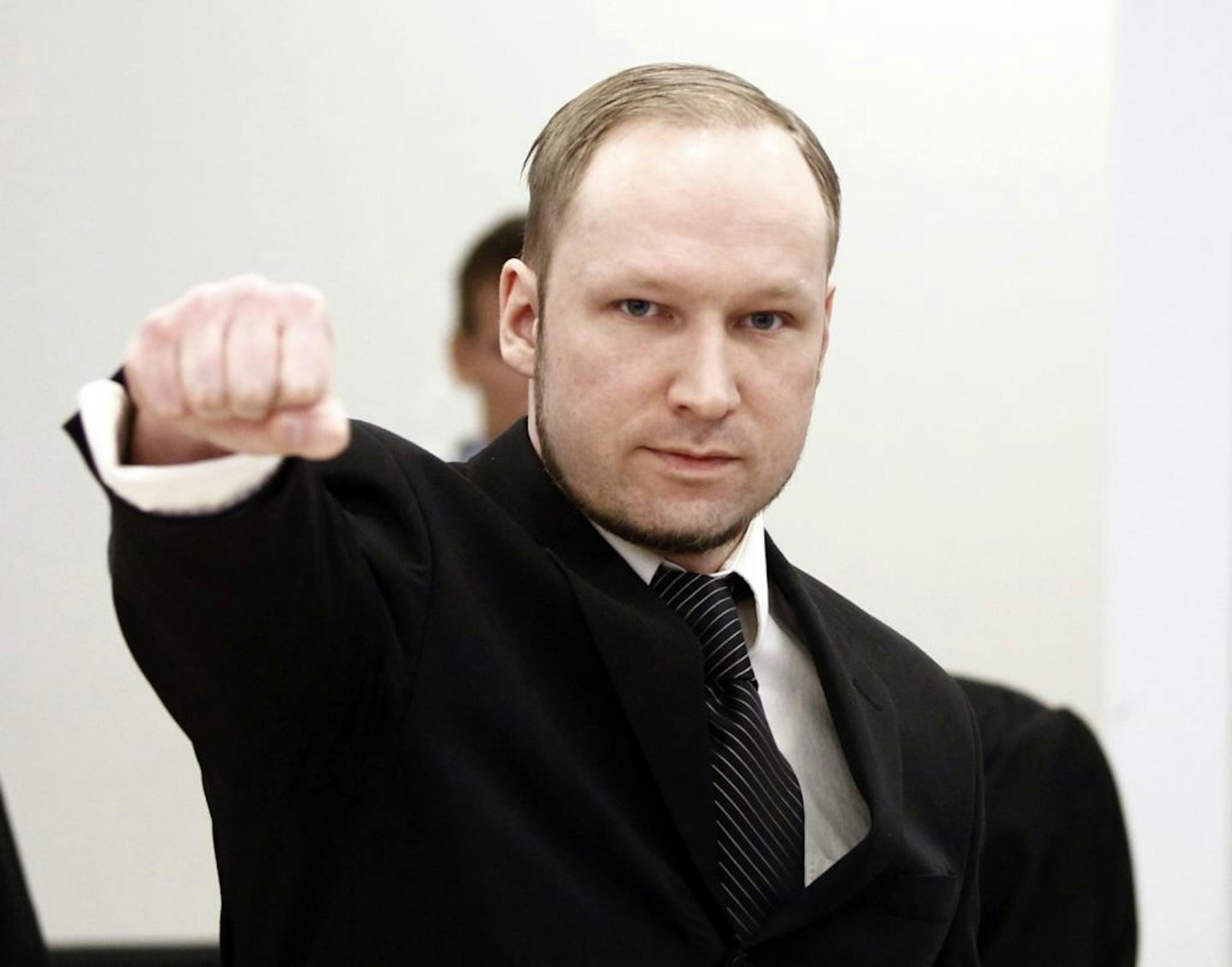
If anyone personifies evil, it is Anders Breivik. The 33-year-old Norwegian violently disrupted his country's usual peace on July 22, 2011, by gunning down 69 mostly young people at a summer camp. A bomb he planted in Oslo killed eight others. He did it all to defend Norway against multiculturalism, he later raved.Yet, on one point, Breivik is not talking crazy. At his trial, which began April 16, he pronounced the maximum penalty for his actions -- 21 years in prison, or longer if the government meets certain conditions -- "pathetic." He "would have respected" the death penalty, Breivik said. Of course, he won't get it; Norway abolished capital punishment long ago.
Norway has suffered deeply because of Breivik, and I don't mean to add insult to injury. But this situation illustrates what's wrong with banning the death penalty in all cases. If executing an innocent man is the worst-case scenario for proponents of the death penalty, then threatening Breivik with prison is the reductio ad absurdum of death-penalty abolitionism.
Anti-death-penalty sentiment is hardly limited to Europe. Recently, Connecticut Gov. Dan Malloy signed a bill abolishing capital punishment, which means that no future Anders Breivik need fear execution in that state. Sixteen other states have no death penalty; California voters will get a chance to join them in a November referendum.
In the United States, abolitionist arguments are gaining traction, especially claims about the high cost of lengthy death-penalty litigation and the risk of executing people by mistake. Malloy also cited a "moral component" to his decision.
Such practical and moral concerns are at their most understandable in run-of-the-mill convenience-store murder cases, where the risk of error seems relatively high compared with the benefits of punishing murder with death.
But Breivik's was no ordinary crime. It presents the special case of a cold-blooded massacre of children by a political terrorist whose guilt is unquestionable and who remains utterly unrepentant; indeed, he told the court that he would kill again if given the opportunity.
What is morally worse: putting the author of this bloodbath to death or letting him live, with the accompanying risk -- however small -- that he might broadcast his message to receptive audiences from jail, or escape, or one day litigate his way to freedom?
There is no scientific answer. To oppose the death penalty regardless of the crime or the consequences of letting the perpetrator live is a consistent and principled position. If Norwegians consider doing so a point of pride, that's their choice.