Editor's note: This is one in an occasional series of stories called First Person, essays by Star Tribune readers and staffers about adventures in the outdoors.
Our old buddy Mark Mattson from graduate school days was up for a challenge despite just having recovered from a gunshot wound a year and a half before. Maybe a 10-day kayak trip in the high arctic was just what the doctor ordered.
Mark, 60 at the time of the accident, was shot through the abdomen. He was simply walking through the woods after sighting-in his own rifle one moment; in the next, he was on the ground near death shot by a hunter who failed to identify his target. Mark's chances were about 5 percent, but he pulled through, and, after a resection of his intestine eight months after the accident, he signed up to join our group headed to Greenland the next summer.
It was June, and the sun was bright and it never set. It was spawning season for the capelin. The swarm of smelt-like fish flowed along the shore by the billions, leaving behind a slime of brownish eggs making wading a bit precarious. Mark, a Ph.D. in zoology and a marine ecologist, was sitting on the shore just staring in contemplation at the sinuous, living horde. Since his near-senseless death, he seemed to appreciate each moment more than I could imagine. Perhaps this was the tonic he needed to begin living fully again after his escape from the brink.
Another good and longtime friend, Lonnie Dupre of Grand Marais, had completed his circumnavigation of Greenland in the 2001.
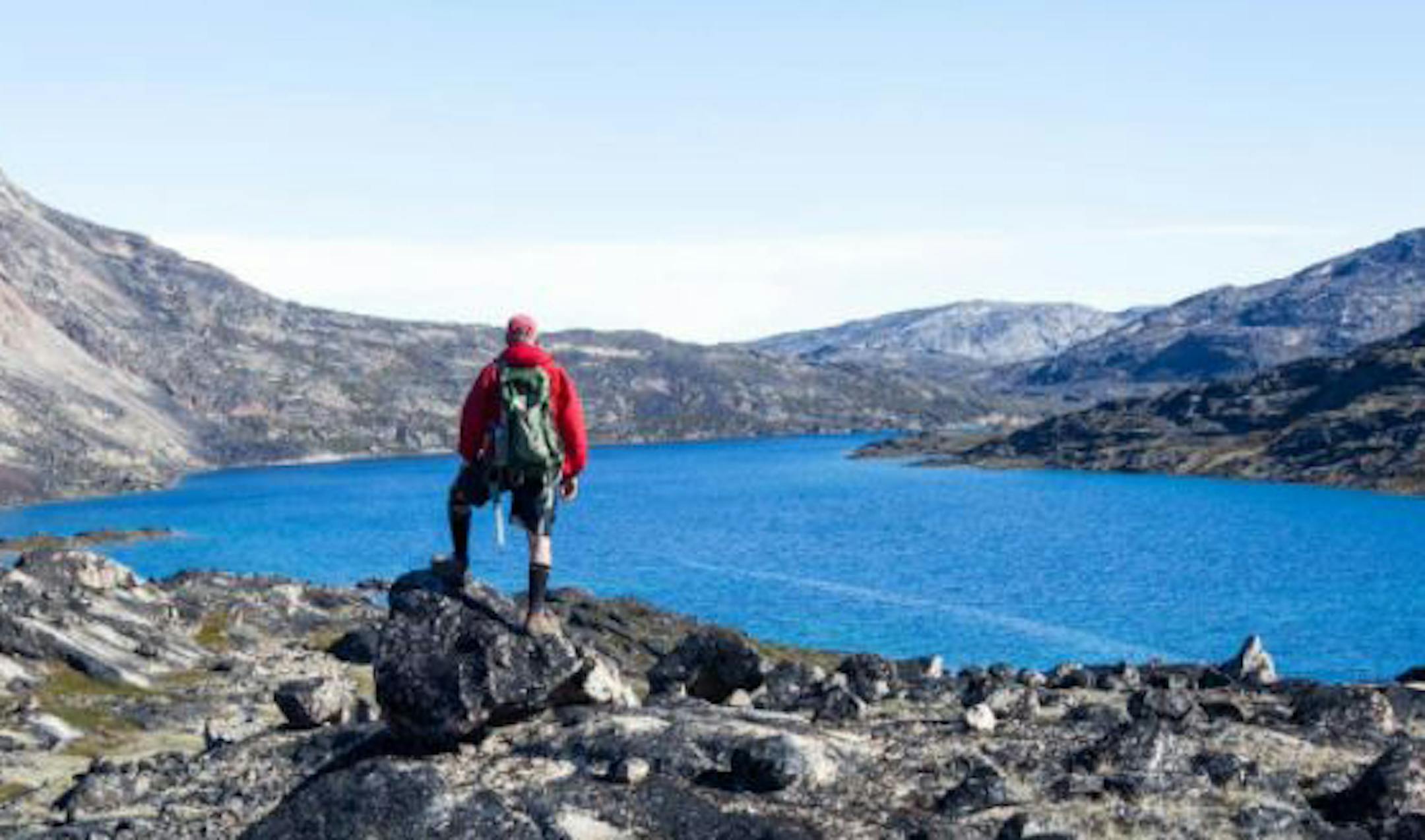
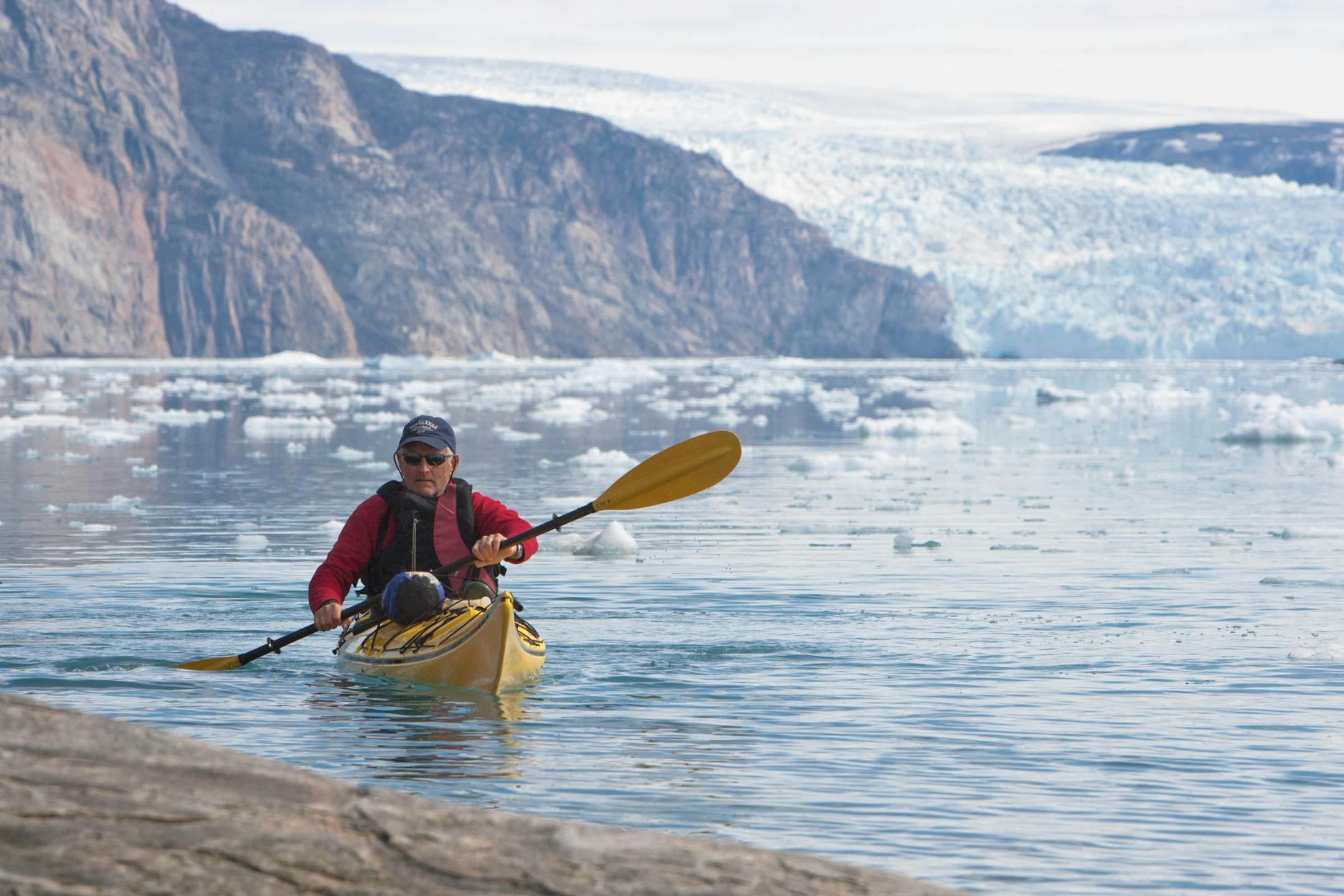
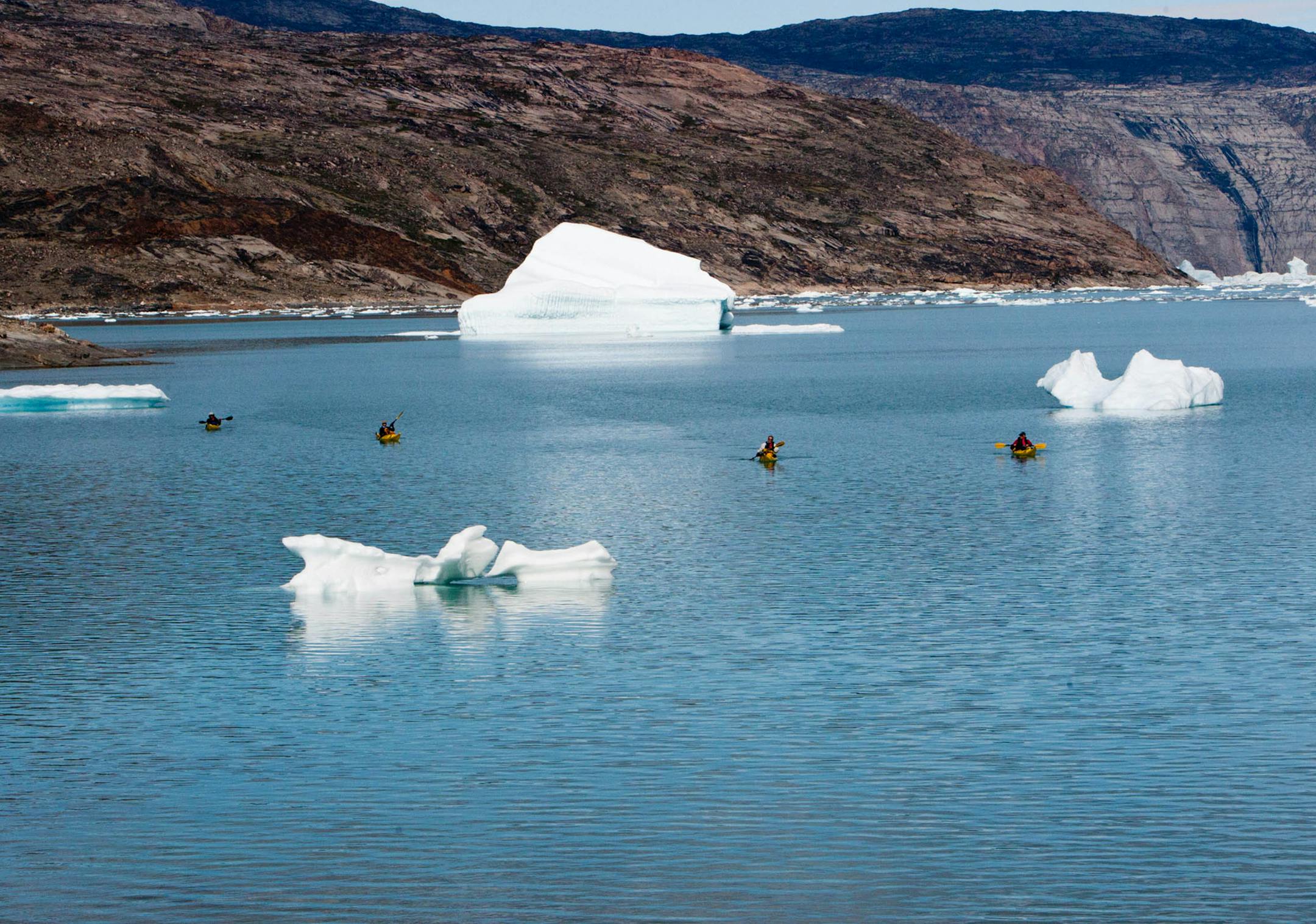
He found a little slice of arctic heaven, Uummannaq, on his kayaking segment up the west coast of Greenland. His description of Uummannaq was so enticing I had to go. Since exploring the fjords there in 2002, I've been drawn back six times to the seascape of snowcapped islands scattered in an azure sea speckled with thousands of crystalline white and blue icebergs. It's also the frosting on the cake that draws me: the ice cap of Greenland looming always on the horizon to the east, 10,000 feet thick and blindingly white. From the main bay, fingerlike fjords jut into the core of Greenland and bring out the icebergs that are being excreted by the glaciers at their foot.
Many are the size of convention centers that drift with the tides, appearing by the campsite overnight and disappearing the next. Despite their enormous size, they are still dwarfed by the 3,300-foot cliffs towering from the sea to the snow fields above. It's Yosemite at flood tide with campsites used for centuries by the native Inuit, their footprint stone tent rings still embedded in the soil.
The Inuit way
The town of Uummannaq was founded by Danish whalers in the 1700s because of its double harbors and its protective position away from the open ocean. Today, some 1,300 people live on the island, with 10 miles of roads and 40 cars. The only industry is a fish-packing and freezer plant where the local fishing fleet sells its catch of Greenlandic halibut and cod. Locals range from full-blooded Greenlanders to Danish immigrants, to a mix of both. All of them share a pride of the unique place they call home about 300 miles above the Arctic Circle. They seem to know that they live, fish, hunt and recreate in a place like no other on Earth.