

IN KANABEC COUNTY – By the late 1800s, most of the white pine in this part of the state had been logged off. The stump-filled countryside that remained was selling cheap, and the Kroschels and Rabes were among families of German descent who headed north from New Ulm.
The fertility of the land that greeted these new east-central Minnesota residents was no match for the ground they left behind. Still, crops were planted, and what they couldn't provide in sustenance, beaver and other wild critters did. Times were tough, and even game wardens looked the other way if a family was down on its luck and jacklighted a deer or two out of season, their shots from Model 94 Winchesters echoing in the dark.
Among those who laid early claims in Kanabec County were Walter Rabe and Clarence Kroschel. Born on the same day, they married sisters and throughout the early 1900s raised mink together, often feeding the animals whatever fish, roadkill or game innards they could muster.
"They each hunted deer with .300 Savages, and it was common to see them with .22s in their hands to shoot rabbits for mink food,'' said John Rabe, 63, of Hinckley.
From this familial wellspring, deer hunting has been passed down generation to generation, five now in all.
Herman, August, Bill and Gus were among Kroschels who started the tradition early last century, and Heinrich and Herman were among the first deer-hunting Rabes hereabouts.
"Some creeks in this area had been dammed so logs could be floated to market,'' said Greg Kroschel, 64, of Brook Park, Minn. "This created a lot of water in the woods, and if they had hip boots, they'd wear them when hunting deer.''
Following a very wet summer, waterproof footwear also proved advantageous Tuesday as the Kroschels and Rabes prepared for Minnesota's 2018 whitetail season.
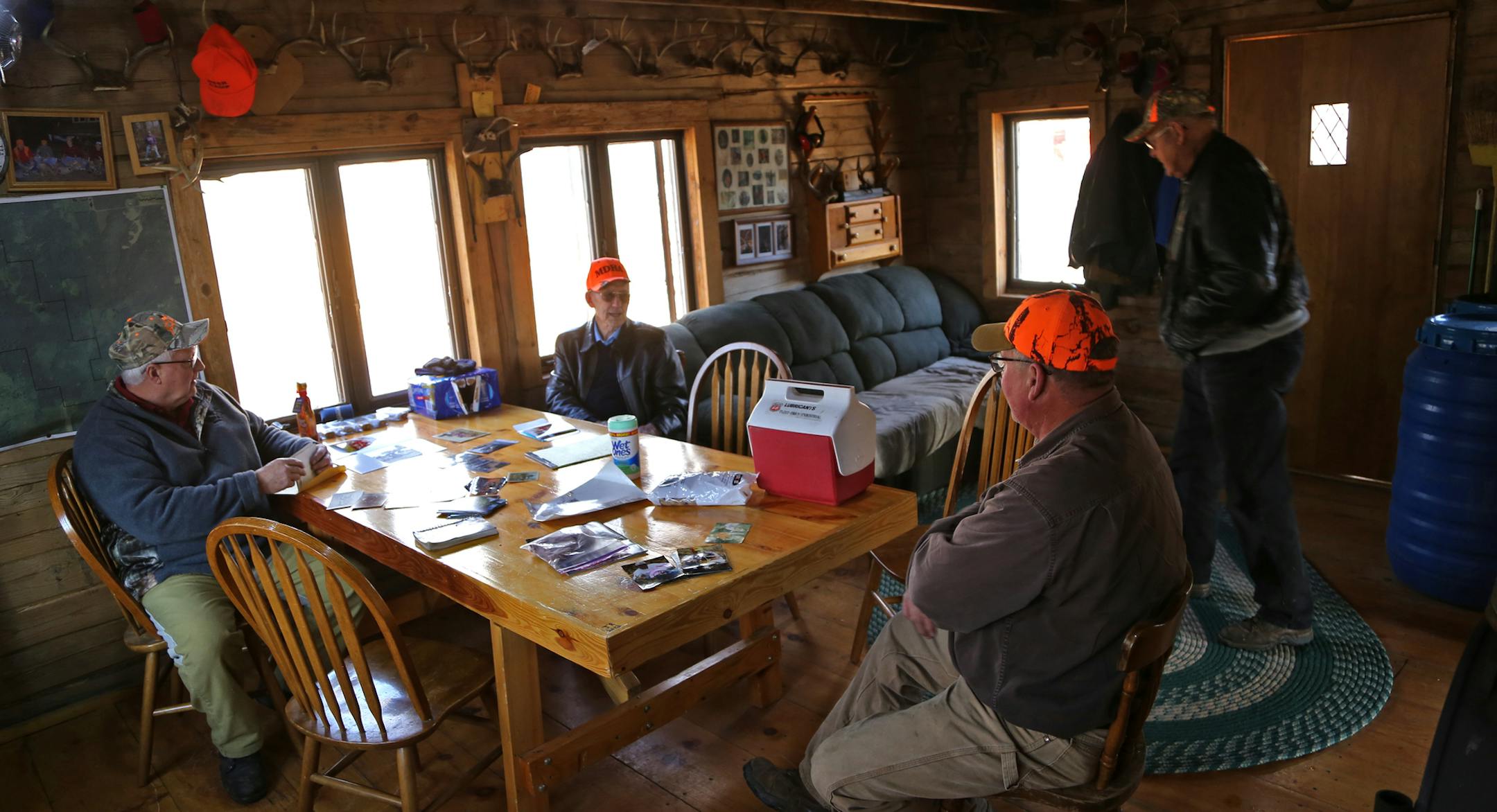
One hundred or more years from the first time their forebears stalked pot meat in this undulating, swampy country, members of the two families congregated in a Kanabec County shack surrounded by 120 acres of oaks, popple and swamps.


