

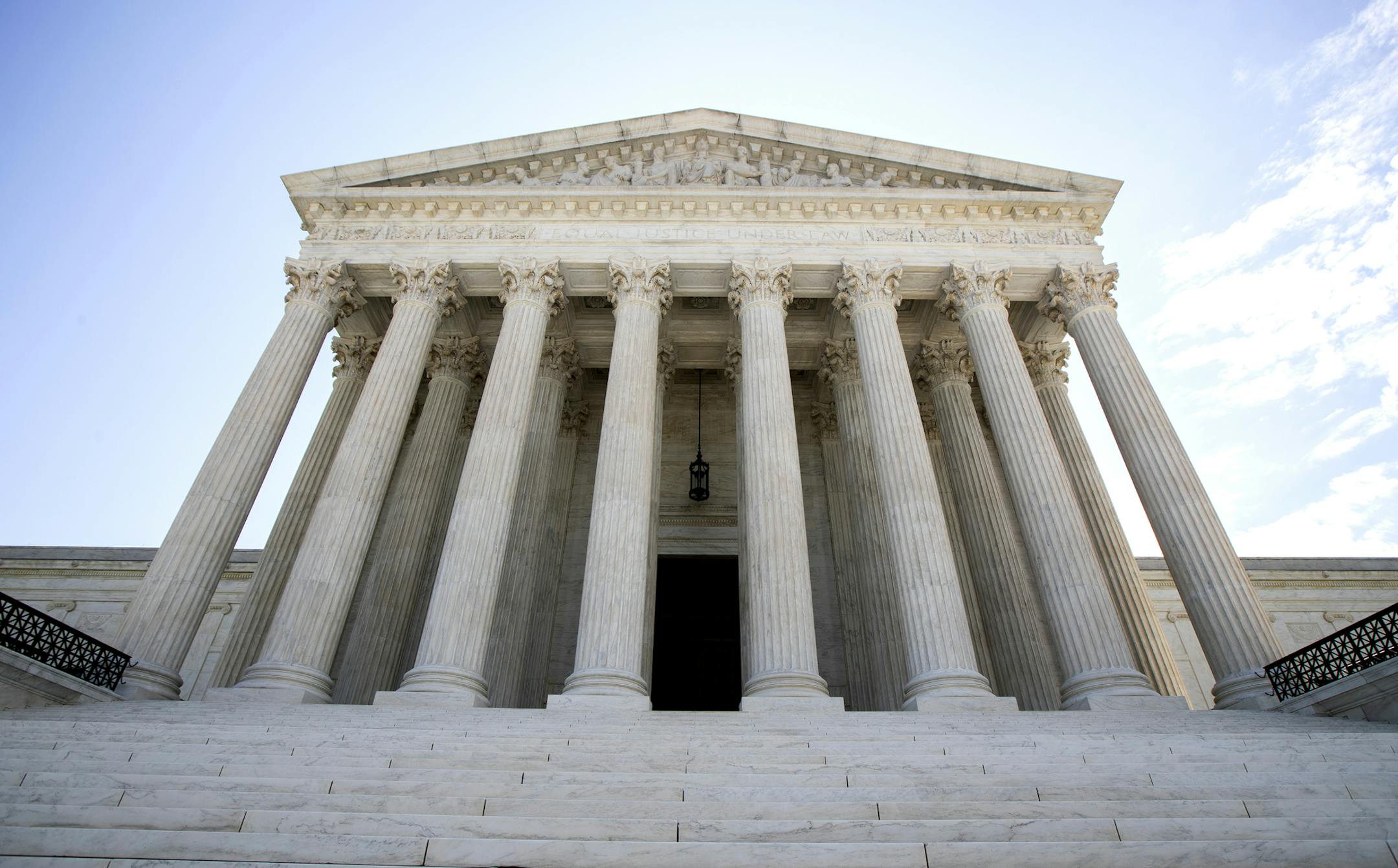
The John Roberts show continued Tuesday at the Supreme Court. The chief justice cast the deciding vote to overturn a decision by the Montana Supreme Court that barred a state scholarship program from funding education at religious schools. In effect, the decision says that if a state has a program that provides scholarship funding for schools, it has to make those scholarships available to religious institutions — even when the state constitution has a provision barring aid to religion.
The conservative ruling followed others in previous years by Roberts. Like those that came before, it took yet another brick out of the wall separating church and state. In the foreseeable future, there may be no wall left at all.
The context for the decision, Espinoza v. Montana Department of Revenue, goes all the way back to the 19th century and the earliest days of the public school movement. From the start, public schools in the United States were labeled as "nondenominational" or "nonsectarian." As Catholic immigrants began to arrive in large numbers, some of them pointed out that the public schools were effectively Protestant, often featuring Bible readings from the King James version of the Bible and recitation of the Protestant version of the Lord's Prayer. Catholics sought state funding for their own schools, or, barring that, the elimination of what they saw as distinctively Protestant practices.
The response of America's Protestant majority was essentially to tell Catholics, "No way." In the run-up to the 1876 election, the Republican Party introduced a federal constitutional amendment that would have gone so far as to bar states from providing any funding to "sectarian" institutions, which meant Catholic ones. There was lots of anti-Catholic rhetoric in the public discussions of the proposed amendment, including on the floor of the U.S. Senate.
The amendment did not pass. (Nor was it expected to — it was proposed as a wedge issue to help the Republicans in the national election.) Nonetheless, many states adopted state constitutional amendments modeled on the failed federal one. As new states were admitted to the union, many of them also incorporated versions of the no-aid amendment in their constitutions.
Montana has such a provision that bars state aid to any school "controlled in whole or in part by any church, sect, or denomination." The Montana Legislature passed a law that gave tax credits for donations to organizations that award scholarships to students in private schools. The Montana Supreme Court interpreted the no-aid provision of the Montana Constitution to bar the law because it gave aid to religious schools — and struck down the program in its entirety.
Roberts's opinion for the court reversed the Montana Supreme Court decision. But because the U.S. Supreme Court can only interpret the federal Constitution, not state constitutions, Roberts couldn't just say that the Montana court misread the Montana constitution.
Instead, Roberts held that the Montana decision violated the free exercise rights of people in Montana who want to donate to scholarship programs or attend religious schools using scholarship money. His logic was that the no-aid provision as applied by the Montana court amounted to discrimination against religious schools simply because they were religious.


