

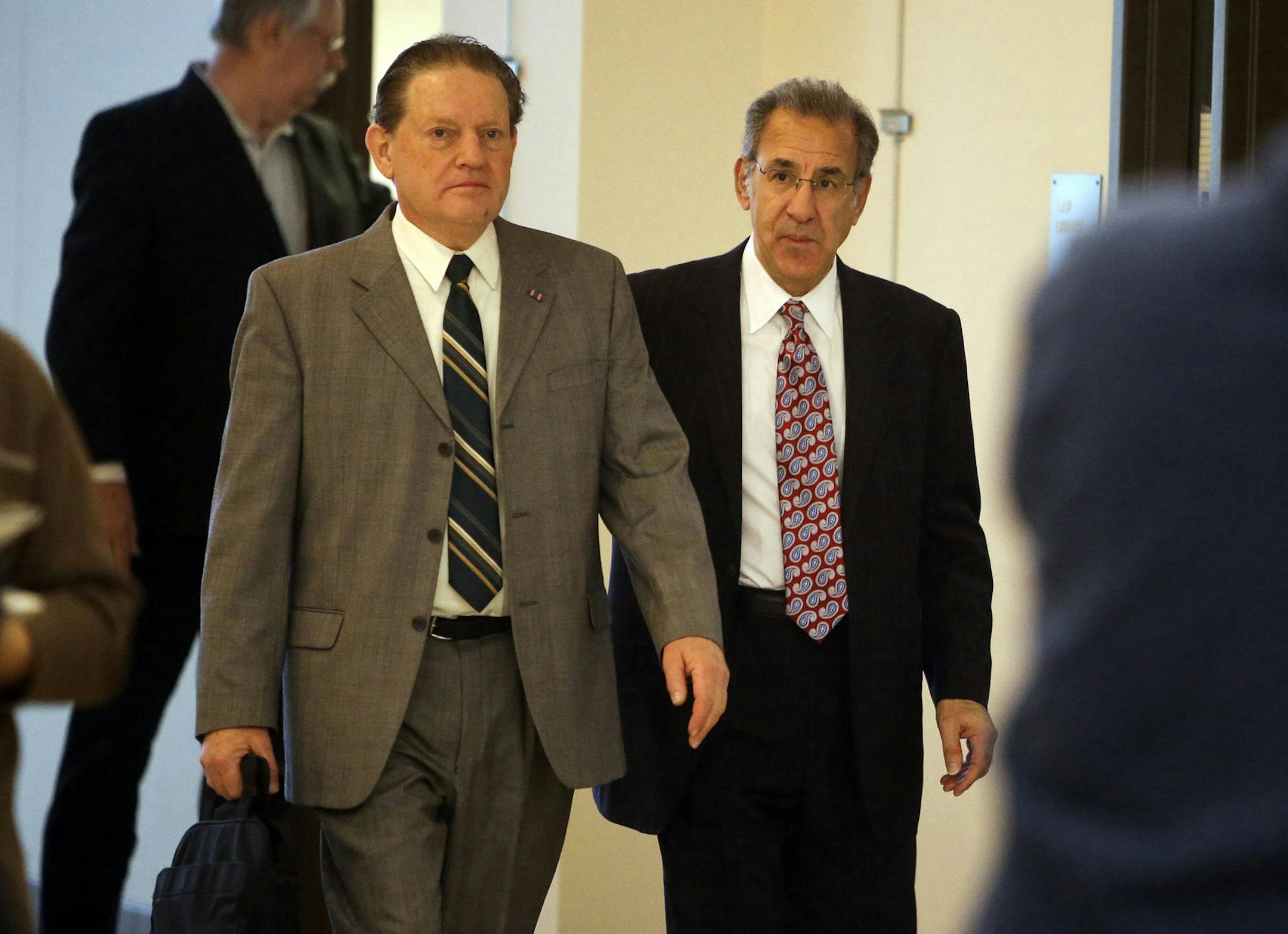
Byron Smith could have testified in his own defense on Monday, but he waived his right to appeal directly to jurors and remained silent.
The 65-year-old Little Falls man and his legal team may be regretting that decision today, but many Minnesotans — including the 12 men and women on the jury — had already seen and heard too much from Smith.
In a case that reignited the national debate over self-defense, the former State Department security specialist was convicted Tuesday of premeditated murder in the shooting deaths of 18-year-old Haile Kifer and 17-year-old Nick Brady.
Smith's lawyers, who say they will appeal the verdict, had made their client out to be a third victim, arguing that he was justified in shooting the unarmed Kifer and Brady on Thanksgiving Day 2012 because he was terrified by previous break-ins in which guns were taken from his home.
In fact, jurors heard audiotaped police interviews in which Smith calmly told authorities that he had assumed the intruders were armed, making it a shoot-or-be-shot confrontation.
But the jury heard other recordings, too, and no doubt those weighed heavily during their deliberations. Smith, who had set up security for embassies while with the State Department, recorded audio of the shootings and the aftermath. In a case that tested the limits of the "castle doctrine," he had wired his own castle.
For many who followed the case, the recordings provided all of the evidence necessary to conclude that Smith had planned the execution-style killings in retribution for the break-ins.
Smith waited in his basement while Brady and Kifer entered the home upstairs. The recordings capture the sounds of two gunshots and Brady's groan, followed by Smith firing a third time before saying, "You're dead."
 djoles@startribunemurders The murder trial of Byron Smith in the deaths of 17-year-old Nick Brady and 18-year-old Haile Kifer at the Morrison County Courthouse in Little Falls Tueday, April 29, 2014. ORG XMIT: MIN1404290935242512](https://arc.stimg.co/startribunemedia/R5R22PE5HNQCEH6653FRE6FVFA.jpg?&w=1080)


