

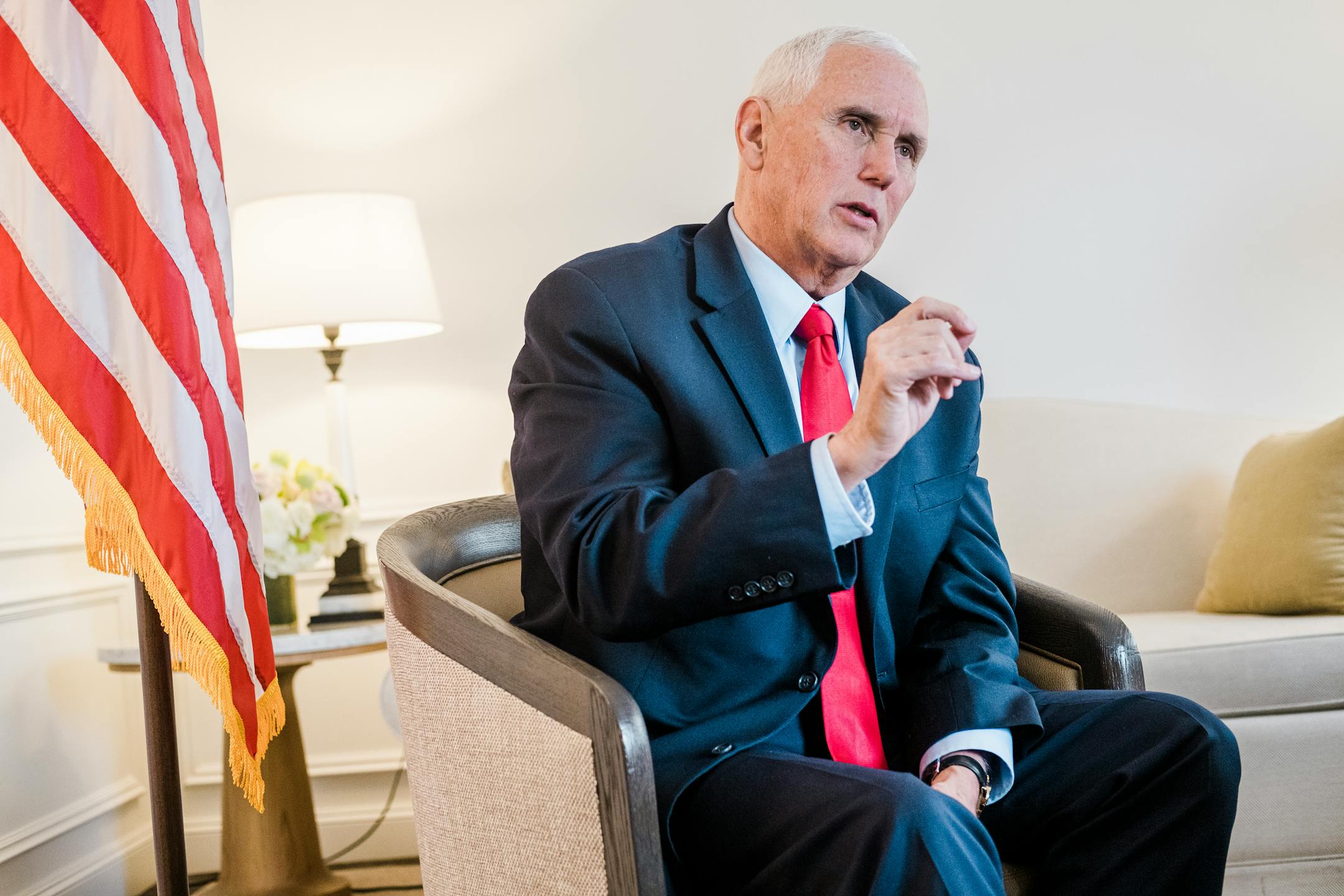
The Justice Department is seeking to question former Vice President Mike Pence as a witness in connection with its criminal investigation into former President Donald Trump's efforts to stay in power after he lost the 2020 election, according to two people familiar with the matter.
Pence, according to people familiar with his thinking, is open to considering the request, recognizing that the Justice Department's criminal investigation is different from the inquiry by the House Jan. 6 committee, whose overtures he has flatly rejected.
Complicating the situation is whether Trump would try to invoke executive privilege to stop him or limit his testimony, a step that he has taken with limited success so far with other former officials.
Pence was present for some of the critical moments in which Trump and his allies schemed to keep him in office and block the congressional certification of Joe Biden's victory. An agreement for him to cooperate would be the latest remarkable twist in an investigation that is already fraught with legal and political consequences, involving a former president who is now a declared candidate to return to the White House — and whose potential rivals for the 2024 Republican nomination include Pence.
Thomas Windom, one of the lead investigators examining the efforts to overturn the election, reached out to Pence's team in the weeks before Attorney General Merrick Garland appointed a special counsel Friday to oversee the Jan. 6 investigation and a separate inquiry into Trump's handling of classified documents, according to one of the people familiar with the matter. Garland has said that the appointment of the special counsel, Jack Smith, will not slow the investigation.
Officials at the Justice Department declined to comment. A spokesperson for Pence also declined to comment.
The discussions about questioning Pence are said to be in their early stages. Pence has not been subpoenaed, and the process could take months, because Trump can seek to block, or slow, his testimony by trying to invoke executive privilege.
Trump has cited executive privilege to try to stop other former top officials from talking with investigators. While those efforts have generally been unsuccessful in stopping testimony by the officials to a federal grand jury, they have significantly slowed the process.


