

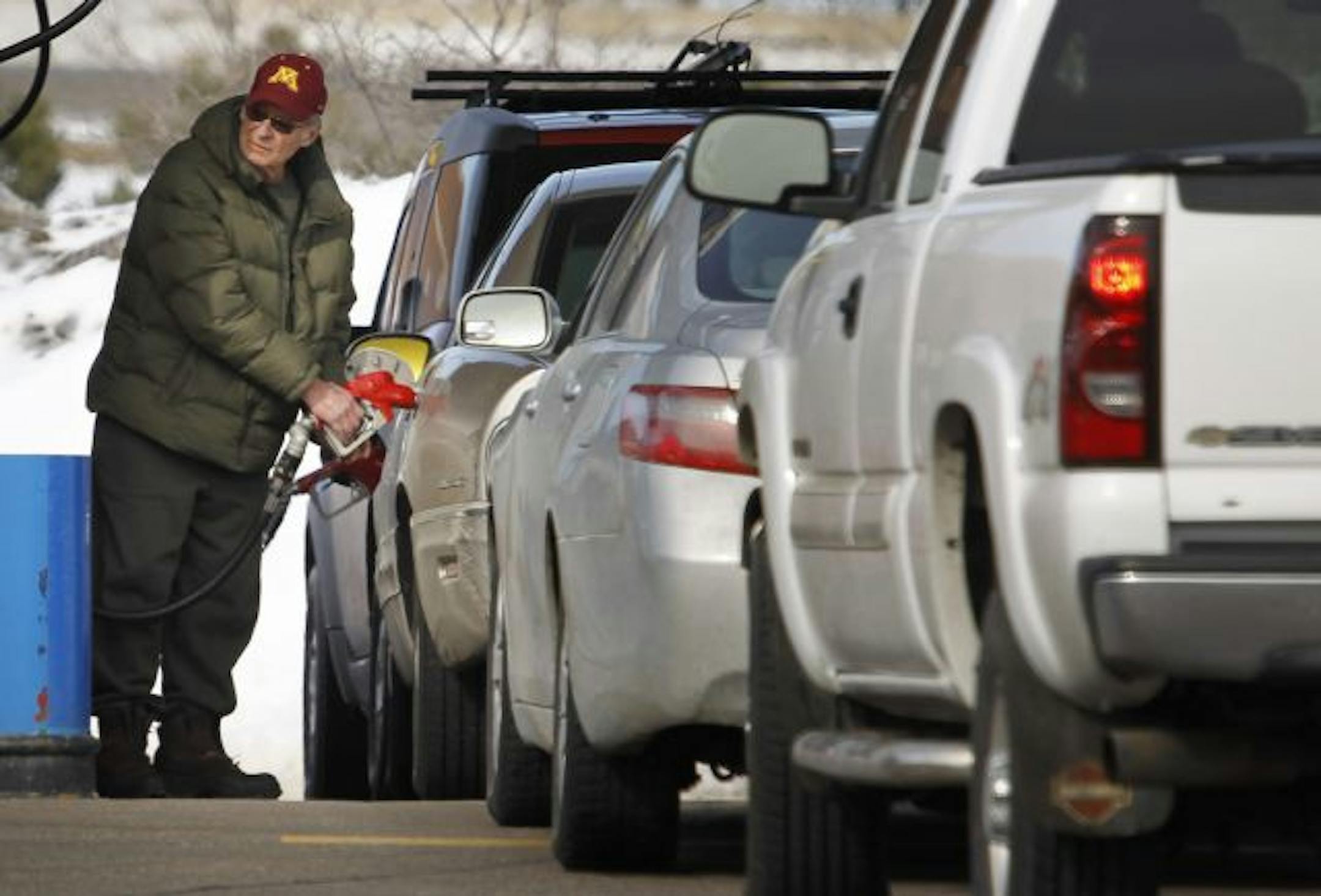
Freedom fever in the Middle East has roiled the oil market with uncertainty and created a guessing game of sorts: Just how high might gas prices go?
The painful $4-per-gallon peak of 2008 is a possibility as petroleum-rich Libya teeters in chaos, some gasoline industry watchers say. And while $5-per-gallon gasoline seems highly unlikely if the crisis is contained to Libya, it's a much different story if there's a crimp in Saudi Arabia's oil pipeline.
"If we wake up ... and there's violence in the streets of Riyadh [the Saudi capital], every number gets thrown out the window and we are basically looking at uncharted territory," said Tom Kloza, chief oil analyst at Oil Price Information Service. "It completely alters price forecasts."
Daniel O'Connell, energy vice president at futures traders MF Global, agreed. "The bottom line is that there is a huge wild card out there." And with the U.S. economy still weak, cash-strapped consumers are much less prepared to handle 2008-like gas price spikes. "It's a whole different story now," O'Connell said.
Even before revolution spread across the Mideast, consumers had reasons to be cranky about gas prices. A gallon of gas in the Twin Cities cost $3.37 on average Thursday, up 8 cents from Wednesday, 20 cents from a week ago and 63 cents from a year ago, according to TwinCitiesGasPrices.com. The average U.S. gas price Thursday was a dime per gallon less than in the Twin Cities, the website said.
Gas prices have been climbing in recent months as crude oil prices rose, the product of an improving world economy coupled with cold, oil-draining winters in parts of the United States and Europe.
But nowadays, a Mideast-turmoil risk premium is built into the market -- even if Saudi Arabia itself remains stable, said Patrick DeHaan, senior petroleum analyst for GasBuddy.com, which oversees more than 250 websites that track gas prices nationwide.
"It's like auto insurance," DeHaan said. "You have a couple accidents, and insurance companies consider you a greater risk and you wind up paying more for your policy." DeHaan believes that concern over events in the Middle East will combine with factors that already were pushing up prices and that by summer, U.S. consumers could see $4-a-gallon gas.


