

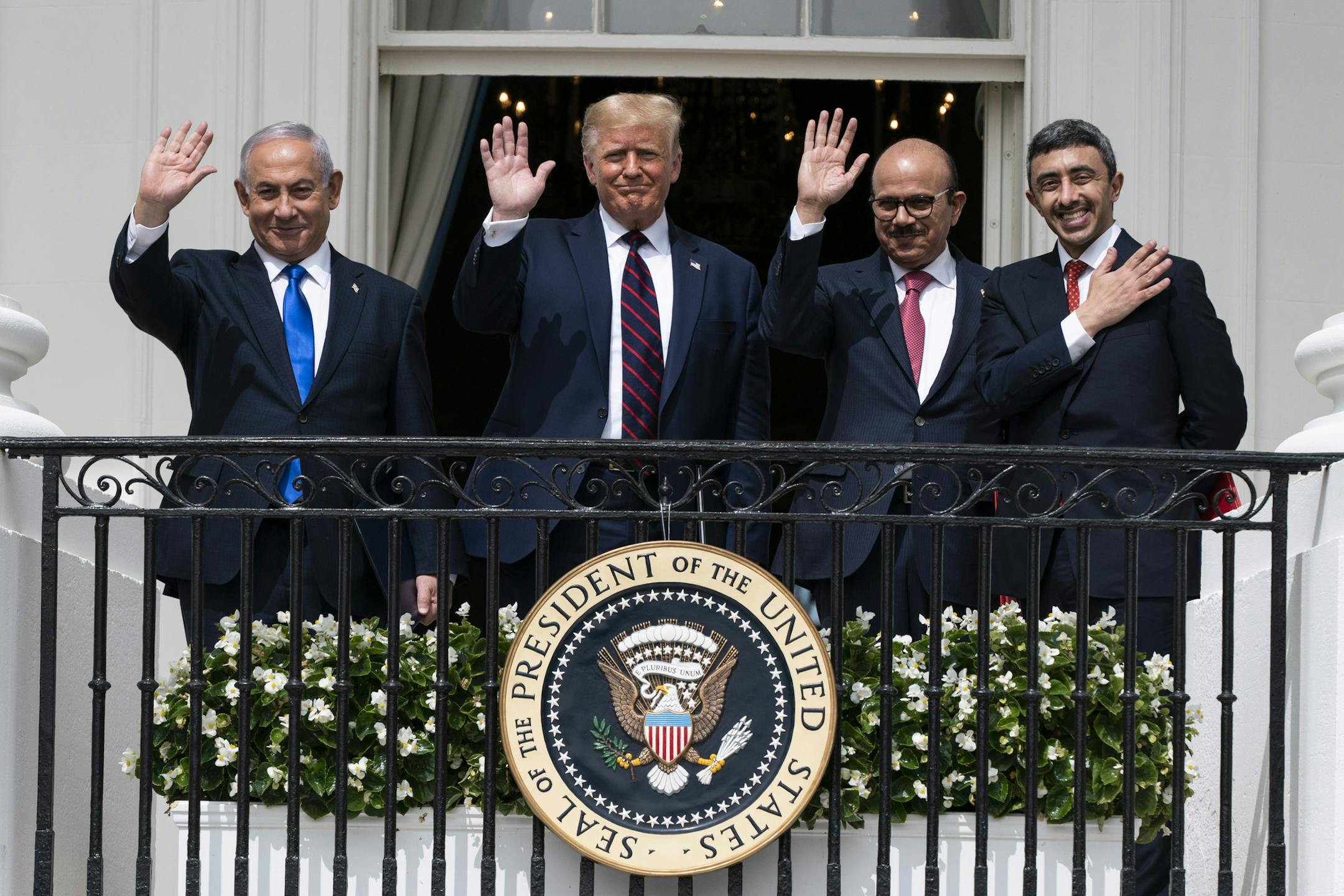
By any conventional or historical measure, the recent breakthrough between Israel and the United Arab Emirates and Bahrain is a good thing, and the Trump administration deserves its share of praise for it. The refusal of much of the media to take this moment seriously only lends credibility to President Donald Trump's complaints that the media is out to get him. Who does that serve?
Just give Trump his due. This happened on his watch. He helped it happen. And if he were any other president, the media would have acknowledged, perhaps still grudgingly, that this is — or at least could be — a very big deal.
More importantly, whatever your view of Trump (readers know I'm not a fan), reducing what's happening in the Middle East to a pro-Trump or anti-Trump narrative is myopic. Much like his 2016 presidential run, Trump's 2020 Middle East success is a product of timing. Trump couldn't have won the nomination in 2012 or any of the other years he flirted with running. Similarly, the Abraham Accords couldn't have been achieved four or eight years ago because conditions weren't ripe for it.
Historically speaking, a lot of credit goes to Barack Obama. In much the same way that Neville Chamberlain and his policy of appeasement were partly responsible for World War II, Obama's disastrous Iran deal led the Arab world to reevaluate its priorities. Shia Iran wants to dominate the Sunni-majority Middle East. Saudi Arabia fears that the Iranians want to be the caretaker of the holy cities of Mecca and Medina, both of which are located in Saudi Arabia.
Obama's gift to Iran of piles of money and a path to a nuclear weapon was perceived as a betrayal of existential proportions not only by the Saudis and Israelis, but by the smaller Arab states such as the UAE and Bahrain as well. When the U.S. essentially greenlights Iranian hegemony in the region, Israel — Iran's mortal enemy — looks more like a potential ally to Iran's regional rivals.
But Obama did something positive, too. He didn't stop the U.S. oil industry's technological revolution, which led to America becoming the world's largest oil producer. Note: I didn't say Obama is responsible for the oil boom, merely that he didn't stop it. Both Obama and Trump have tried to take credit for something that mostly just happened on their watch.
It took a long time for the Middle East to lose its stranglehold on the global oil supply — and its ability to set prices at will. But once it happened, the politics and economics of the region were bound to change.
The clearest sign of that was the rise to power of Saudi Crown Prince Mohammed bin Salman. He saw the writing on the wall that the Saudis needed to diversify their economy and join the global economy as something more than a fuel depot — not just for the survival of Saudi prosperity, but for the survival of the ruling family.


