It seems de rigueur to mention in every review of Nilo Cruz's "Anna in the Tropics" that the play notably won the 2003 Pulitzer Prize without a New York production. Critic John Lahr huffed that this was akin to giving a restaurant five stars on the strength of its menu. Zing.
The Pulitzer controversy is 14 years past, so forget I said anything. Judge the play on its merits. Judge it on the staging that opened Friday at the Jungle Theater in Minneapolis.
On those terms, "Anna in the Tropics" is as romantic and poetic a piece of literature as you will find. It is also an inert piece of drama that struggles to come alive in the mouths and actions of real-life actors.
Cruz writes beautiful, lyrical dialogue — too beautiful for the working-class cigar factory denizens he celebrates. Larissa Kokernot's straight-ahead direction does little to energize the stasis, particularly in the glacial first act. After intermission, Cruz churns romance and the specter of mechanization in 1929 Tampa into something a bit livelier. Whether the sum will hang in the memory though, is unlikely.
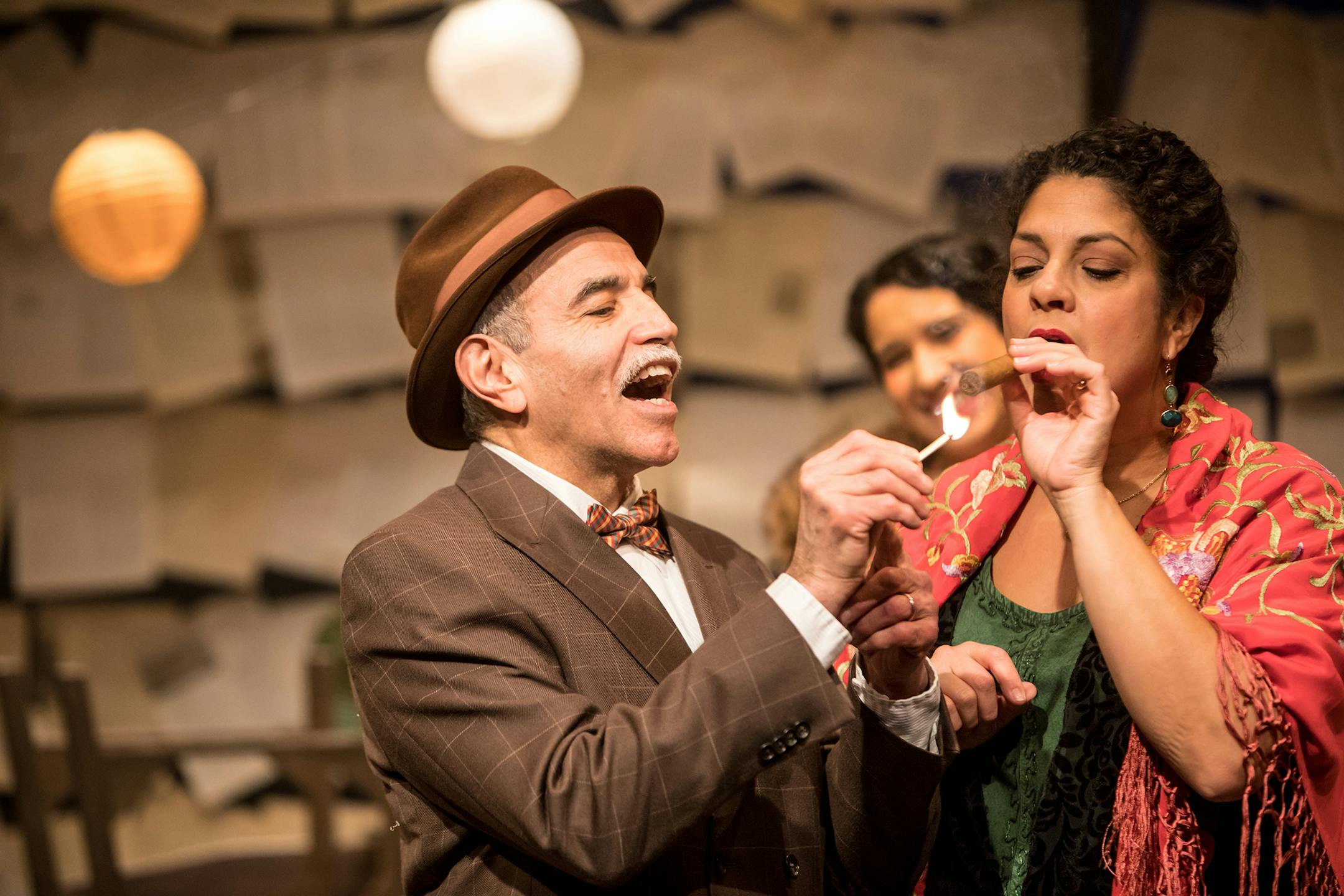
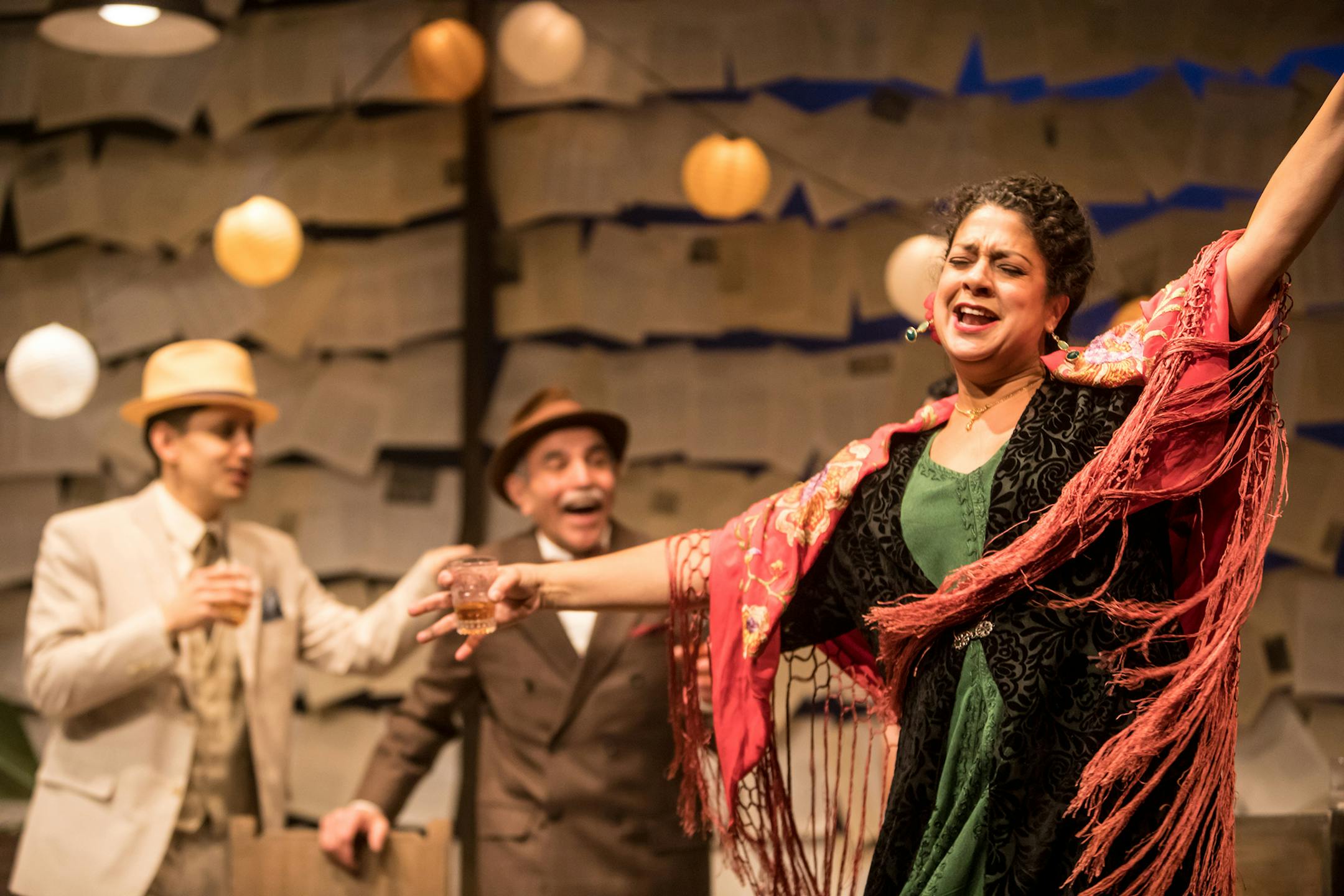
In the Jungle production, Juan Rivera Lebron portrays Juan Julian, a lector who has traveled from Cuba to read to workers in a cigar factory owned by Santiago (Al Clemente Saks) and Ofelia (Adlyn Carreras). The lector has a long tradition (to this day in Cuban factories) of reading literature to laborers who roll cigars.
Juan Julian (regal but stiff and cool in Lebron's hands) exhales the tangled romance of Tolstoy's "Anna Karenina" into the hot Florida atmosphere. The story of forbidden trysts excites Conchita (an excellent Nora Montañez), who suffers the dalliances of her doughy husband, Palomo (a sufficient Rich Remedios), and dreams of taking her own lover.
Santiago's half-brother Cheché (Dario Tangelson) wants to move the plant into the machine age and, in a tortured comic moment worthy of Jackie Gleason, Tangelson collapses with rage when he loses the battle.
This makes the story sound a little plot-heavy, and it is. But as it unfolds on Andrea Heilman's set — difficult to read initially with its mix of naturalism and surrealism — it is more an aroma than a meal of substance.