

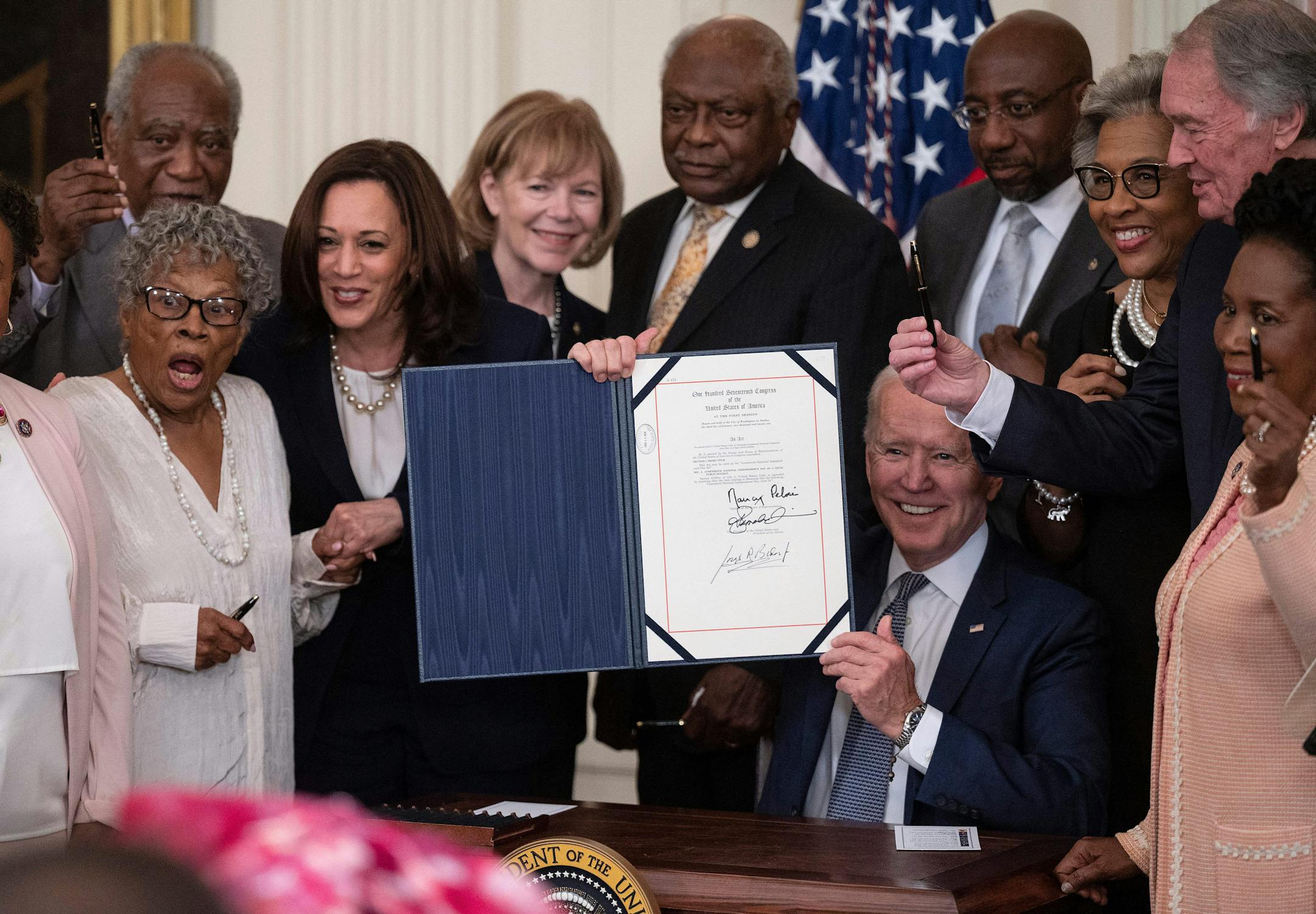
This weekend, Americans will celebrate an unofficial holiday that many people had not heard of a year ago.
In this era of purposeful racial awareness, Juneteenth is the new "it" holiday for the socially woke.
While many African Americans have celebrated it for decades, the effort to make June 19 a federal holiday commemorating the end of slavery gained steam recently.
There's certainly nothing wrong with embracing Black history, making amends for atrocities past and present, and honoring the accomplishments of African Americans. The problem is that it's the wrong date. The last of the slaves were not freed on Juneteenth.
Juneteenth represents June 19, 1865 — the date Union soldiers arrived in Texas to announce that the Civil War was over, and slavery had been abolished. That was 2 1⁄2 years after President Abraham Lincoln's Emancipation Proclamation declared slaves held in Confederate states free and two months after his assassination.
Juneteenth does not represent the end of slavery in America, as it is often erroneously reported. It specifically notes the end of slavery in Texas. Slavery continued to thrive in several border states that were not affected by the Emancipation Proclamation. Delaware was the last to free its nearly 2,000 slaves on Dec. 6, 1865, six months after Texas.
Dec. 6 would be the most accurate date to celebrate the end of slavery. That's when the 13th Amendment was ratified in 1865, officially abolishing slavery throughout the United States. Every state was then required by federal law to free its slaves.
There is no historical reason to make June 19 a federal holiday or even a state holiday anywhere other than in Texas. It does, however, allow for a good summer celebration. And it's better than no commemoration at all.


