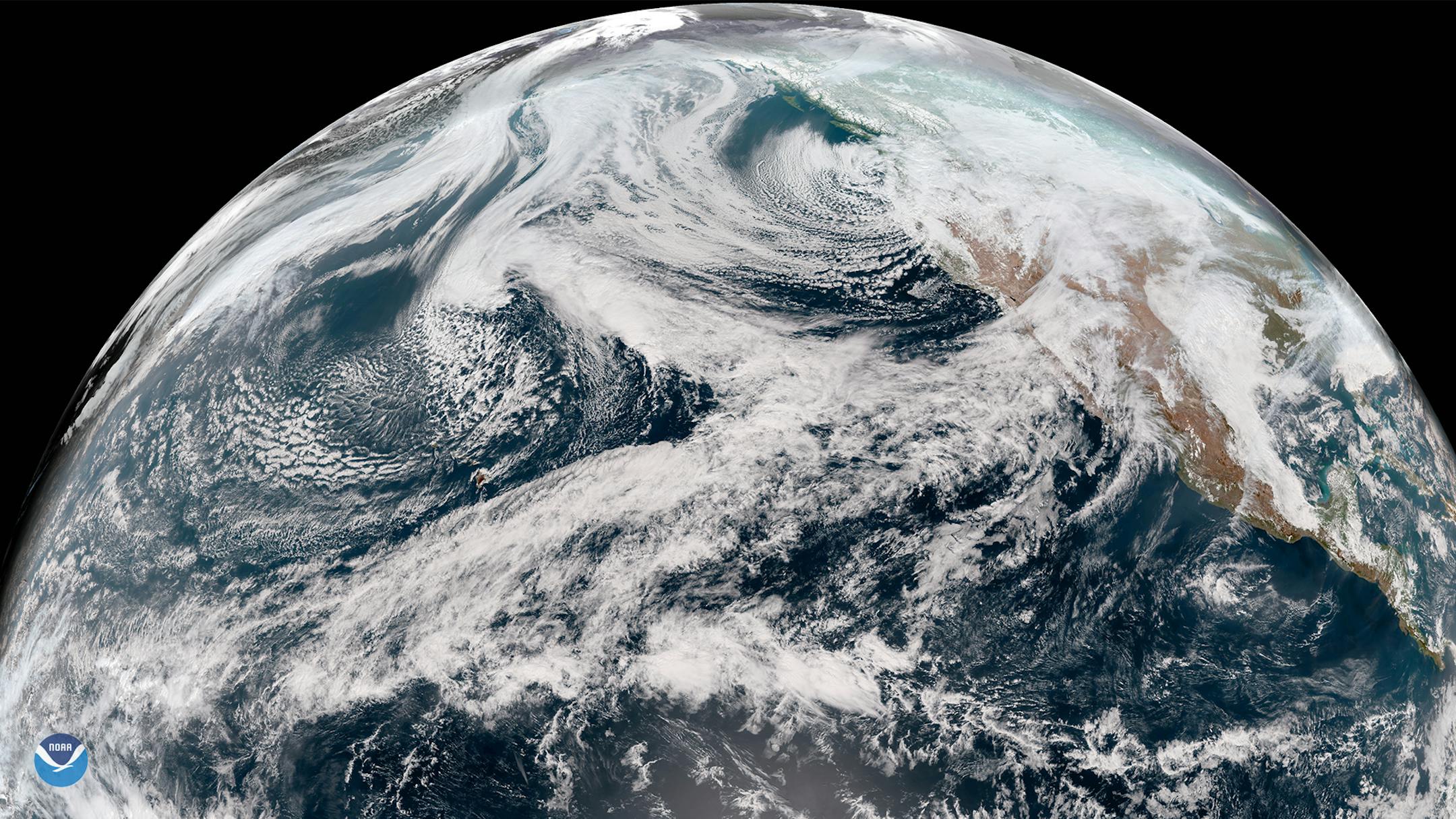
Western MegaDrought
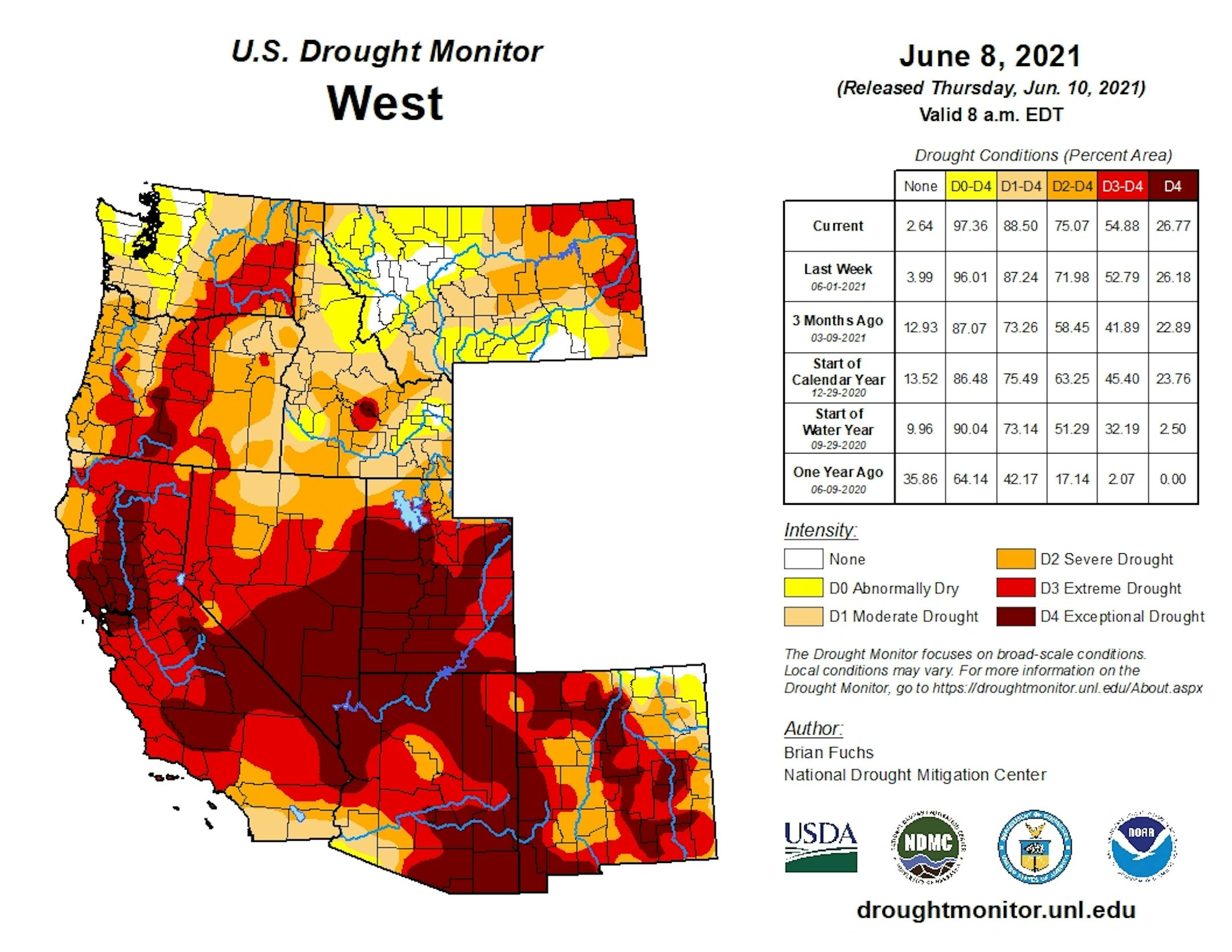
According to the US Drought Monitor, nearly 97% of the Western US is considered to be abnormally dry with 88% in a Moderate Drought, 75% in a Severe Drought, 55% in an Extreme Drought and 27% in an Exceptional Drought. 1 year ago, no areas were in an Exceptional Drought and only 2% was considered to be in an Extreme Drought
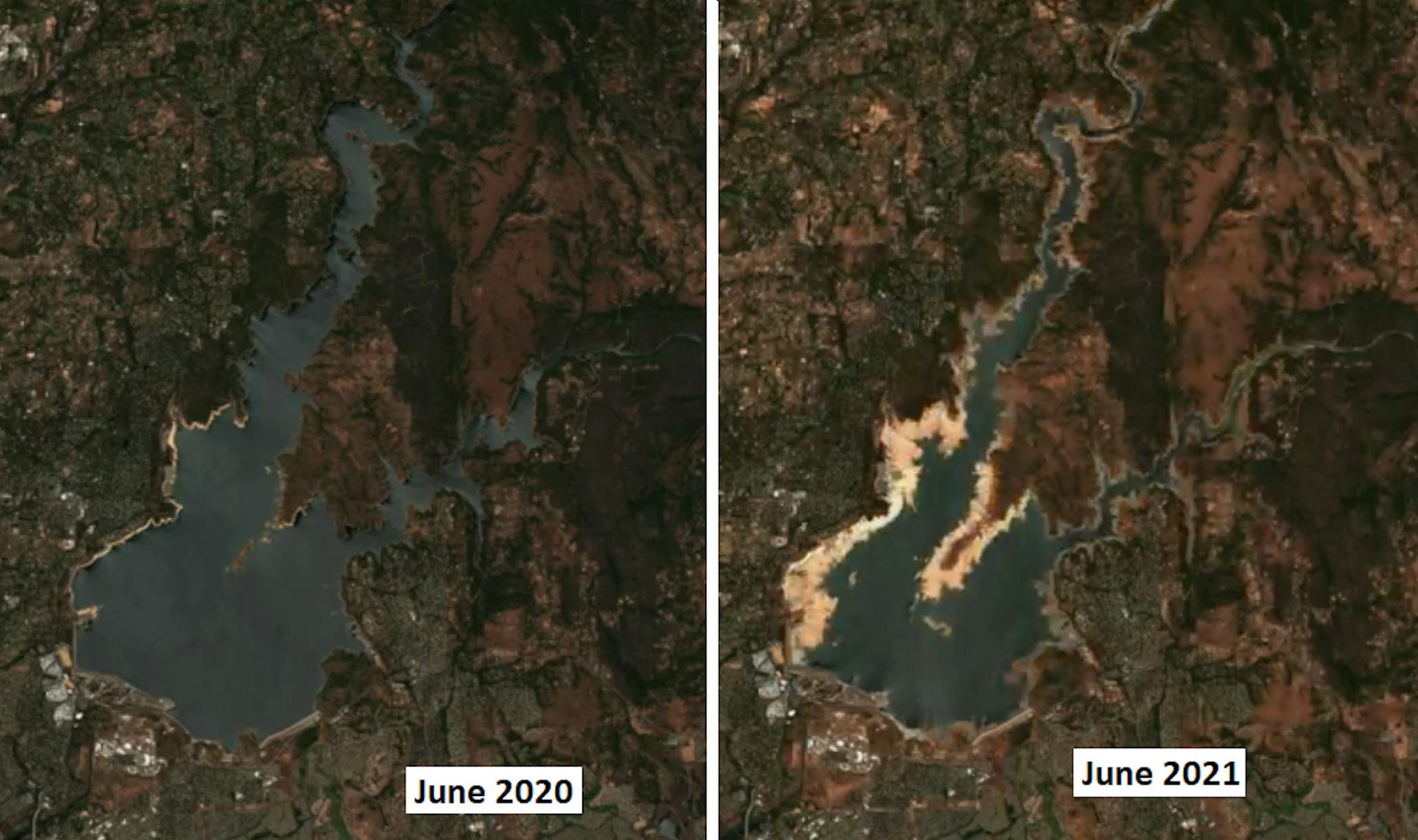
"7 Shocking Satellite Images Reveal the West's Megadrought"
"The 2021 megadrought is having major impacts on the ground. But to truly grasp the scope, you need to see it from space. The megadrought hitting the western United States has yielded no shortage of horror stories to start the dry season. Record heat last week has seared in drought, turning the region from an already well-done steak into a charred crisp. Almond growers are ripping up orchards, and 17 million endangered salmon are being shipped to the sea because rivers are too hot to navigate. Horror stories abound. But the toll of the megadrought is perhaps most visible in the state of reservoirs across the West, from California to Utah. Lake Mead hit a record low, touching a level not seen since the Hoover Dam was constructed. The images of boat docks sitting on now-dry land are visceral, but so too are the state of the West's reservoirs from space. The European Space Agency's Sentinel-2 satellite has captured astounding images of the West's reservoirs. Earther has taken snapshots from 2020 and 2021 of a number of reservoirs in California as well as Lake Mead and Lake Powell, the two largest manmade reservoirs in the West, which millions depend on. These shocking images show how quickly water supplies have deteriorated, and the risks facing the region as the dry season ramps up."
California Reservoir Levels
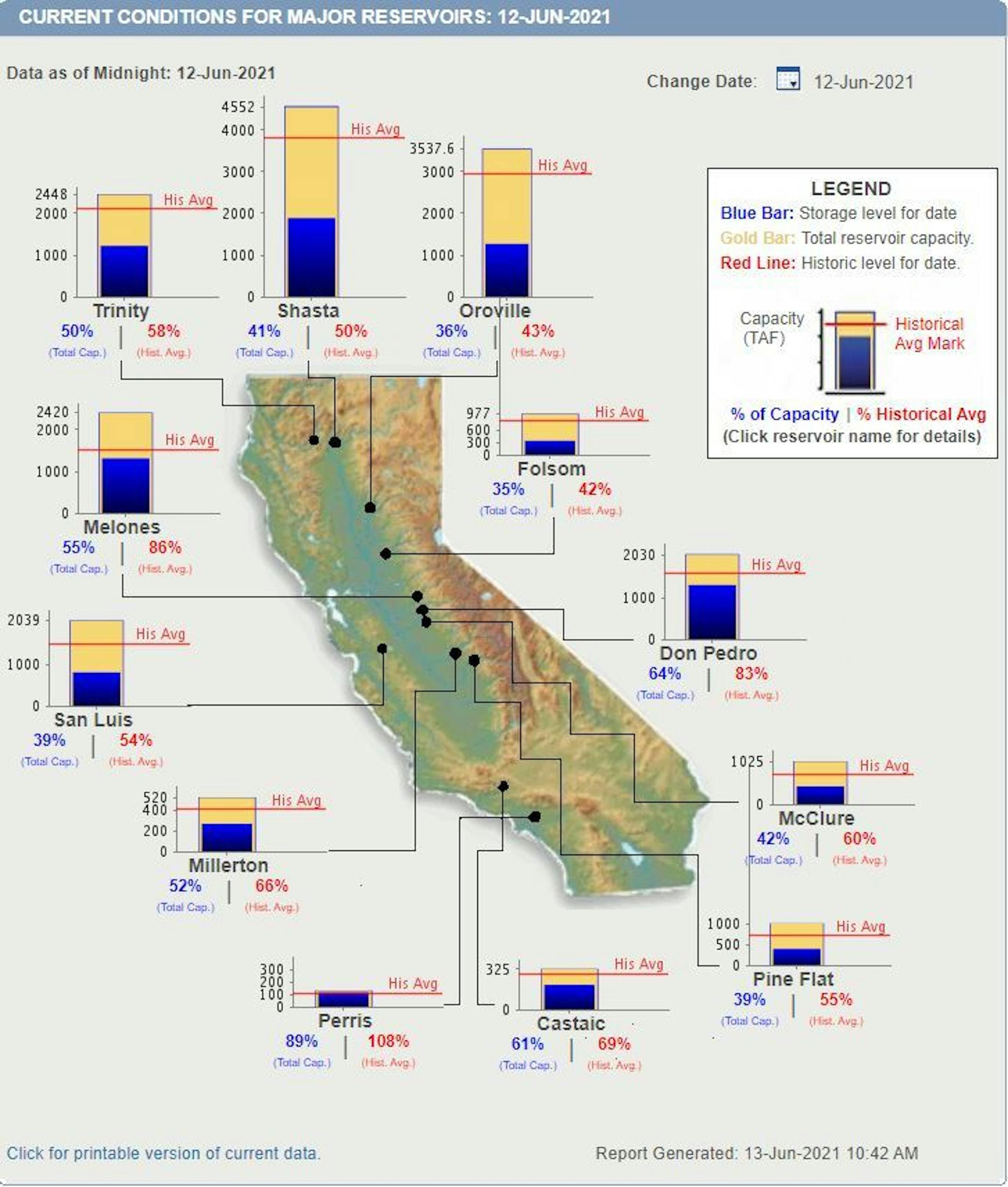
According to CA.gov most of the reservoirs located in California are running well below the historical average. Interestingly, Folsom Lake is sitting at 35%, which is the lowest out of any of the reservoirs located in the state.
Minnesota Drought Update
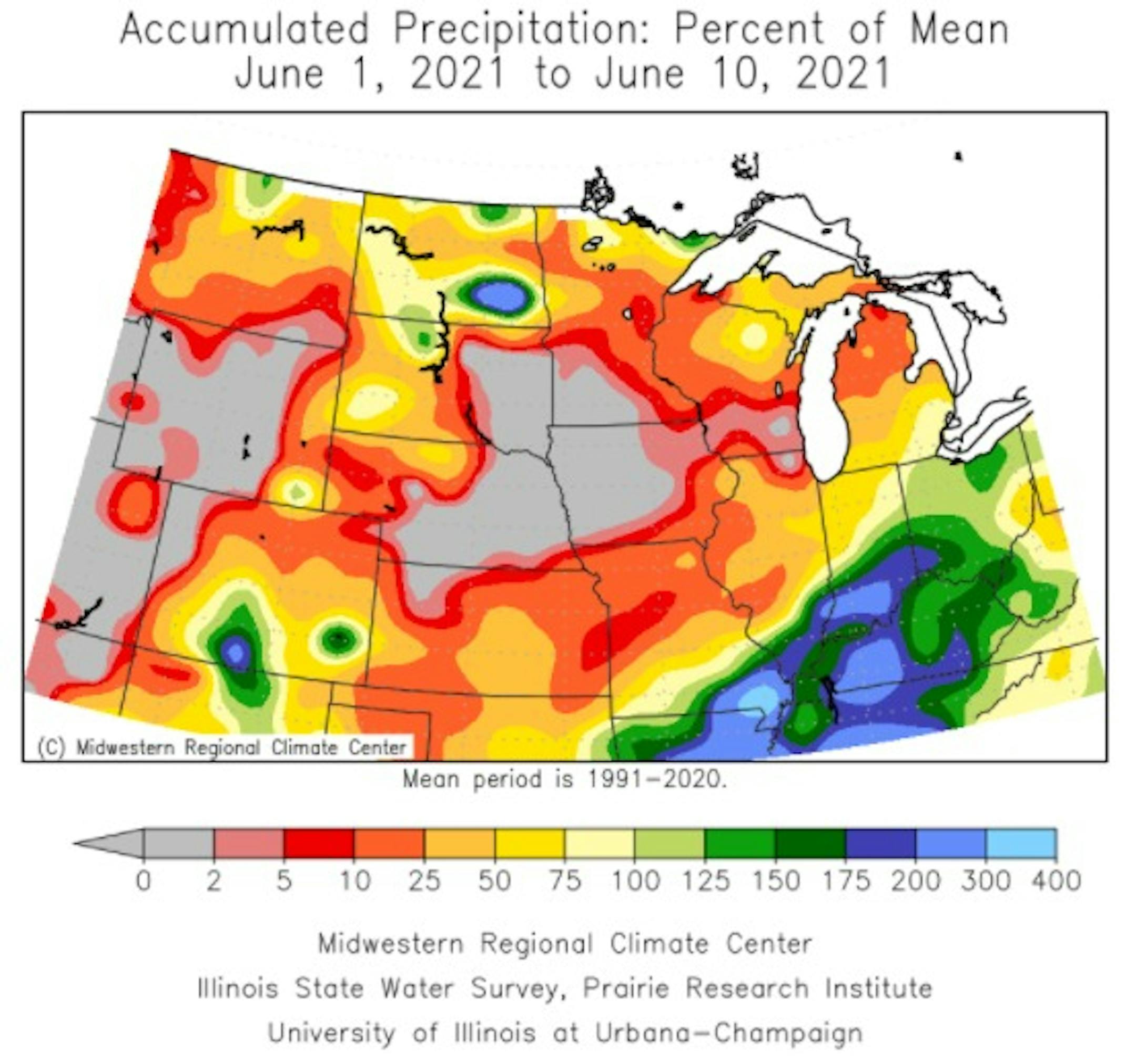
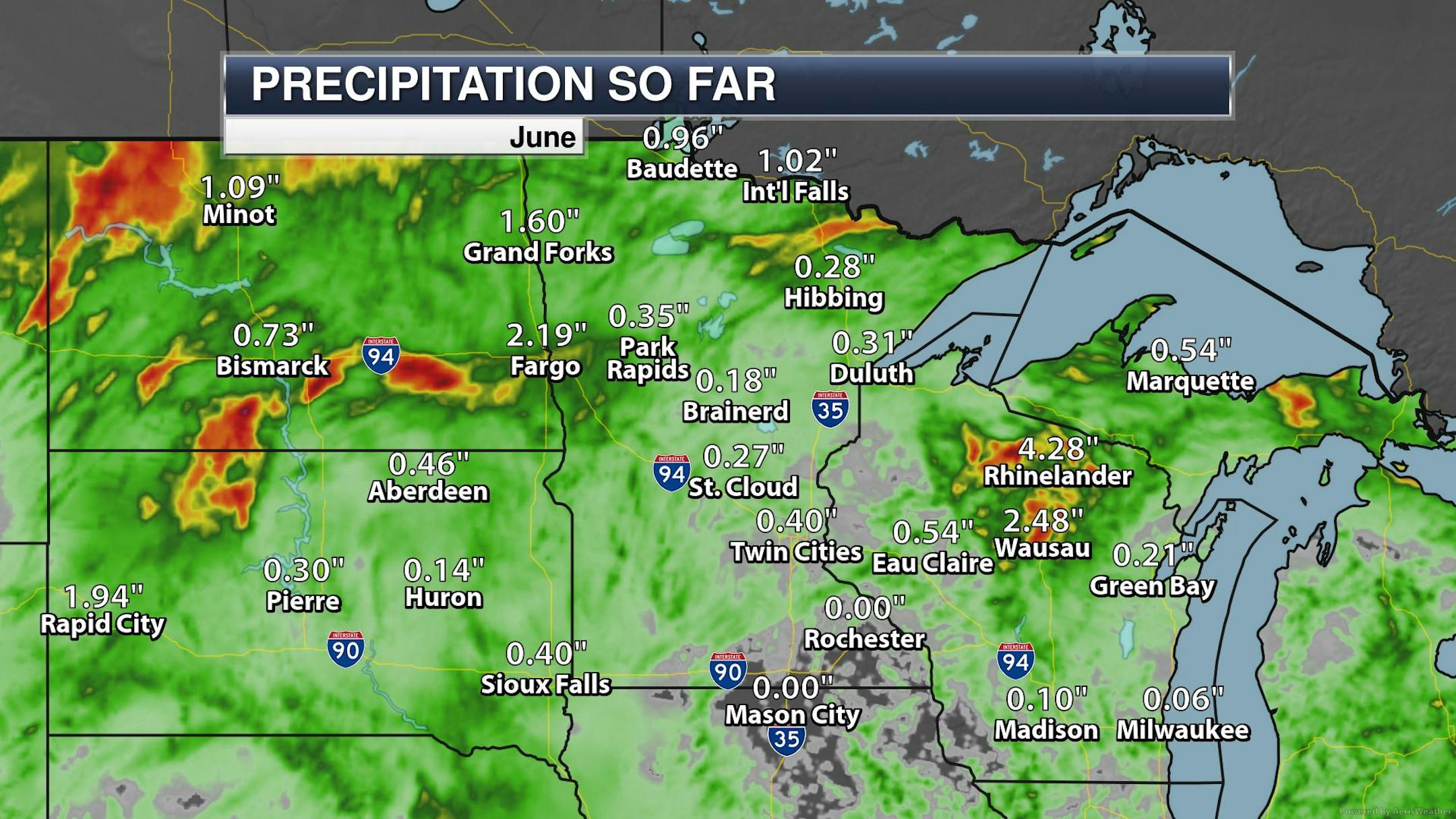
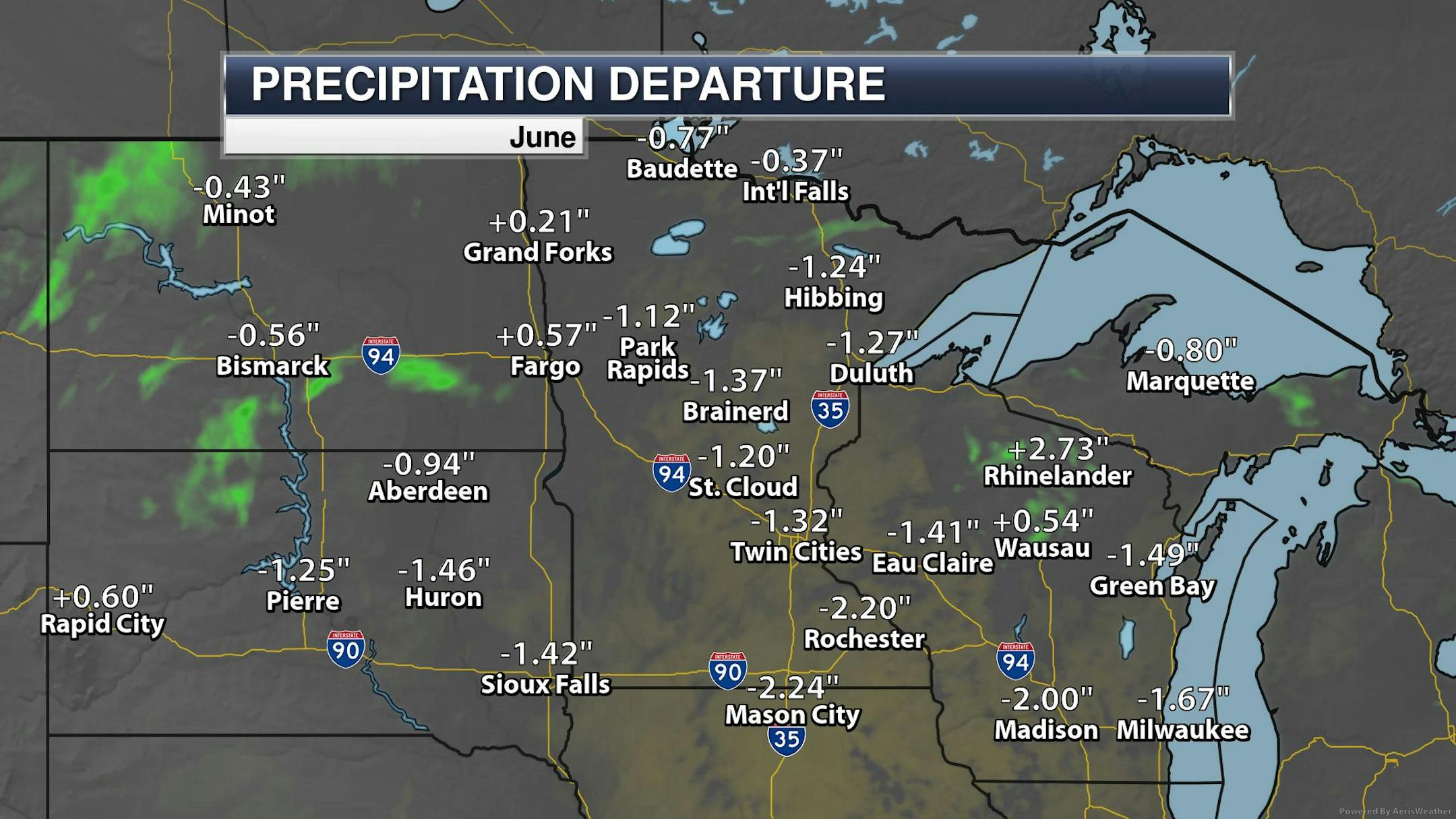
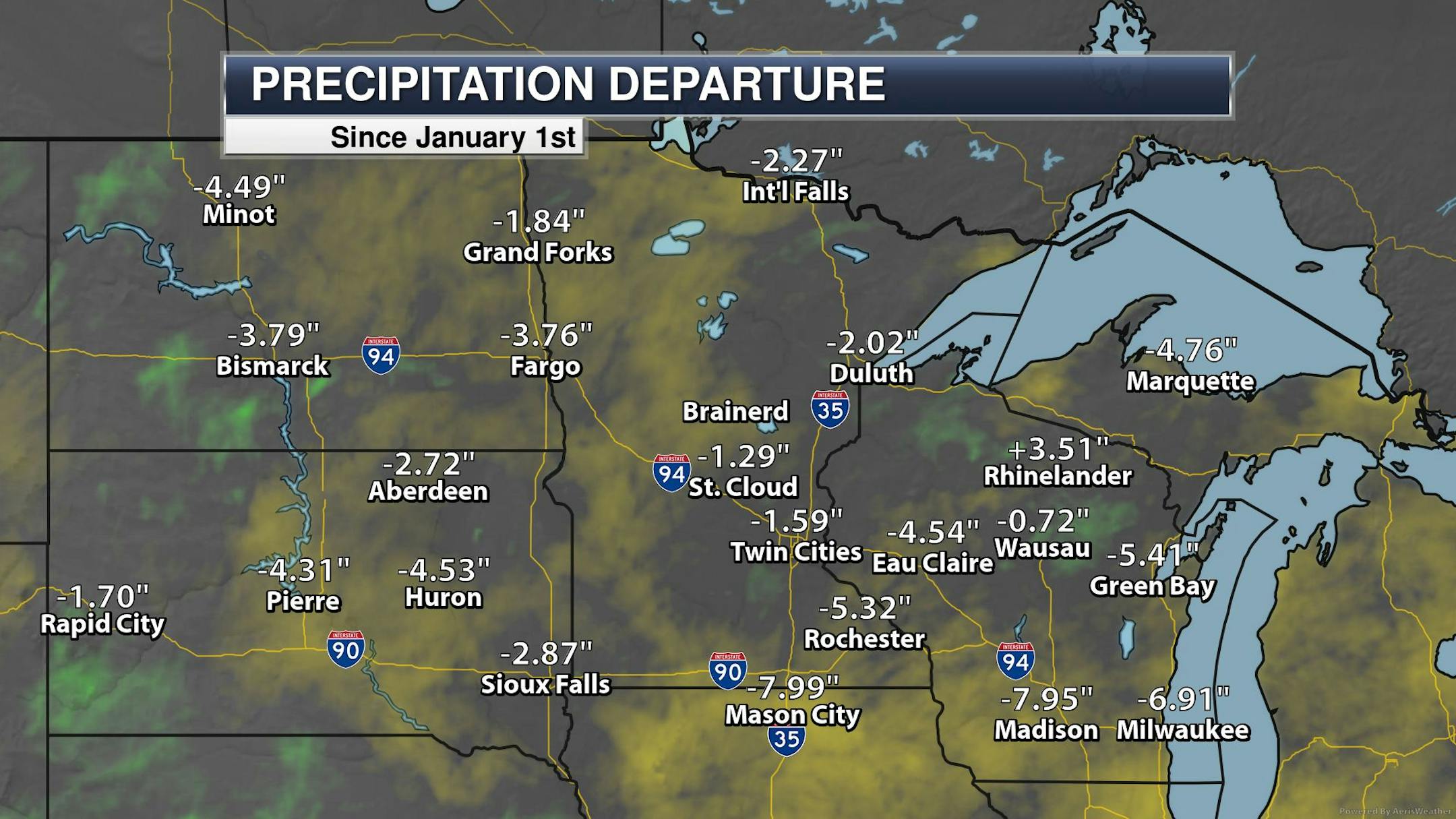
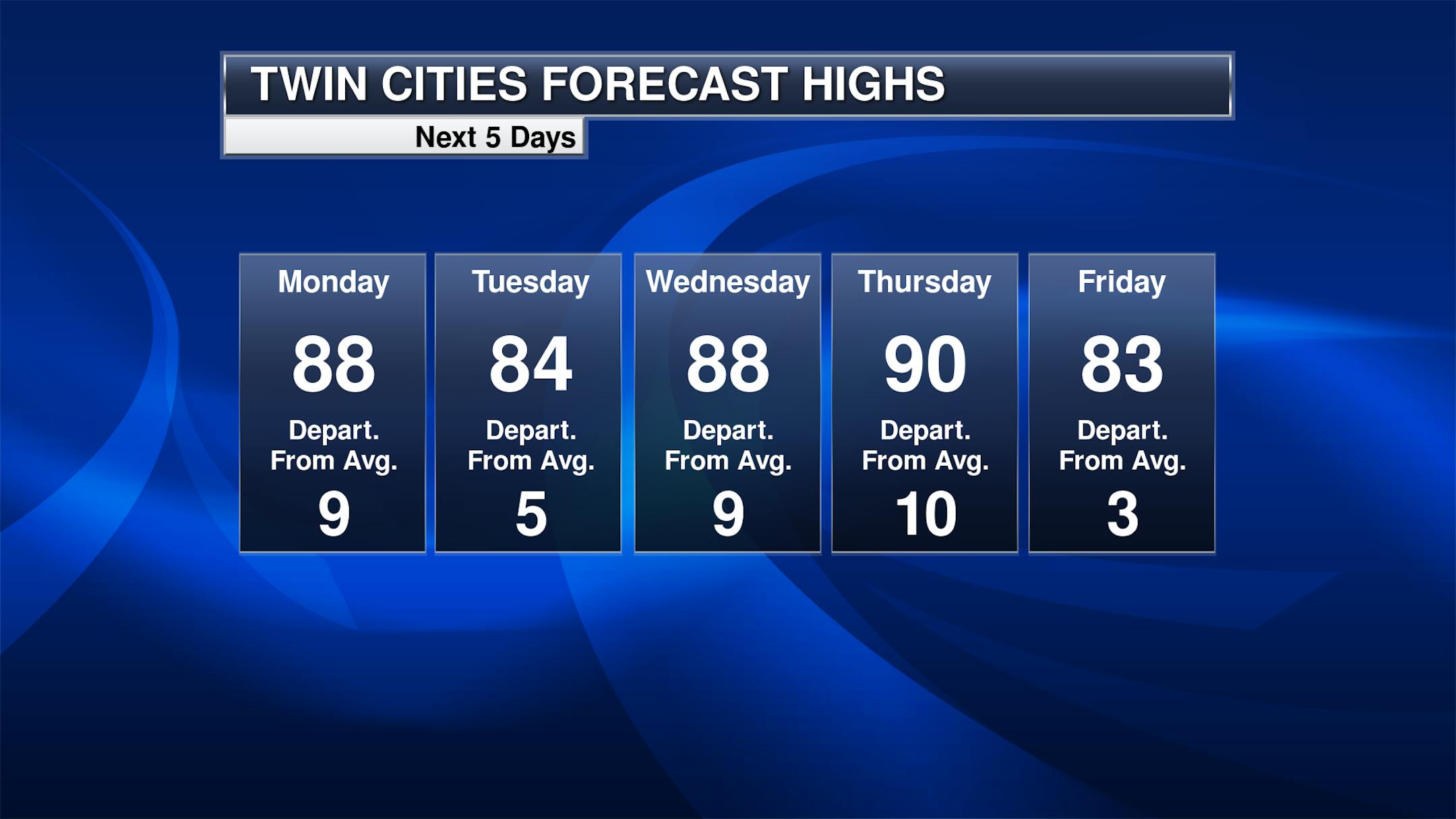
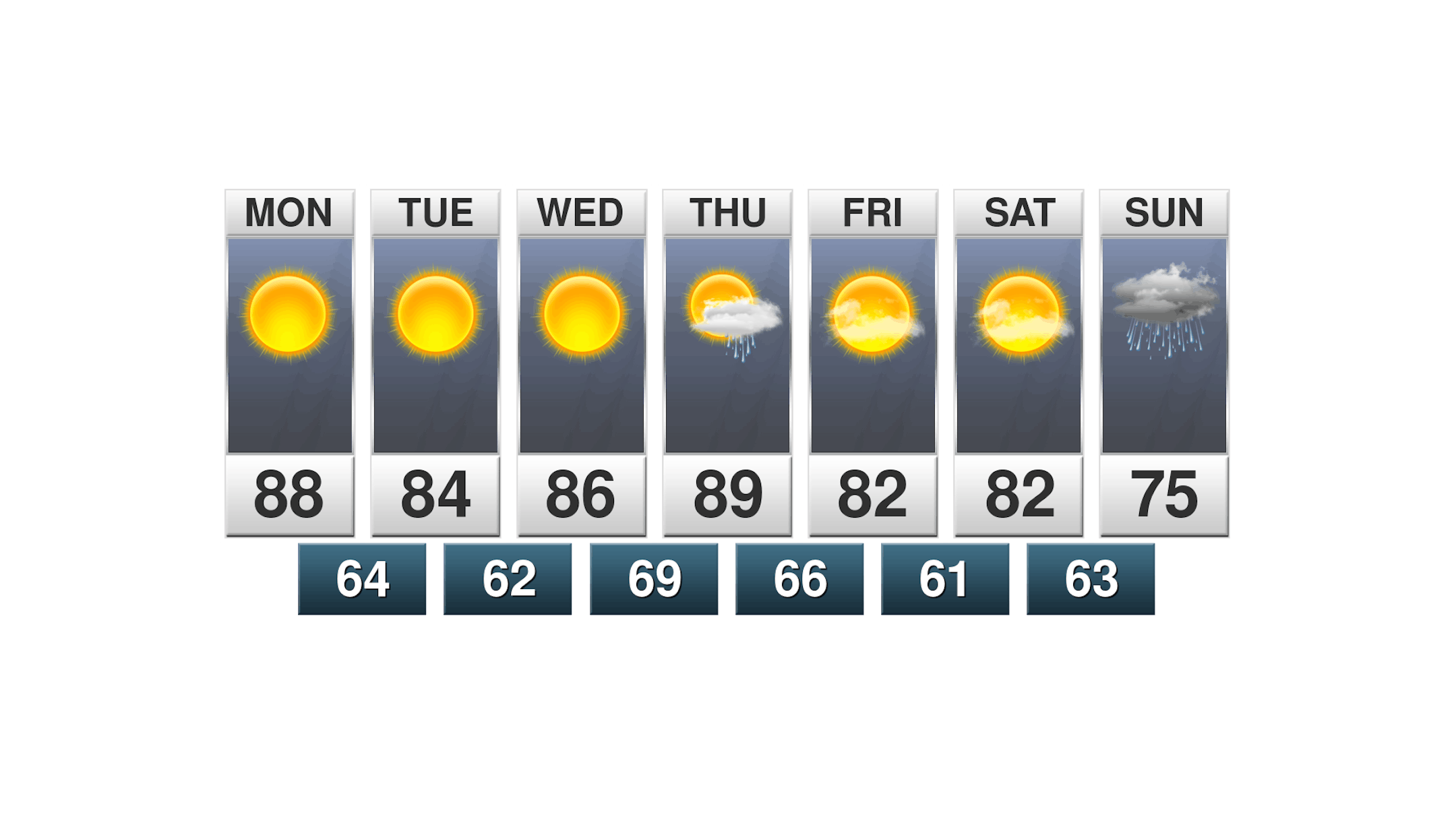
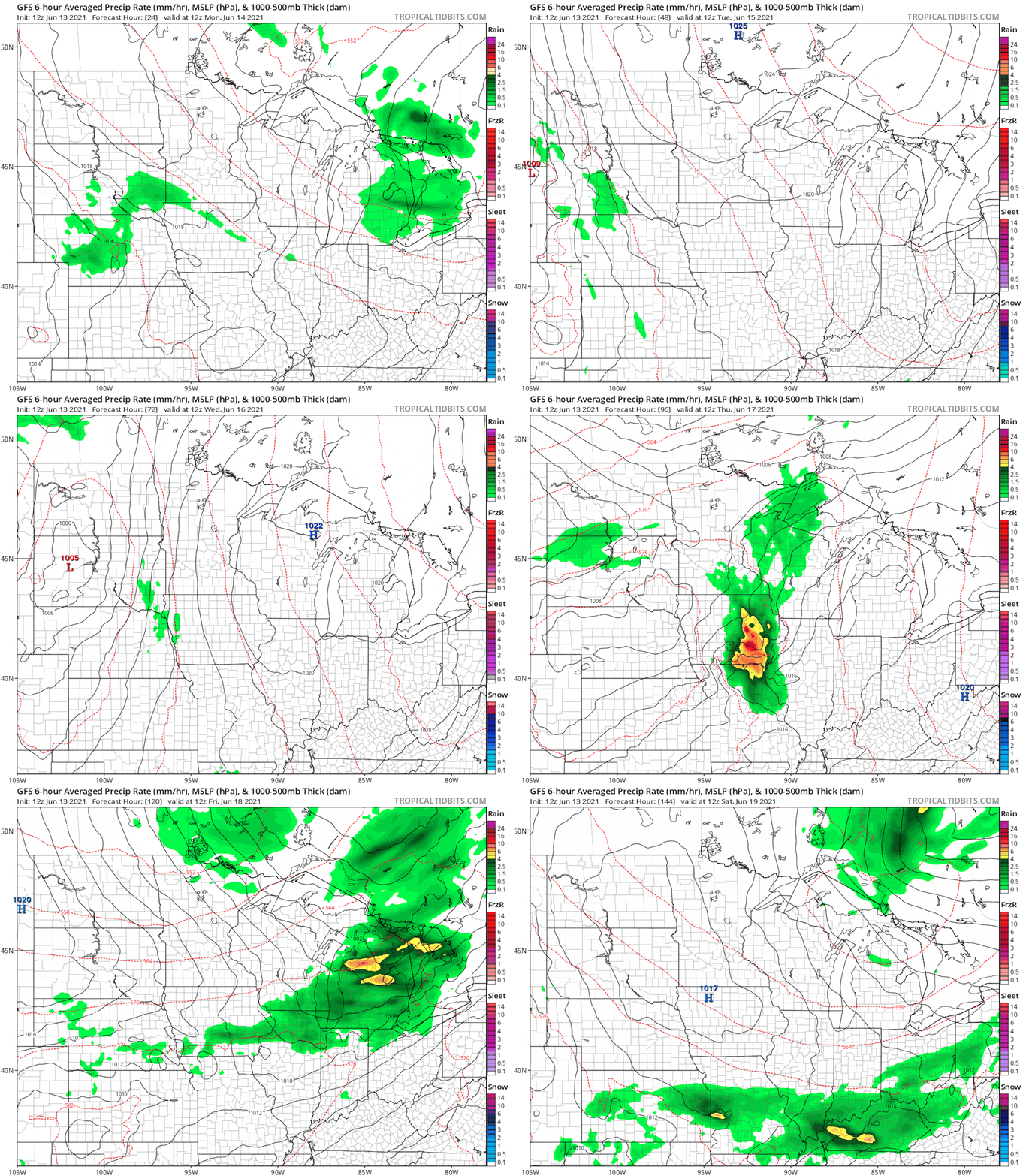
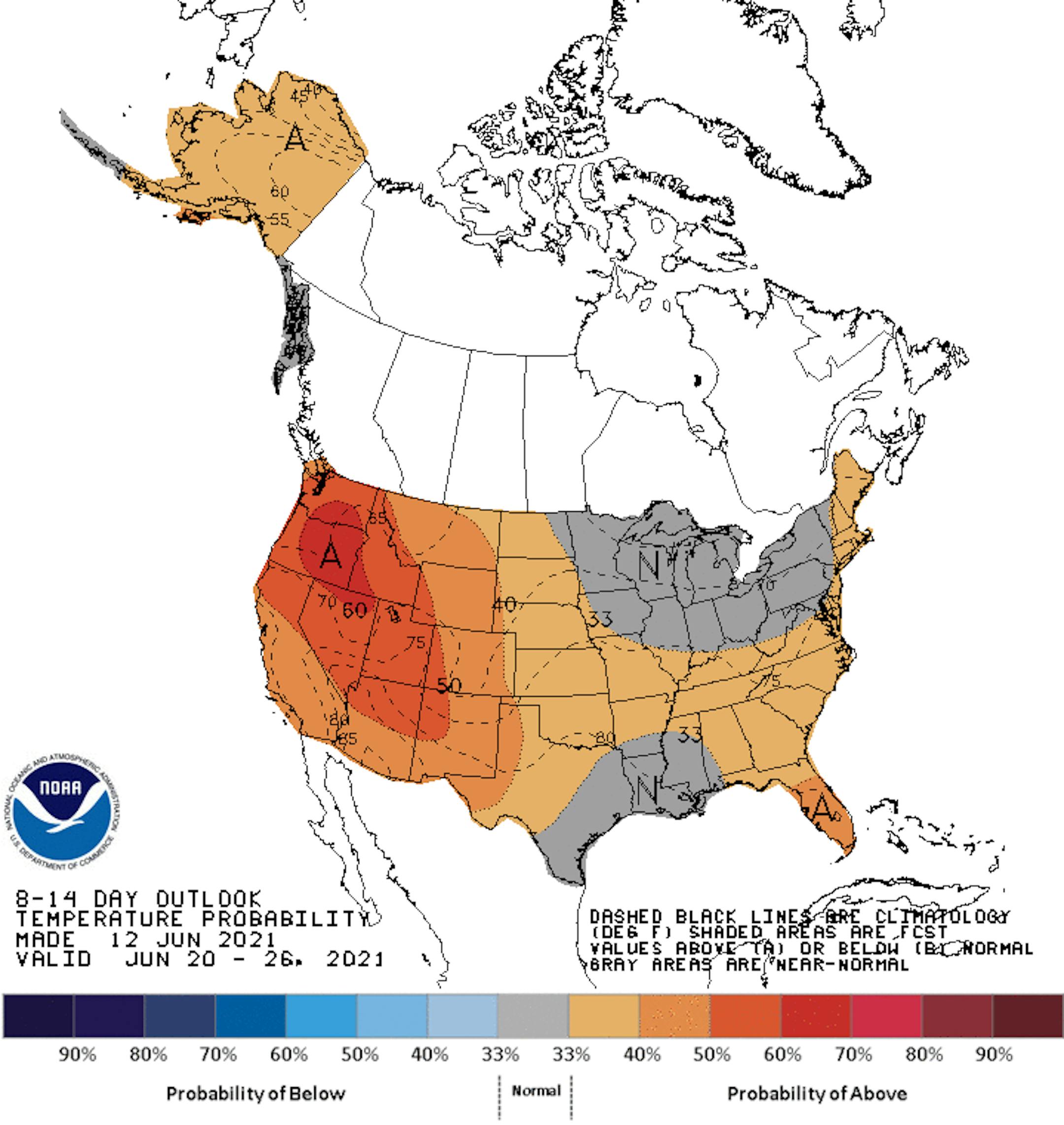
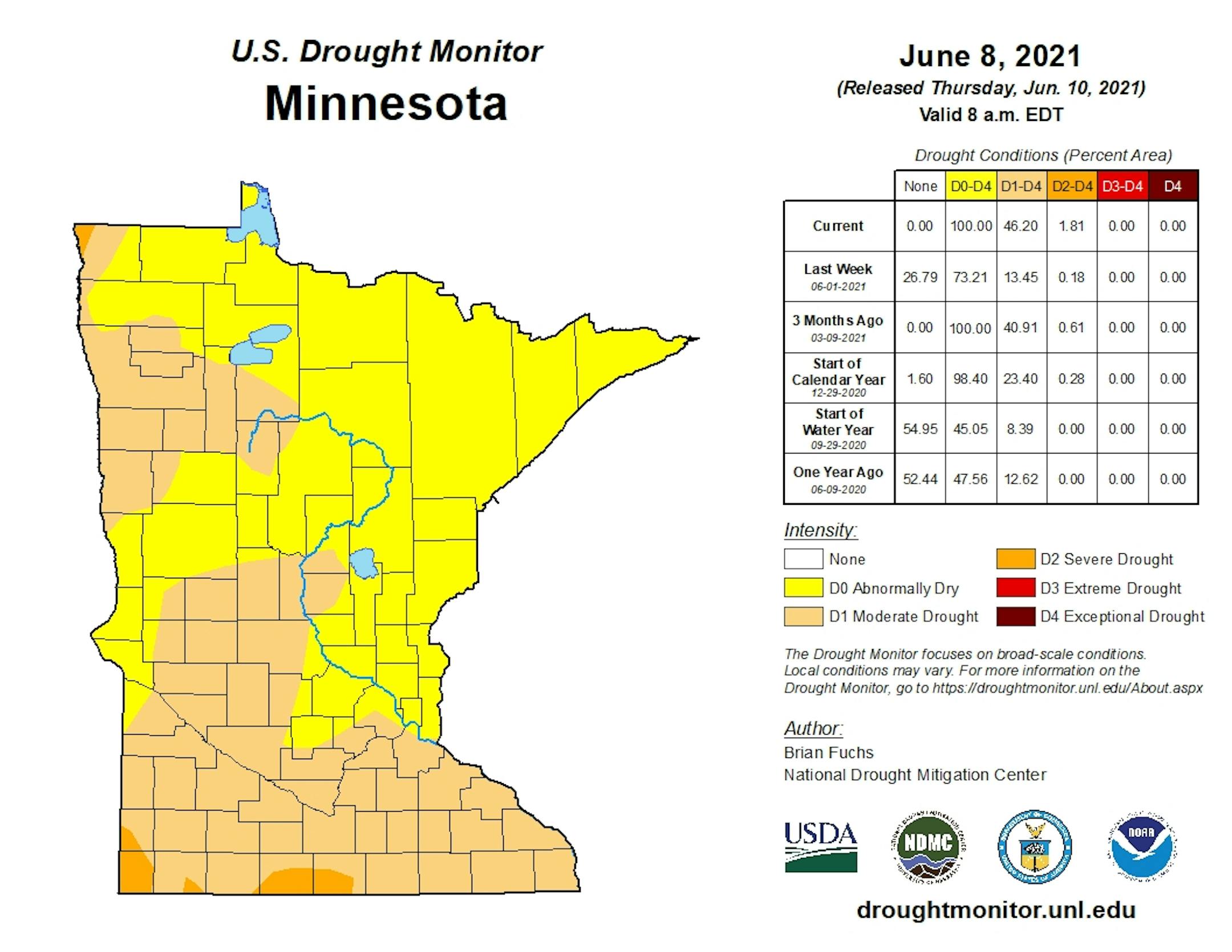
"Little rainfall fell this week, except in some parts of far northern Minnesota where over an inch of rainfall was reported. Gunflint Lake (Cook County) and Orr (St Louis County) reported over 2 inches of rain. The heat this week coupled with the absence of rainfall in most places has accelerated produced drought concerns over many areas of the state. According to the U.S. Drought Monitor portions of 6 Minnesota counties are in severe drought, and 55 counties are designated in moderate drought, with the rest of the state drier than normal, but not yet in drought. Some areas of southern and western Minnesota have received less than 50 percent of normal precipitation for the year so far. Further the outlook models show continued trend for hot and dry through most of the rest of the month. Many lawns are already showing signs of browning, and some tress are under stress as well."
Precipitation Percent of Average So Far This June
"Agriculture impacts: We are early in both the growing season and this drought, so agricultural impacts have been minimal to this point. The main impact messaged by the USDA is that the early June warmth promoted a rapid pace in crop development, though has begun to stress pastures. In both Minnesota and Wisconsin, about 75% of major crops were reported as being in good or excellent condition, with slightly lower percentages for the condition of pastures/rangeland as of June 7th. Hydrologic impacts: Being early on in this dry spell, we have yet to see significant hydrologic impacts. Fire hazards: In Minnesota, all but the counties that border Wisconsin have a fire danger rating from the Minnesota Department of Natural Resources as high or very high, with burn restrictions in place from St. Cloud on north in the state. In Wisconsin, the Wisconsin Department of Natural Resources has all of western Wisconsin within a moderate fire danger with only daytime burning restrictions."