

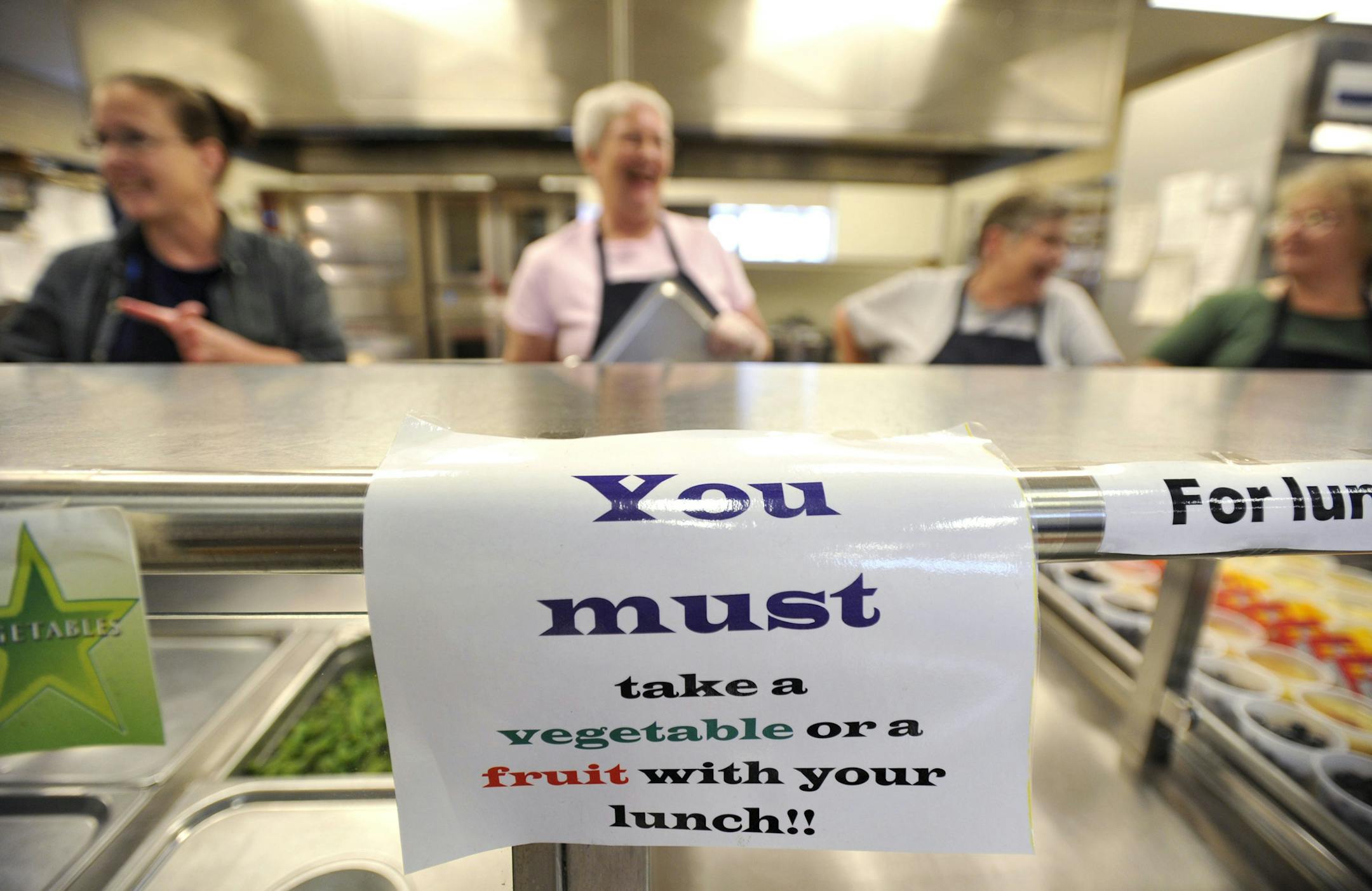
In two short years, a quiet revolution has taken place in Minnesota's school cafeterias: On today's trays, you'll see more lean meat than lasagna, and fresh fruit where there was once french fries. Even pizza now features low-fat cheese and whole-grain crust.
The changes are part of a 2010 federal law that requires school breakfasts and lunches to have more fruits, veggies and whole grains and less sodium, fat and calories, in an effort to reduce childhood obesity. In return, schools get more federal funding for meals.
But not everyone is a fan of the regulations, which opponents say are costly, complicated and result in too much wasted food.House Republicans, notably Minnesota's Rep. John Kline, who heads the education committee, are among the opponents.
The topic has again been in the news, with Kline and Republicans hoping to loosen restrictions on what schools can serve to students. They also want to grant waivers to schools that are losing money on nutrition programs, allowing them a yearlong reprieve from the rules.
Across the south metro, school nutrition directors agree that implementation has been challenging and expensive. But they believe serving healthier fare is ultimately good for students.
Some districts say they are concerned about their ability to implement the latest — and most stringent — round of requirements, related to sodium, snack foods and whole grains. They hope that as the issue heats up, districts may be given more flexibility and time to comply.
"I think it is the right direction to go," said Pam Haupt, nutrition director for the Northfield district. "I don't see [the changes] as unreasonable."
But in Rosemount-Apple Valley-Eagan, making the changes over a short period has been tough, said Wendy Knight, food service coordinator. "The intent is good, it just happened so fast," she said.


