

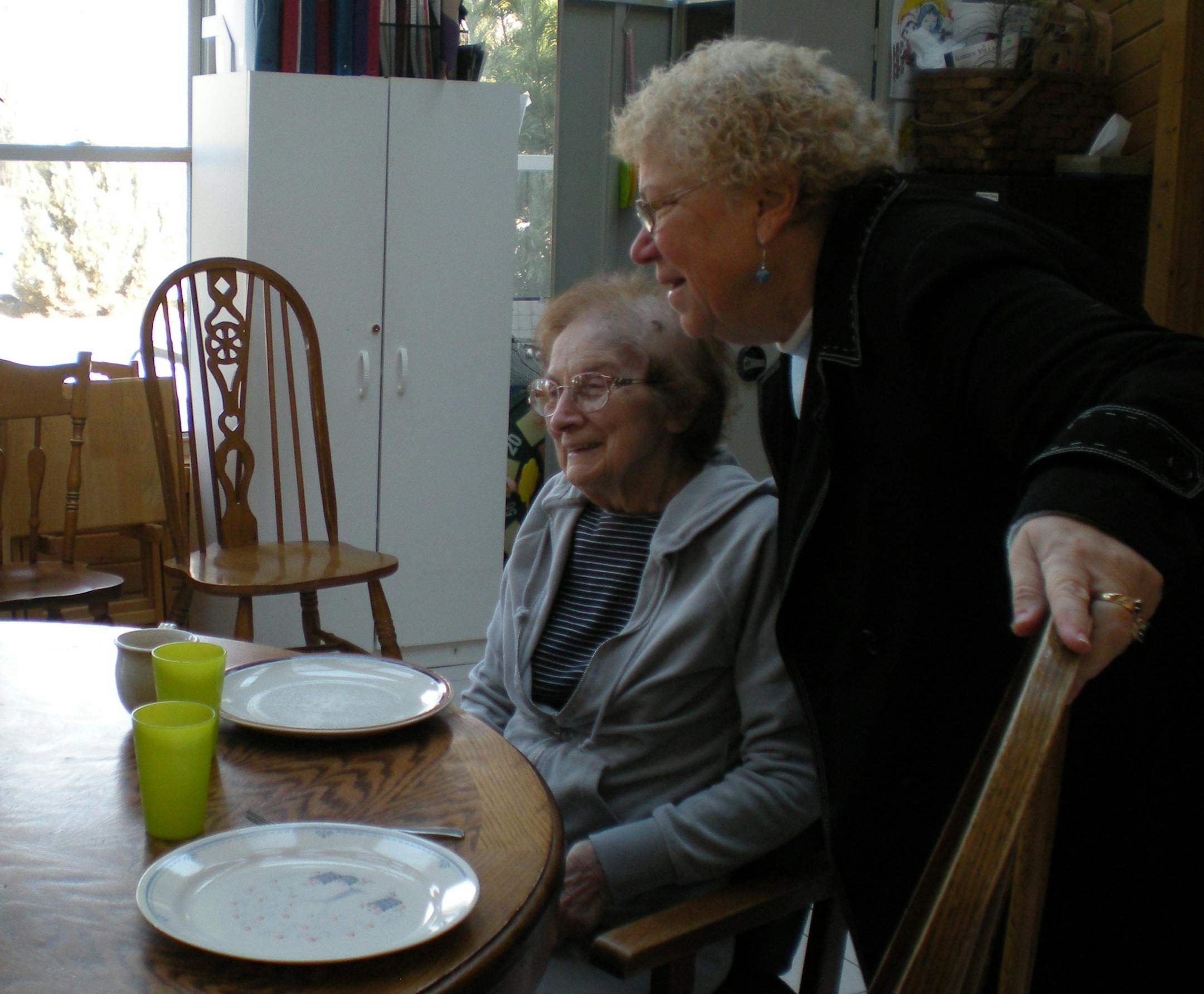
Watching her mother's ordeal prompted Judy Berry, a former sales executive, to launch a 20-year effort to help people with dementia.
Berry's mother had just moved into a nursing home in the late 1980s when one day she wandered around the building without telling anyone. She was labeled a "flight risk" and moved to the facility's memory-care section: a hallway with a few rooms and locked doors on either end. She was in her mid-70s.
"When they told her this was her home now and she wasn't going to be going out, she went berserk," recalled Berry, who is now 72 and lives in Cokato, Minn.
The facility attempted to subdue the older woman with medication. But when not drugged, she turned rebellious and aggressive. Eventually, she was asked to leave the residence. The same thing kept happening elsewhere. Berry's mother occupied 12 facilities in seven years.
Finally, she wound up in a nursing home that kept her so heavily medicated she "sat in a chair for two years and drooled," Berry said. "It just ripped my heart out."
Berry knew her mother's behavior stemmed from fear and loneliness, that she needed "someone to hold her hand." But other facilities Berry saw had neither the budget nor the staff to provide such time-consuming personalized care.
After her mother died in 1996, Berry remained determined to create a different system. With no health care background, she spent several years educating herself, reading, visiting long-term care facilities and talking to staffers.
She knew her plan was a stretch. "But because I had been in so much pain watching what my mother went through, I wanted to at least try."


