

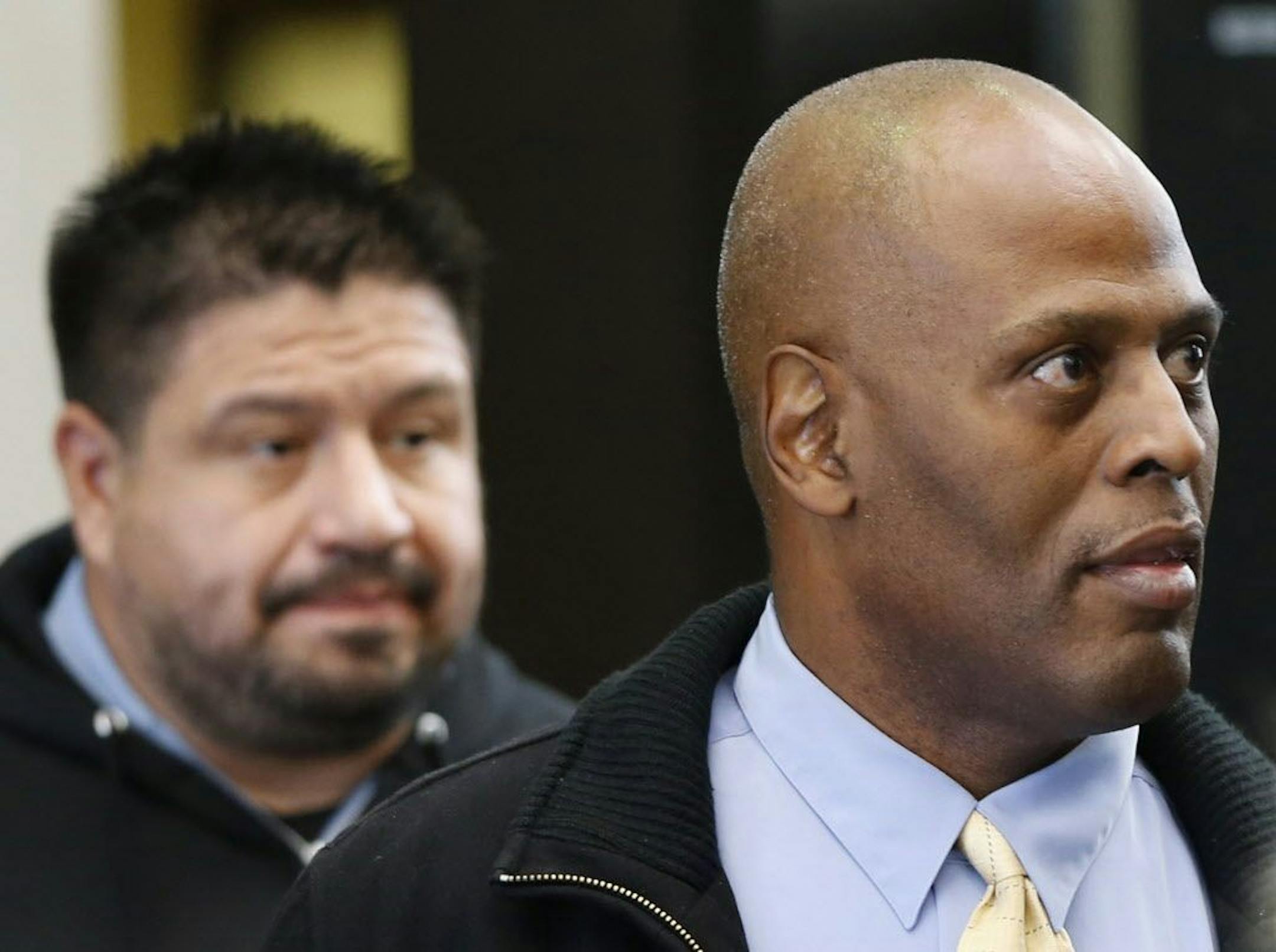
CHICAGO — A judge on Monday acquitted a Chicago police commander accused of shoving his gun down a suspect's throat, outlining what she said were flaws in the state's case and stressing that it shouldn't be conflated with other recent cases of alleged police misconduct that have come to the fore in Chicago and elsewhere.
Cook County Judge Diane Cannon found Cmdr. Glenn Evans not guilty of aggravated battery with a deadly weapon and official misconduct stemming from the 2013 arrest of Rickey Williams, whom Evans believed he had seen holding a gun.
Cannon said she didn't find Williams' story believable, accusing him of changing it repeatedly and of offering to change it if it would help investigators. She also dismissed evidence thought to be among the most damning — Williams' DNA on Evans' gun — suggesting it was collected so sloppily that that it was of "fleeting relevance. But she opened and closed her remarks by cautioning that the case shouldn't be grouped with other recent cases of alleged police misconduct.
"My ruling does not pertain to (police) misconduct," the judge said. "This is just one case."
Evans' case received widespread attention because of his aggressive tactics — condemned by some, praised by others — as the city has struggled to lower its violent crime rate. Former Chicago Police Supt. Garry McCarthy and residents of crime weary neighborhoods said Evans helped clean up a number of areas under his command, while others say he symbolized the department's failure to control its officers. Both Evans and Williams are black.
The bench trial unfolded as protesters rallied against alleged brutality by Chicago police after last month's release of a squad-car video that showed a white officer shooting a black teenager 16 times in October 2014. That officer was charged with first-degree murder just hours before police finally released the video after being ordered to do so by a judge.
Evans showed little reaction upon hearing the verdict. He could have faced up to five years in prison.
Williams' lawyers issued a statement saying they will proceed with a lawsuit and are confident they'll meet the burden of proof needed to show that Evans violated Williams' rights.


