

Opinion editor's note: Star Tribune Opinion publishes a mix of national and local commentaries online and in print each day. To contribute, click here.
•••
Second only to how much the this country accomplished in two decades — no set of colonies had ever liberated itself, nor since Rome had anyone designed a republic that could endure — was how much the founders quarreled among themselves.
There were petty feuds, lifelong feuds, intermittent feuds, inexplicable feuds, deadly feuds. Those who lived and worked closely together quarreled. Those who spent little time in the same room quarreled. Alexander Hamilton and Thomas Jefferson fell out. Jefferson and John Adams fell out. So did Adams and Ben Franklin, Thomas Paine and George Washington, Washington and Jefferson. When John Adams sailed to France to negotiate a treaty of peace at the end of the war, Jefferson wondered with whom he would side. Adams hated both the French and the British. He also hated his colleagues, Franklin and John Jay.
The language could be rich — and brutal. The most peevish, John Adams, naturally proved the most quotable. He found Franklin's life "one continued insult to good manners and decency." He called Hamilton "a bastard brat of a Scotch peddler" — three times, in three different letters, over 10 years. He deemed Washington "illiterate, unlearned, unread for his station." Paine was to his mind "a mongrel between pig and puppy, begotten by a wild boar on a bitch wolf." There was ample reason Jefferson should compare Adams — with whom he ultimately reconciled, a decade before their deaths — to "a poisonous weed."
The collisions tell us a great deal about the personalities at play; a straight-spined, word-spewing John Adams was never going to fare well with a supple, silent Thomas Jefferson. But the collisions also reveal deep-seated, warring strains in the national character.
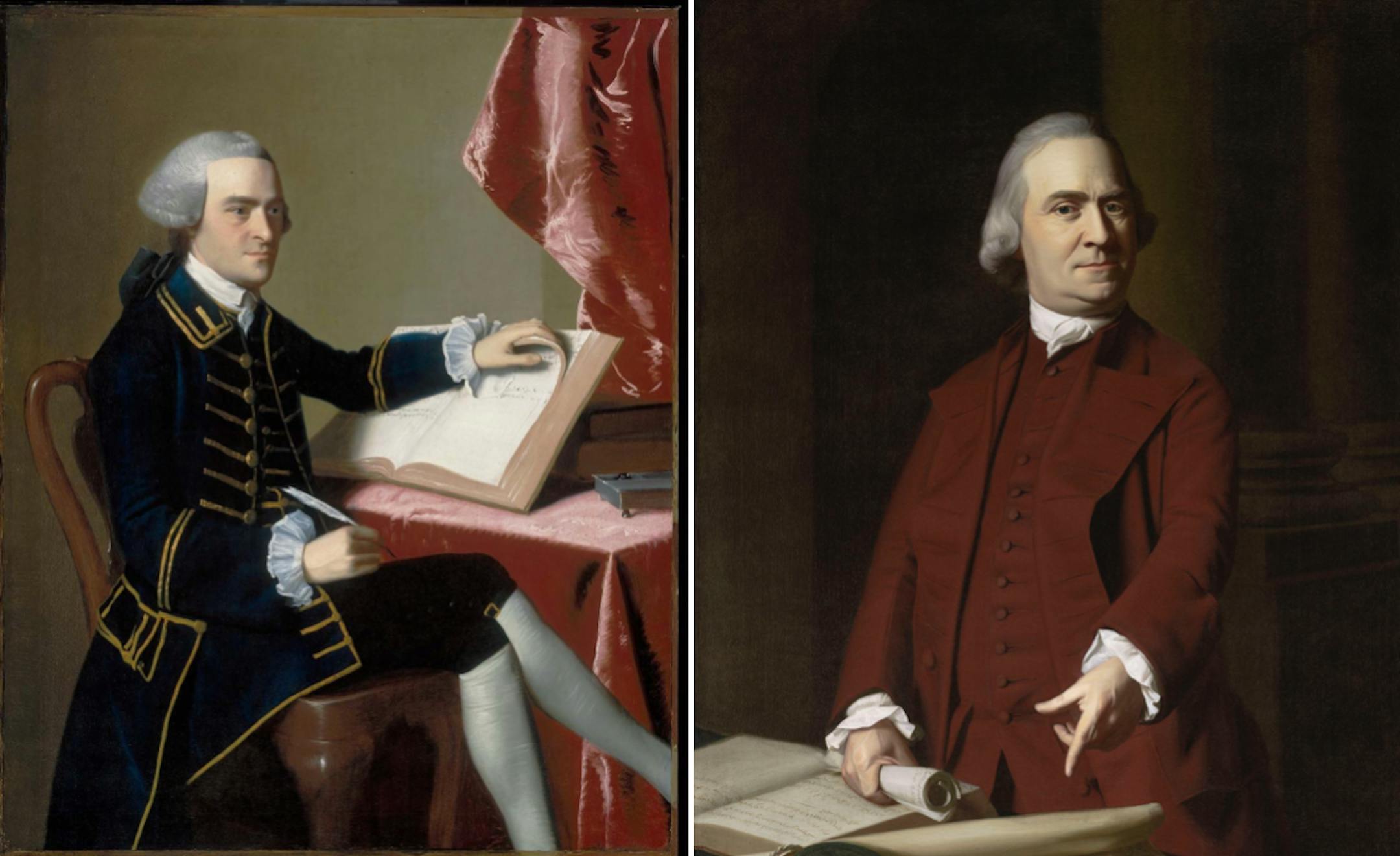
Nowhere was that more apparent than in the ill-starred friendship of John Hancock and Samuel Adams. The two spent the most hair-raising hours of their lives in each other's company. They worked side by side over nearly three decades. But they did so intermittently, as for much of that time they were not on speaking terms.
Colleagues in the Massachusetts House of Representatives, Adams and Hancock colluded to undermine and oust a royal governor. Together they conspired to publish his private letters. Together they patrolled a Boston wharf over several critical evenings in December 1773, when they collaborated in plotting the destruction of East India Company tea. The two most wanted men in Massachusetts shared a Lexington bedroom on the night of April 18, 1775. Together they heard, from Paul Revere, of their imminent arrest. At dawn, as British soldiers and British colonists fired at each other for the first time, Hancock and Adams huddled together, several miles away, in a swamp. Which did not make of them natural companions.


