

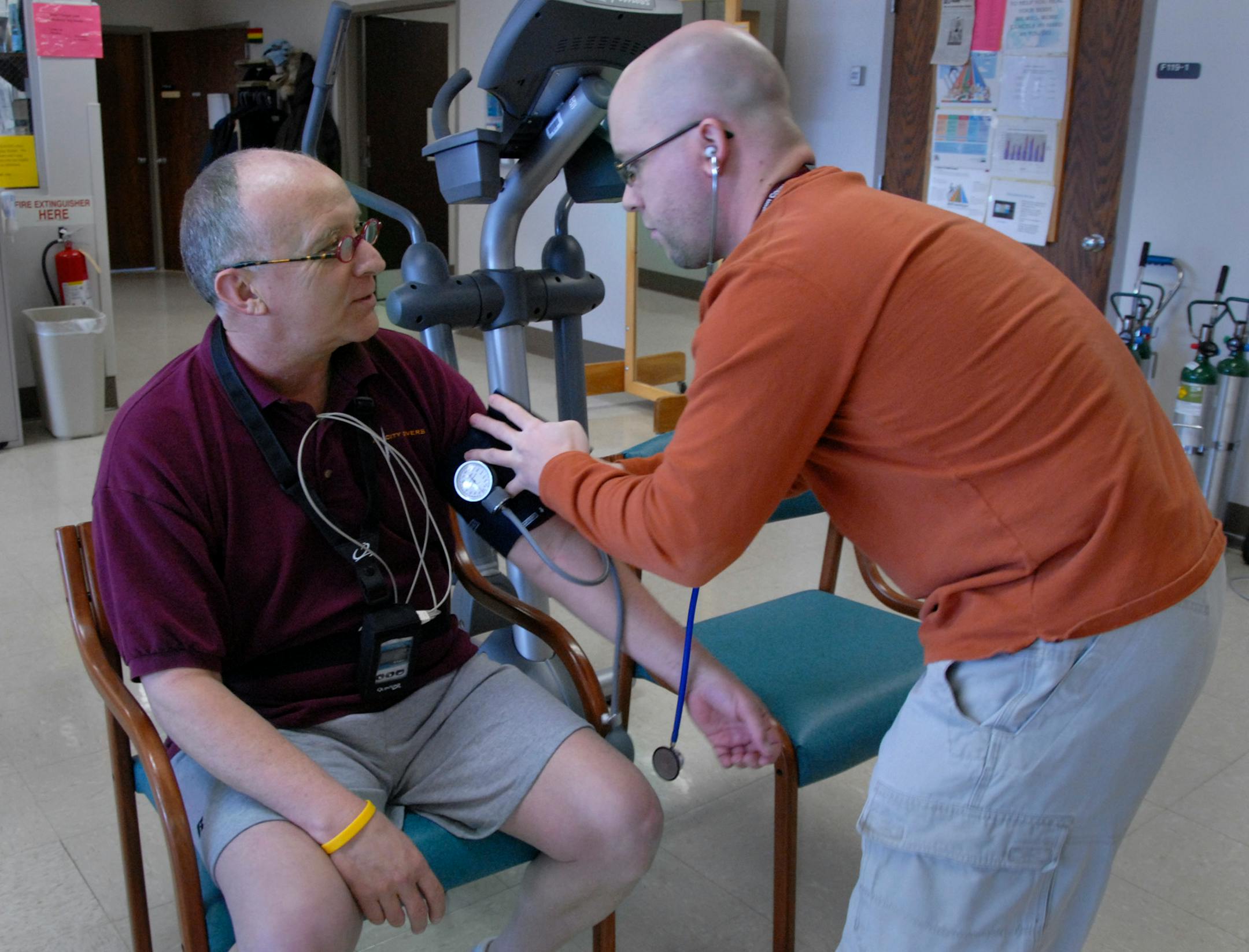
John Dailey was having trouble getting out of bed, even as his dog, Birkley, waited eagerly for her morning walk.
It was 6:50 a.m. on Wednesday, Jan. 16, and the alarm had gone off 20 minutes earlier. Dailey, 54, knew he had to get going. He just felt so tired.
As he sat up, pain struck the middle of his chest and radiated to his sides. A former paramedic, he felt a shiver of recognition. Reflexively, he took a quick mental inventory.
How's my breathing? Is it getting worse when I take a deep breath? No.
For a moment, he felt relieved. Then pain spread to his jaw and left arm. Cold sweat poured down his face. All classic symptoms. But "I'm in full-blown denial," he later admitted. "I'm still figuring it's going to go away."
He made his way to the bathroom in his Minneapolis loft and glanced at the mirror, horrified. His skin was the color of putty, a grotesque ashen gray. "That's when I decided to call the ambulance," he said.
The most extraordinary hour of John Dailey's life was about to begin. He would learn, firsthand, about the quiet medical revolution that has given emergency teams the power to stop a heart attack.
7:05 a.m. Dailey grabbed his cell phone and dialed 911. I think I'm having a heart attack, he heard himself say.


