

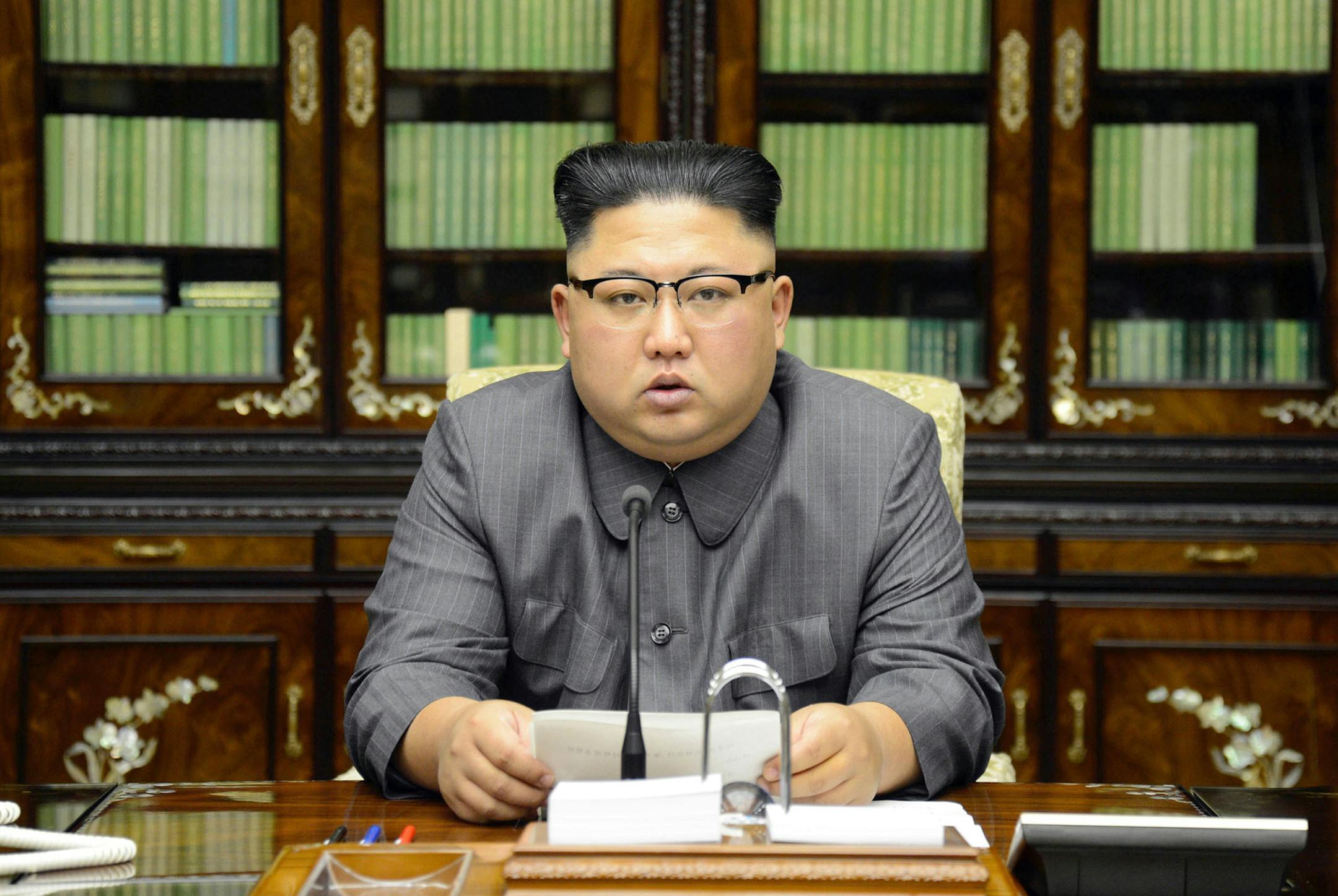
As the world knows, we face the strong possibility of another Korean war, with potentially devastating consequences to the Korean Peninsula, Japan, our outlying territories in the Pacific and perhaps the mainland of the United States. This is the most serious existing threat to world peace, and it is imperative that Pyongyang and Washington find some way to ease the escalating tension and reach a lasting, peaceful agreement.
Over more than 20 years, I have spent many hours in discussions with top North Korean officials and private citizens during visits to Pyongyang and to the countryside. I found Kim Il Sung (their "Great Leader"), Kim Yong Nam, president of the Presidium of the Supreme People's Assembly, and other leaders to be both completely rational and dedicated to the preservation of their regime.
What the officials have always demanded is direct talks with the United States, leading to a permanent peace treaty to replace the still-prevailing 1953 cease-fire that has failed to end the Korean conflict. They want an end to sanctions, a guarantee that there will be no military attack on a peaceful North Korea, and eventual normal relations between their country and the international community.
I have visited with people who were starving. Still today, millions suffer from famine and food insecurity and seem to be completely loyal to their top leader. They are probably the most isolated people on Earth and almost unanimously believe that their greatest threat is from a preemptory military attack by the United States.
The top priority of North Korea's leaders is to preserve their regime and keep it as free as possible from outside control. They are largely immune from influence or pressure from outside. During the time of the current leader, Kim Jong Un, this immunity has also applied to China, whose leaders want to avoid a regime collapse in North Korea or having to contemplate a nuclear-armed Japan or South Korea.
Until now, severe economic sanctions have not prevented North Korea from developing a formidable and dedicated military force, including long-range nuclear missiles, utilizing a surprising level of scientific and technological capability. There is no remaining chance that it will agree to a total denuclearization, as it has seen what happened in a denuclearized Libya and assessed the doubtful status of U.S. adherence to the Iran nuclear agreement.
There have been a number of suggestions for resolving this crisis, including military strikes on North Korea's nuclear facilities, more severe economic punishment, the forging of a protective nuclear agreement between China and North Korea similar to those between the United States and South Korea and Japan, a real enforcement of the Non-Proliferation Treaty by all nuclear weapons states not to expand their arsenals, and ending annual U.S.-South Korean military exercises.
All of these options are intended to dissuade or deter the leadership of a nation with long-range nuclear weapons - and that believes its existence is threatened - from taking steps to defend itself. None of them offer an immediate way to end the present crisis, because the Pyongyang government believes its survival is at stake. Secretary of State Rex Tillerson's statement last week that "we have lines of communications to Pyongyang. We're not in a dark situation" is a good first step to defusing tensions.


