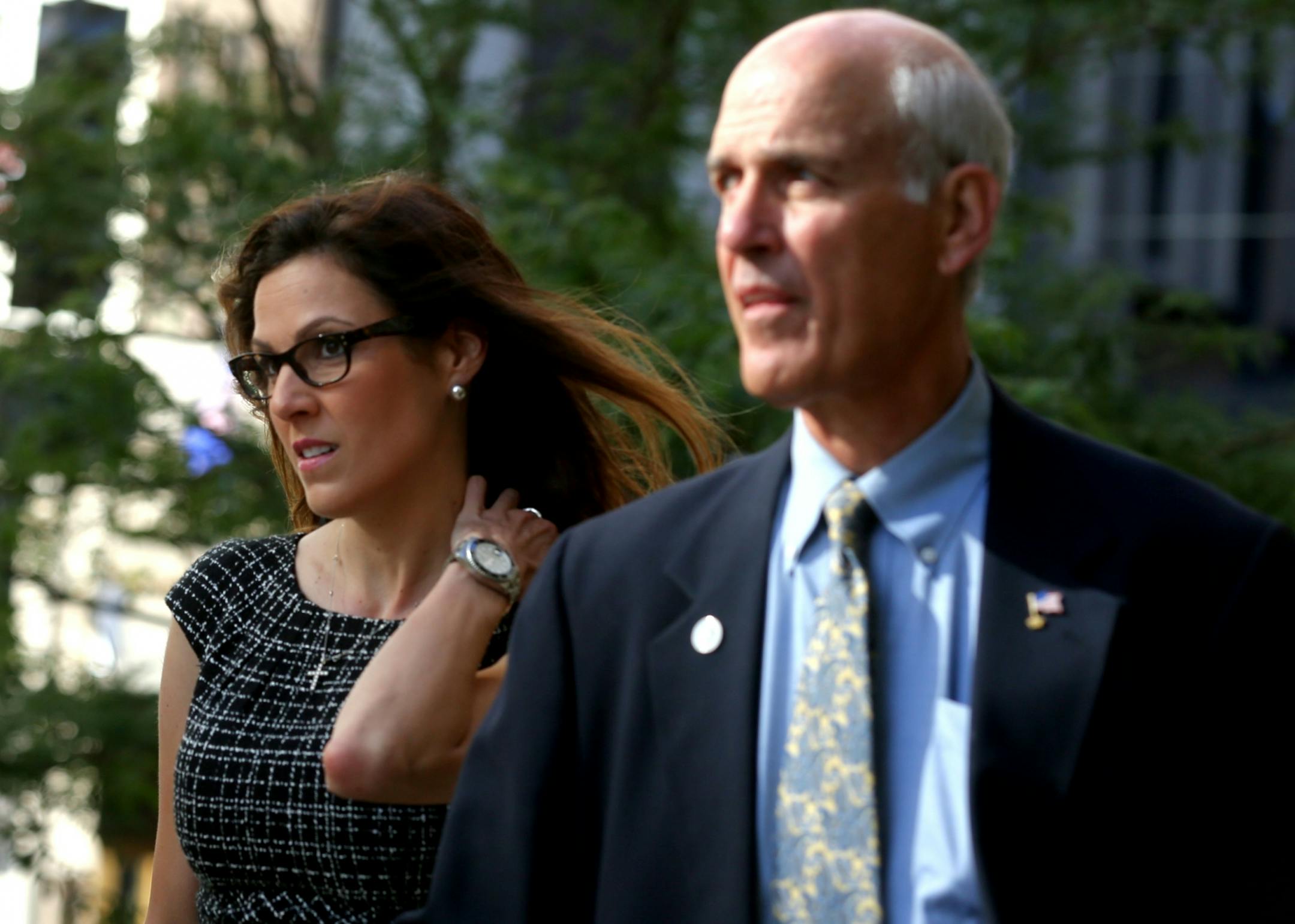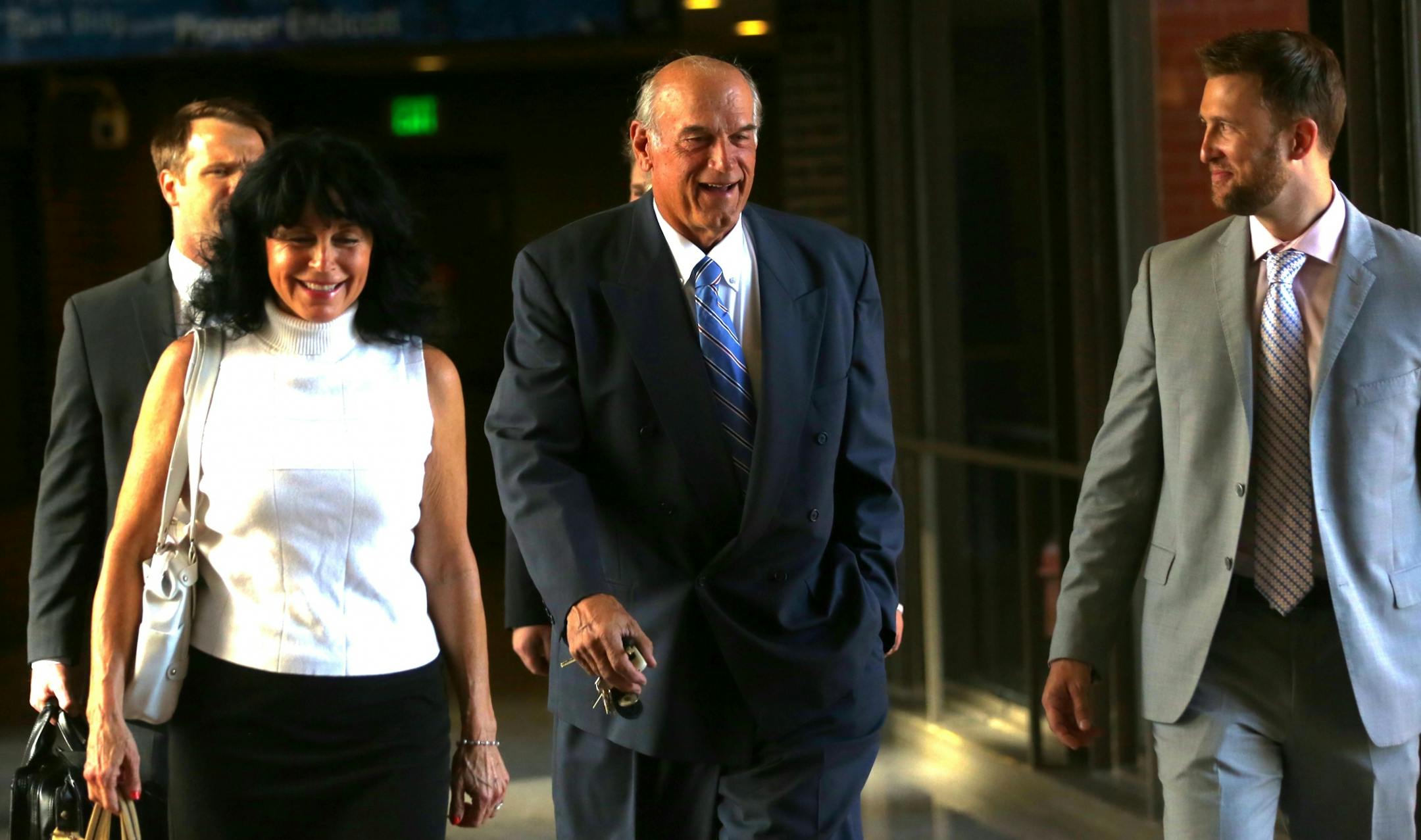
The jury in the Jessie Ventura defamation trial will have to sort out dueling views of reality when they get the case Tuesday in U.S. District Court in St. Paul.
In closing arguments Tuesday morning, a lawyer for the estate of the late Chris Kyle can be expected to argue that testimony from a slew of witnesses, who saw some element of the confrontation, prove that Kyle accurately reported the former governor was punched out at McQ's Irish Pub in Coronado, Calif., in 2006 after making an odious remark at a wake for a Navy SEAL killed in Iraq.
Ventura's attorneys, who have labeled Kyle's account fiction, are likely to argue that those witnesses, many of them loyal to Kyle, saw the events through a haze of alcohol, and some of their descriptions contradict. They place the verbal exchange and fight in various places — the bar's patio, parking lot and sidewalks on either side of the bar.
That Kyle's barroom witnesses outnumbered Ventura's by 11 to three might suggest that the courtroom odds are against Ventura. But Judge Richard Kyle, who is no relation to Chris Kyle, is expected to tell jurors it is not the number of witnesses that should influence their decision, but the credibility of the testimony, a standard court instruction.
Then deliberations will begin in the case, in which Ventura claims that Kyle ruined his reputation in his 2012 bestselling memoir, "American Sniper: The autobiography of the most lethal sniper in U.S. military history."
Kyle was killed in 2013, and Ventura has continued the suit against the estate, and Kyle's widow, Taya, who oversees it.
The 10-member jury should get the case by midday.
True or false?
"The first thing the jurors have to establish is whether what was published in the book is false, because under American law, no matter how harmful something is to someone's reputation, if it's true, it can't be the basis of a libel claim," says Jane Kirtley, professor of media ethics and law at the University of Minnesota.