ATLANTA – With all of the talk these days of liberty and citizenship, of who is a patriot and who is not, the new exhibit at the Atlanta History Center is something to consider.
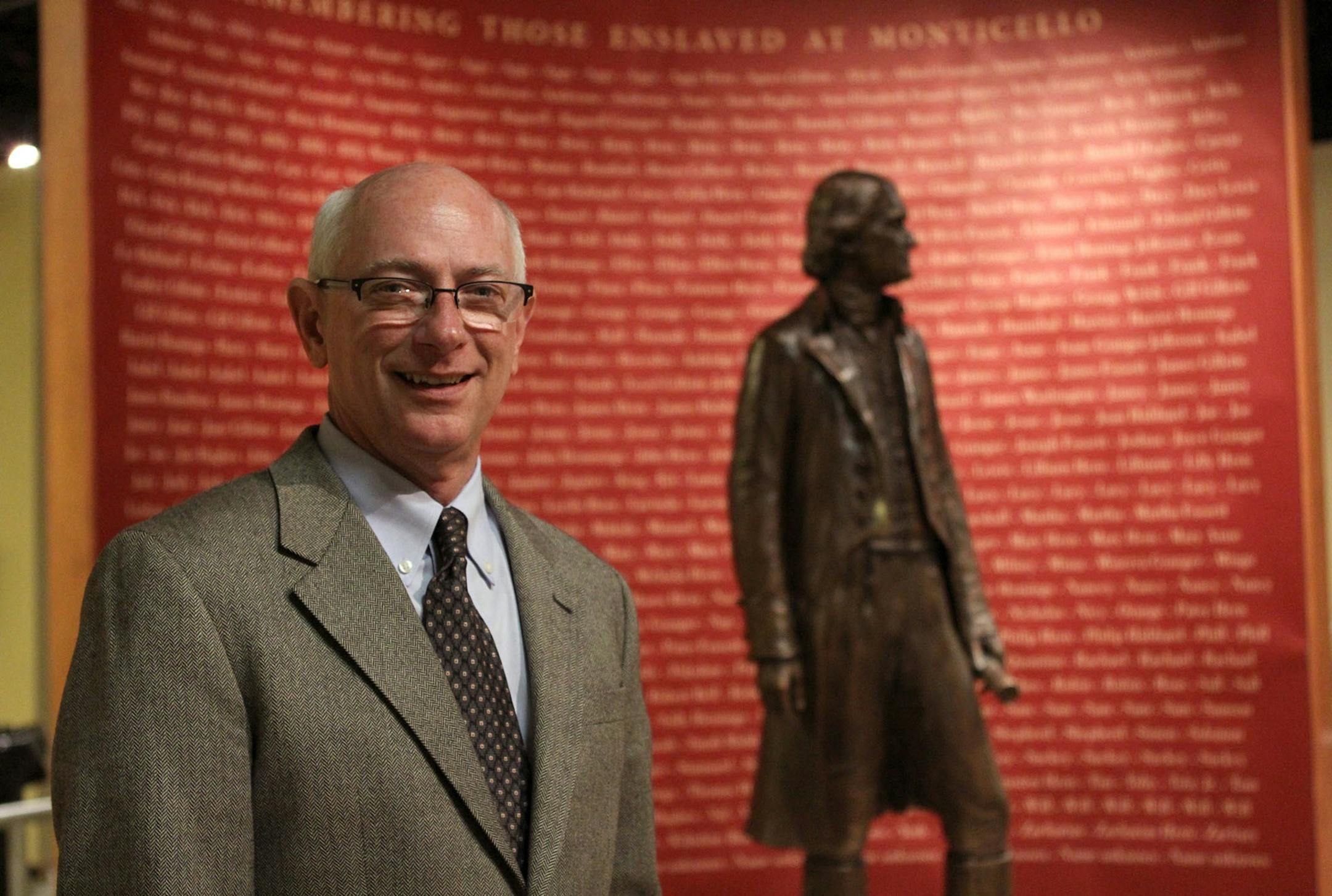
"Slavery at Jefferson's Monticello: How the Word Is Passed Down" opens provocatively. A life-size bronze of the nation's third president commands attention the moment a viewer enters the gallery. Behind the statue, rising above it, is a semicircular wall of names ordered alphabetically, beginning with "Abby" and ending with "Name Unknown."
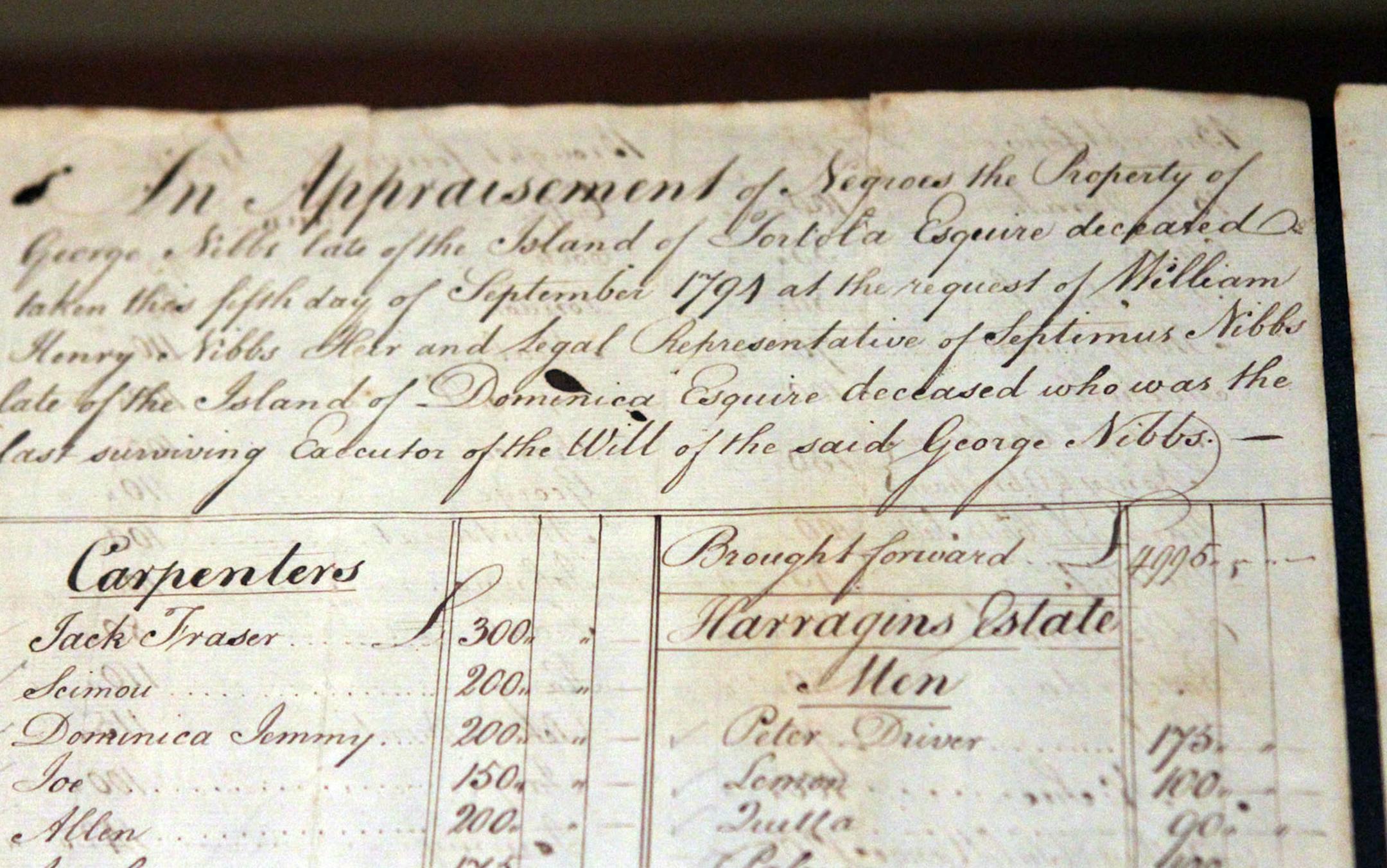
The list of first names, which number more than 600, are those of the slaves Jefferson owned. Depending upon which historian one consults, the author of the Declaration of Independence freed nine or 11 of them. And most of that small group was granted their freedom only through the execution of Jefferson's will.
Contradiction of principles
Here is someone who helped define the notion of American liberty and who thought it should be extended to blacks but did not bestow it on his own human property. Here is a Founding Father and patriot who wrote of his doubts about the acumen and fortitude of black people but who also thought they were part of humanity.
The exhibition was conceived and developed by the Smithsonian National Museum of African American History and Culture and the Thomas Jefferson Foundation at Monticello outside Charlottesville, Va. It had a nine-month run last year at the Smithsonian National Museum of American History, and a portion of the exhibit will become a permanent part of the African American History and Culture Museum when it opens in 2015.
Monticello began incorporating the history of American slavery in the 1950s with the excavation of Mulberry Row, the lane that runs along a side of Jefferson's home. Only a few building cornerstones remain but, from the mid-1700s to the late 1820s, it was the workplace of the slaves who ran the plantation: its nailery; blacksmith, carpentry and barrel-making shops; and other enterprises.
It also was home to those considered to be the most skilled or favored — the cooks, wet nurses, laundresses, valets, and Sally Hemings, the mother of four of Jefferson's children, who also were considered slaves. (The Jefferson Foundation makes clear in the exhibit its belief that DNA and documentary evidence show that the president was the father of Hemings' children.)
The lap desk Jefferson used to draft the Declaration of Independence is on display, so, too, are the lath nails forged in the nailery. A copper sauté pan used to prepare meals for Jefferson and his family and guests rests in a case. There also is a hanging cupboard made out of tulip poplar, Jefferson's favorite tree.