

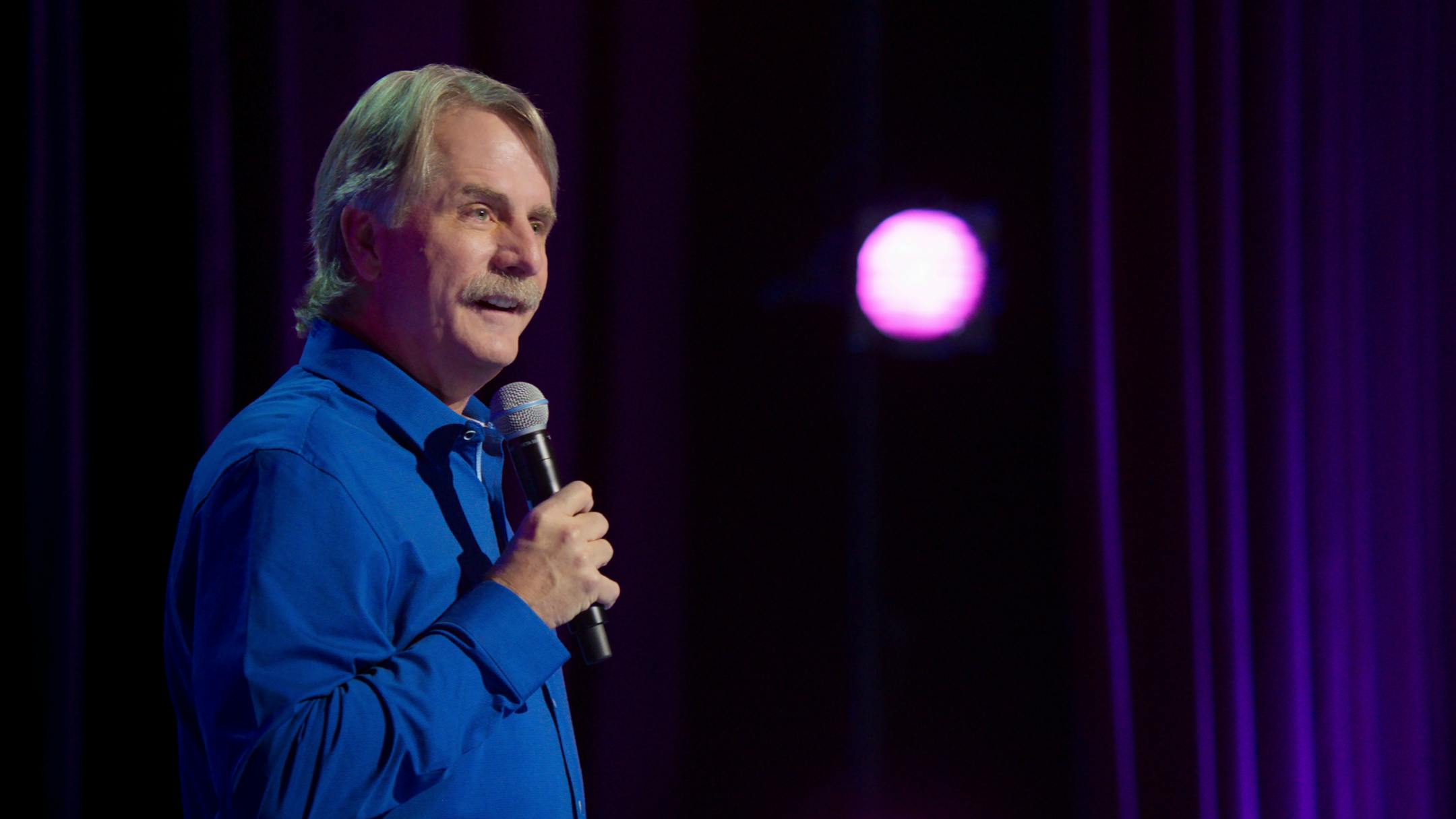
Jeff Foxworthy spent last Tuesday morning sitting in a tree with a bow and arrow.
"That's kind of who I am," said the 64-year-old comic a few hours later, climbing up a hill from his home in west central Georgia so he could get phone reception. "I'm very blessed and thankful to be successful at doing this. But I don't have an aircraft hangar with 50 Porsches in it. I have a farm. That's what I did with my money."
Foxworthy's passion for hunting and choice of living off the grid are just a couple of reasons why he remains one of the country's all-time most successful comics. He will stop at Mystic Lake Casino Showroom in Prior Lake on Thursday.
He took time to chat about his career as he and his wife prepared to host 31 people for a Thanksgiving dinner.
Q: You taped your last TV special, "The Good Old Days," at the Pantages Theatre about a year ago. Why did you pick Minneapolis?
A: In all transparency, I should say that I originally wanted to do it at the Fox Theatre in Atlanta because that's where I'm from. That was my favorite theater as a kid. But it's just too big. Because of all the COVID stuff, we knew we couldn't do it there. There's just a few cities in the country that are known among comics as good comic towns and Minneapolis is one of them. I've always had fun there.
Q: I've heard lots of comics say that about Minneapolis. What makes a good comedy town?
A: That's a great question. I don't know if anyone has ever asked me that. I think it's an attitude, the ability to laugh at yourself. In places like Los Angeles and New York, people can take themselves a little too seriously, especially in this environment. They've lost the ability to laugh at themselves.
Q: In the special, you didn't tell any of the "You know you're a redneck" jokes. Have you officially retired those?
A: I probably haven't done them onstage in 10 years. It's funny, that's what everybody remembers me for. I never thought about it until a buddy of mine pointed out that they were one-liners that were easy to remember. People could tell three of them at the water cooler the next day and get laughs. But even at the height of their popularity, I only did them during the last five minutes of a two-hour show. I'm more of a storyteller. If you look at the body of my work, it's mostly about family and my wife.
Q: Ron White and Kathleen Madigan recently performed here. Like you, they get labeled as blue-collar comics. What does that mean?
A: Let me tell you how I first came up with it. When the Kings of Comedy Tour started, one of their first stops was Atlanta. I was reading about it in the paper and it said the show was for the urban, hip audience. I called up Bill Engvall and said, "Urban and hip? Well, that leaves a lot of people out. We need to do a show for everyone else." He laughed and said, "What do you want to call it?" Without giving it much thought I said, "The Blue Collar Comedy Tour." I'm not singing a sad song because I had a great childhood. When I was a kid, we had a dirt yard. Nothing prepared me to be a little famous and have some money. I'm still kind of that kid.


