

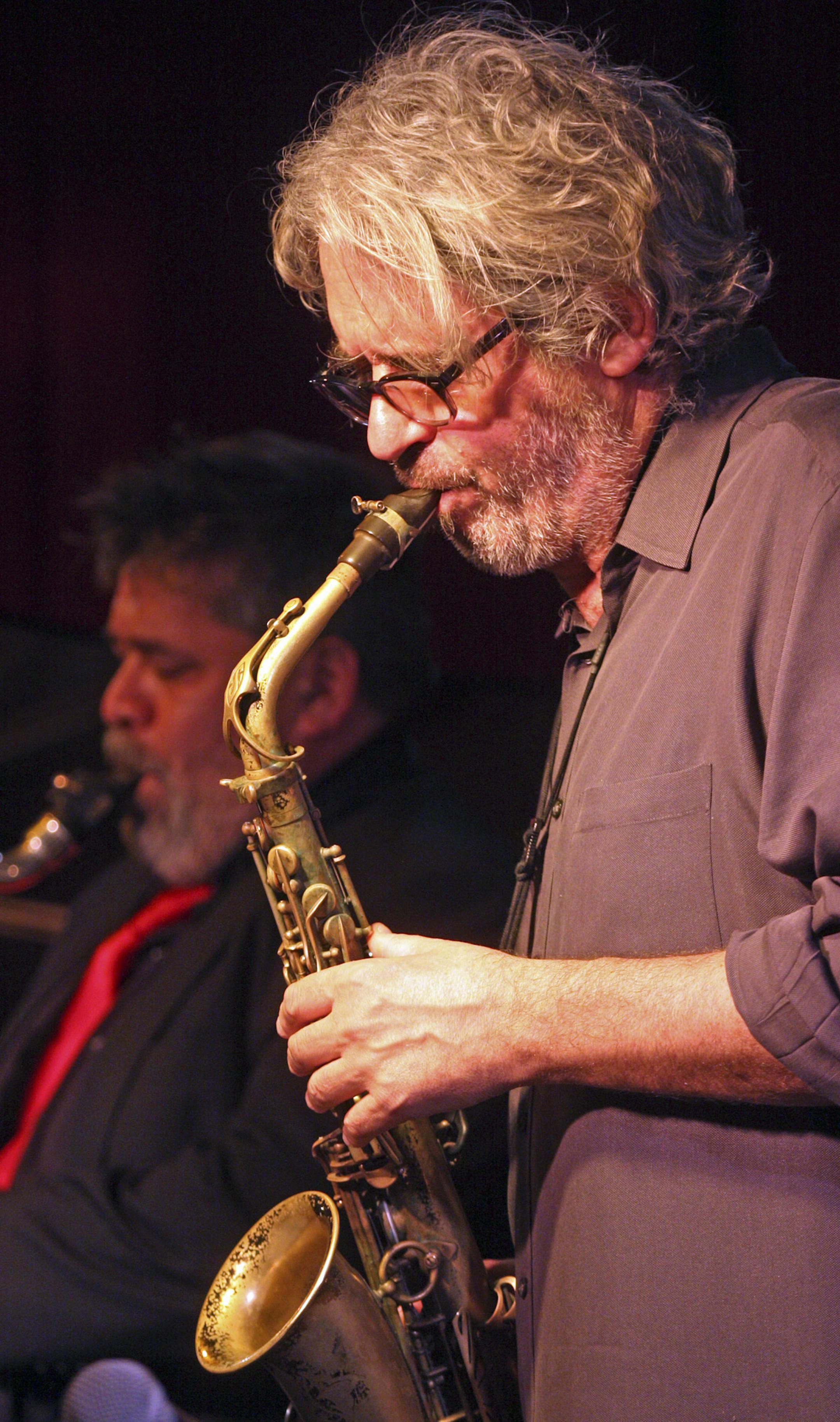
The compositions of Tim Berne frequently unfurl like spaghetti westerns. There is often an epic choreography of menacing tension and violent eruptions, accompanied by the musical equivalent of sagebrush blowing across a dusty landscape, tight close-ups of hard-bitten hombres and interludes of feisty vulnerability and voluptuous beauty.
Indeed, Berne is most comfortable as a jazz renegade. Though the renowned alto saxophonist recently turned 60 and was named No. 7 among "New York City's top 25 essential jazz icons" by Time Out New York, he rejects the notion that he has become an influential elder statesman.
"Everybody thinks I am an adult now," he said sardonically by phone from New York. "I've been doing this for 40 years."
Berne, who will bring his group Snakeoil to Minneapolis' Icehouse on Monday, didn't purchase his first alto until he was in college, and wasn't inspired by jazz until he heard the soulful blues and grit invested in the genre by saxophonist Julius Hemphill.
By age 27, he had moved to New York to study with Hemphill and self-released three albums. By his 30s, he was recording for Columbia Records, a major-label relationship that was destined to fail given the uncompromising, freewheeling tenor of his music. Since then, he has recorded dozens of discs for a variety of labels, but primarily his own imprint, Screwgun.
Against that backdrop, his work with Snakeoil is a bastion of slow-building stability in the Berne canon. The core quartet has been playing together for six years, and has released three albums since 2012 on the prestigious ECM label. His writing for the group has become increasingly elliptical and serpentine, while the interplay is at once more taut and daring.
Dismissing an ECM press release that praised his maturity as a songwriter, he commented, "It isn't that the writing is more mature. It is that thousands are hearing it instead of hundreds. Let's face it, when I was on Columbia, people were impressed mostly because it was on Columbia."
Point taken. In the 1990s Berne helmed another remarkable ensemble, Bloodcount, that released six albums over a three-year period. But all those discs were live recordings, without the pristine acoustics for which ECM is renowned.

