Ivana Trump was best known for her more-is-more approach to life. She and her most famous ex-husband had their differences over the years, but on that front they were united.
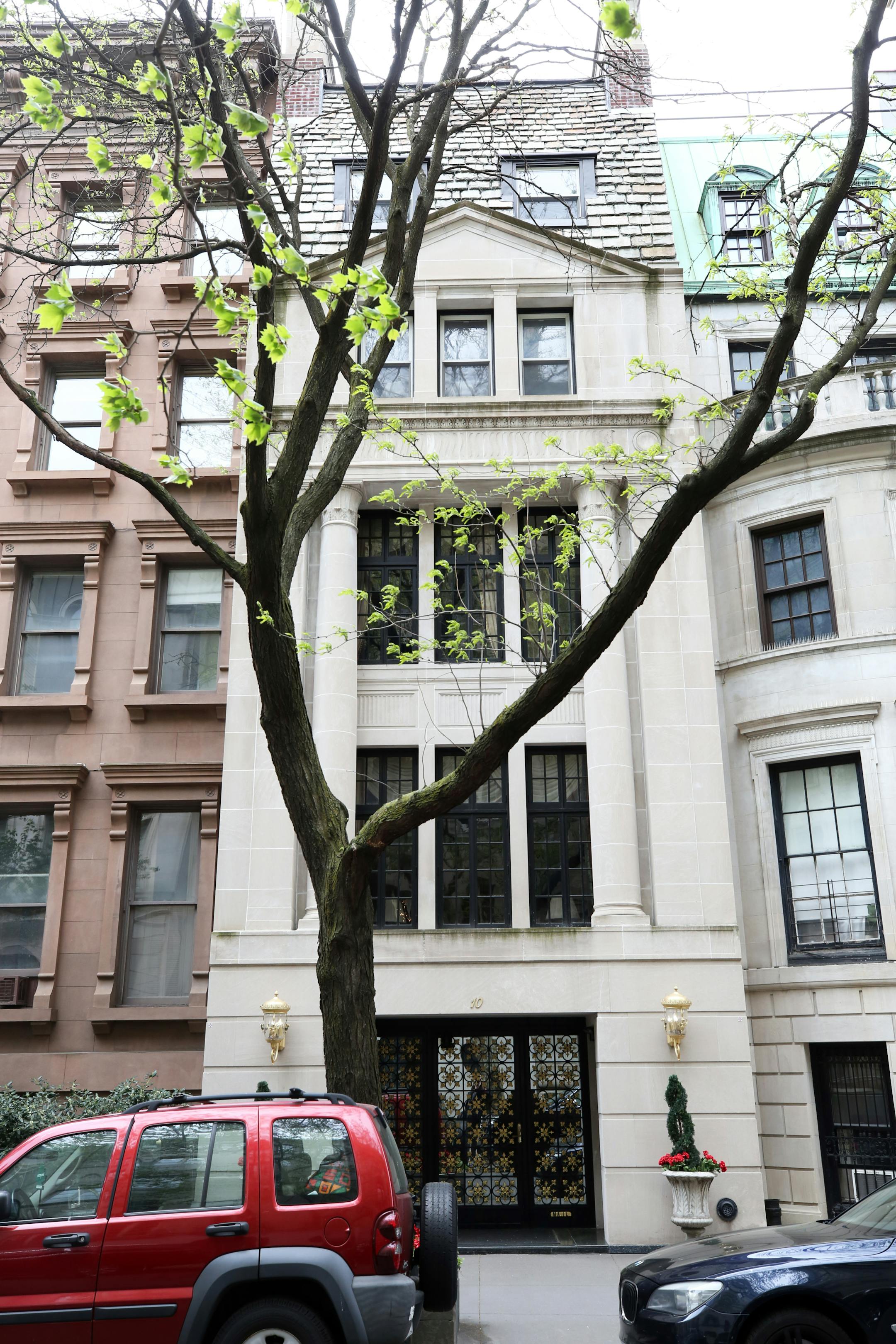
Dresses were covered in crystals, furs were fashioned in nearly every color of the rainbow, and her bouffant ascended high enough to grace the ceilings of many New York rooms — but not those in her Upper East Side home, a 20-foot-wide, 8,725-square-foot, five-story mansion. The townhouse, which she turned into her very own rococo paradise, is on the market for $26.5 million. She died there after falling down the stairs last year.
The house is less than a block from Central Park and became — according to Nikki Haskell, a close friend since the late 1970s — a five-bedroom, five-bathroom metaphor in limestone for Ivana Trump's refusal to shrink in size or stature after the 1990 implosion of her marriage to Donald Trump. His older children were raised there, and the proceeds from the house will be divided among them when it sells.
Yet, sixmonths after being listed with Douglas Elliman, the house is still available.
Is it simply another indication that the market has retreated since interest rates soared and stock market portfolios shrank? Is it an extension of the fact that Trump-branded properties in this true-blue town have traded at a discount since 2015, when Ivana Trump's ex-husband launched the divisive political campaign that took him to the White House? Or is the problem that the house's anachronistic aesthetic is the polar opposite of the minimalist modernism that is standard in high-end homes today?
Ivana Trump purchased her home on E. 64th Street between Madison and Fifth avenues in 1992, when she was finalizing the terms of her divorce from The Donald, as he was then known.
The seller was Francois de Menil, who purchased it in 1979 for $1 million but never moved in. After that, it became "a dentist's office with lots of small rooms," Ivana Trump later said.
Dennis Basso, the designer of Ivana Trump's many minks, said in an interview that he thought it looked more like an embassy than a home. Haskell hated the stairs.