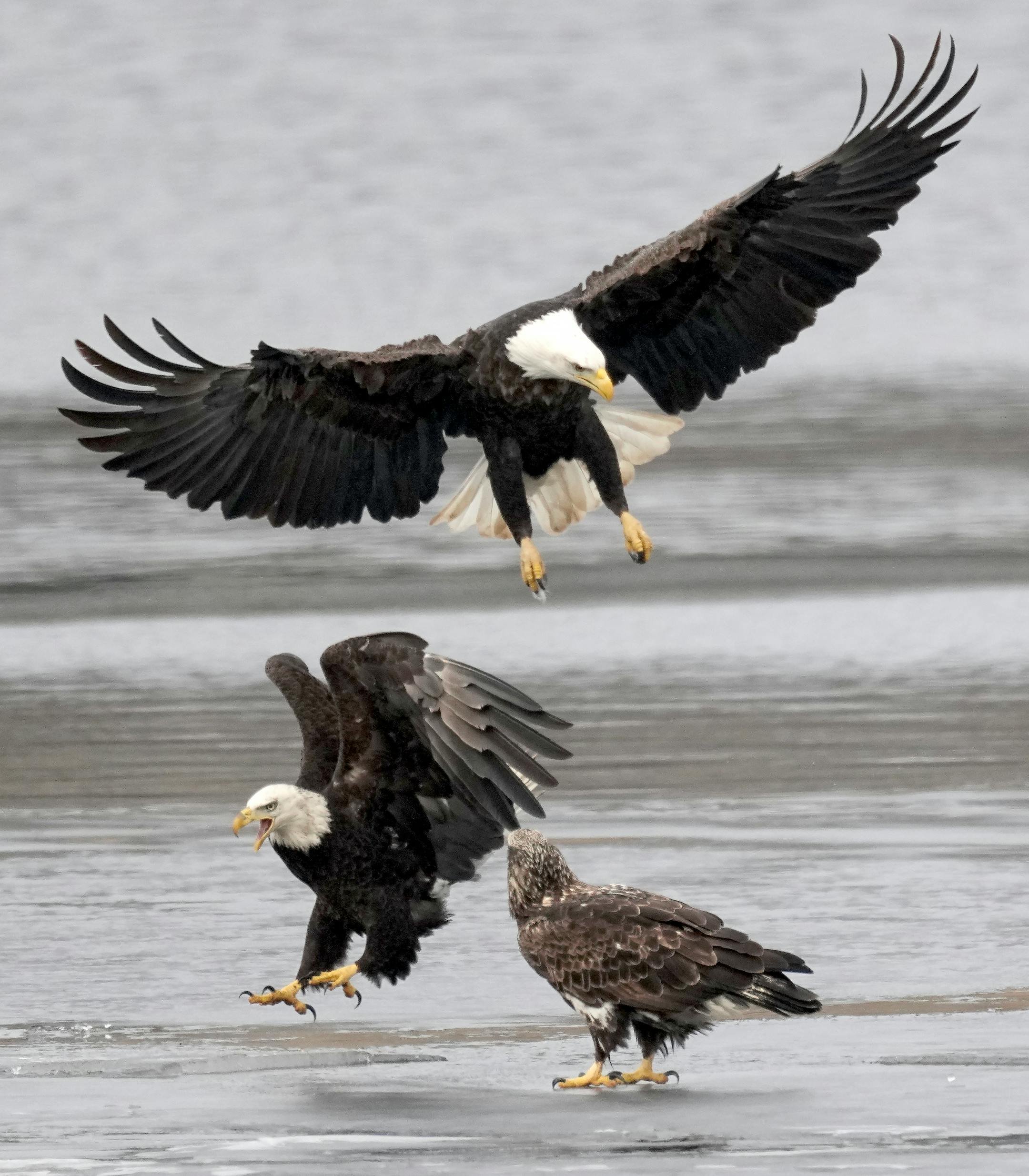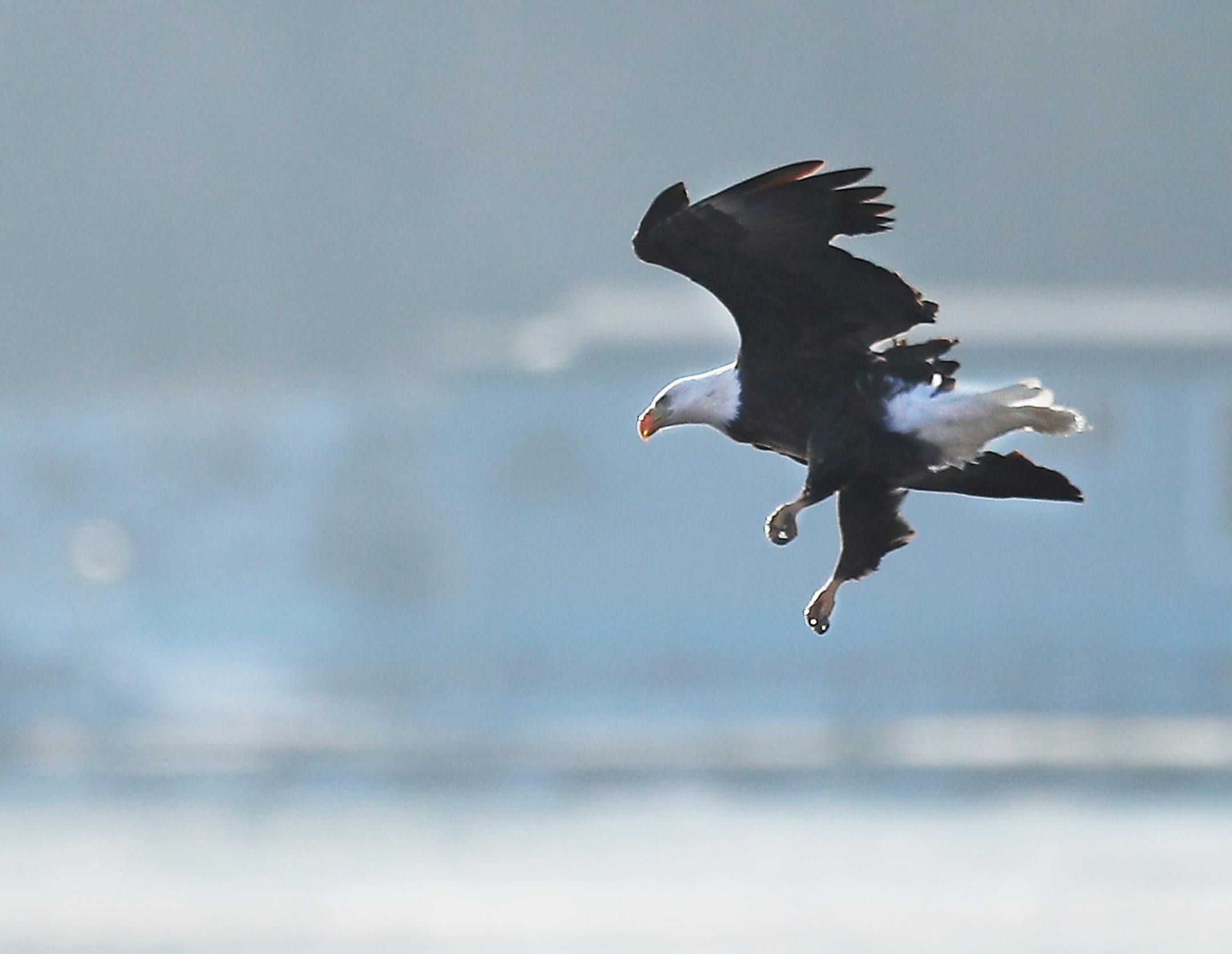
Many people might go their entire lives without seeing a bald eagle, our majestic American emblem, in the wild.
But if you live within driving distance of the Upper Mississippi River, that’s not a problem — especially this time of year. Each winter, the Upper Mississippi plays host to hundreds of bald eagles that are migrating to and from their breeding grounds. They join the so-called “resident eagles” that always live along the river to create an impressive sight, particularly at the end of February and beginning of March: Some viewers have reported seeing as many as 30 in one place.
Staff at the Upper Mississippi River National Wildlife and Fish Refuge, which spans the river floodplain from Wabasha, Minn., to Rock Island, Ill., say a combination of habitat restoration projects and the banning of the pesticide DDT are allowing eagles to flourish. This year is no exception.
”They’re exploding. They’re everywhere. There are so many this year,” said Hallie Schulz, visitor services manager for the refuge.
Why do bald eagles like the Upper Mississippi?
An abundant food source is the driving factor for the location of any species, Schulz said. In this case, the river delivers. The bald eagles get their pick of fresh fish and sometimes also feed on small ducks and other creatures.
The Mississippi’s floodplain forests provide places for them to perch and nest.
The eagles also like the Black River, which meets the Mississippi near La Crosse, Wis., because it’s not as wide and they can keep a closer eye on their possible meal from the trees, Schulz said.
Of course, it’s not just eagles that use the river. More than 325 bird species traverse the Mississippi Flyway during migration each year, according to Audubon.