

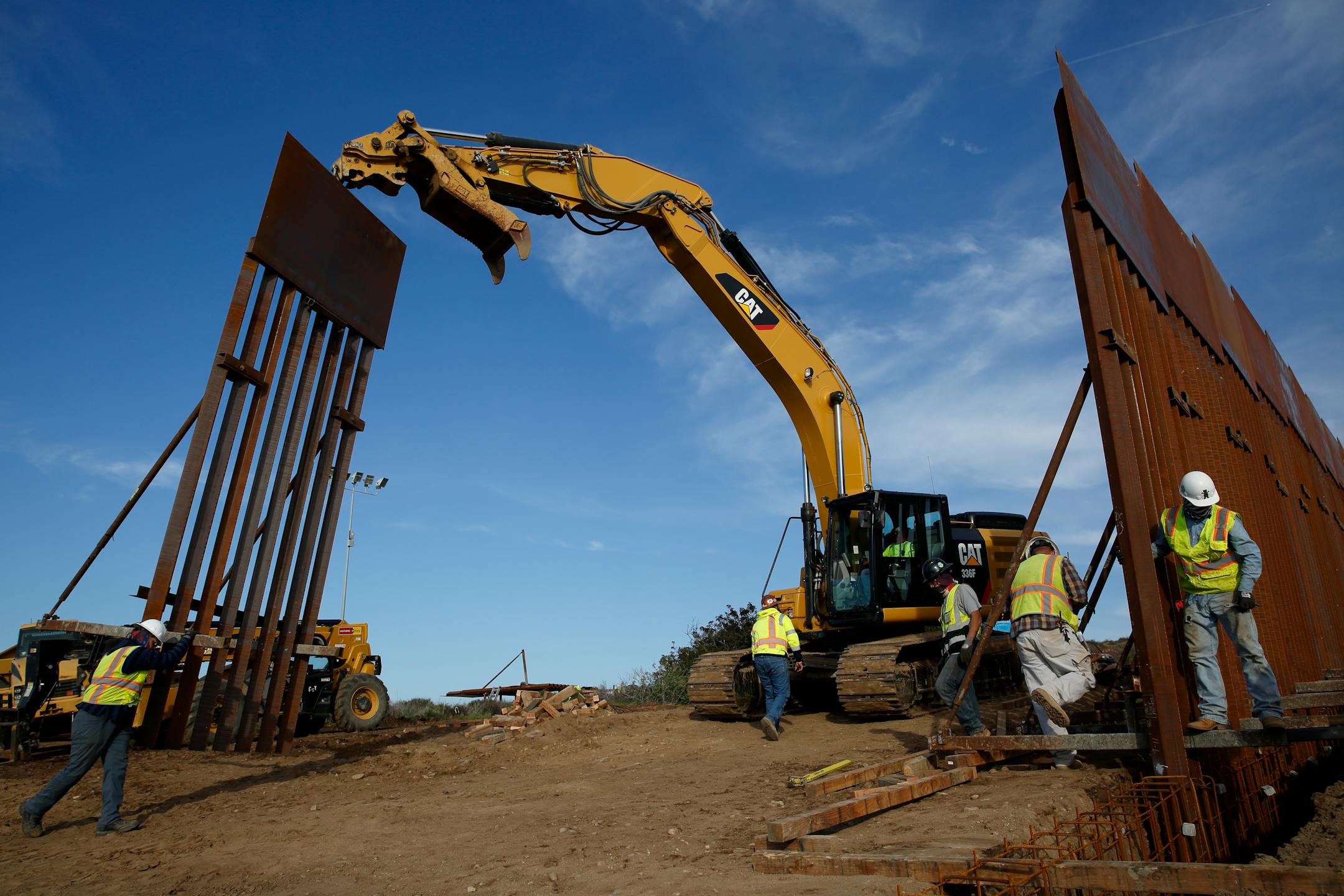
The notion of a barrier along parts of the 2,000-mile U.S.-Mexico border did not, of course, begin with Donald J. Trump, but his quest for a "big, beautiful wall" to be paid for by Mexico made the border barricade both a hallmark and a benchmark of his presidency.
In the end, Trump spent about $15 billion in U.S. taxpayers' money to extend the wall 47 miles, while adding a second layer along an additional 33 miles (plus replacing about 370 miles of existing barriers), calling it "a great achievement, the extraordinarily successful building of the wall on the southern border." The emperor not only had no clothes, he apparently had pretty lousy eyesight, too.
President Joe Biden has rightly ordered a freeze on further wall construction until his administration can sort things out; among other steps, it will review contracts and eminent domain actions to seize private land (mostly in Texas) to build the wall on. That pause ought to go even deeper to reassess not only the wall Trump built but also its predecessors, and to determine whether there might be smarter, more effective and more humane ways to secure the border and deter illegal immigration.
That reckoning must begin by recognizing that, generally speaking, most border walls aren't very good at what they're supposed to do — stopping people — but can be very good at what they shouldn't do — interfering with the natural movement of wildlife, streams and rivers.
Though it's true that a border barrier might temporarily thwart or slow illicit crossers, where there is a will, there is a way. Ladders. Ropes. Tunnels. Cutting torches. People will persevere, even if it means traveling deep into the desert to unbarricaded stretches, a decision that often has disastrous results — the hundreds of migrants' bodies found each year in the desert border region hint at the scale of the circumvention.
People crossing the southern border without permission aren't always trying to sneak in. In recent years, a large portion of them have been families seeking to turn themselves in and ask for asylum. And broadly, most people who wind up living in the U.S. without permission came in legally, with visas, but then didn't leave when they were supposed to.
What about contraband? The vast majority of it comes through legal points of entry hidden in motor vehicles. Besides, walls don't stop drones, planes and boats.
The Trump administration rushed through its fence-replacement and wall-building program by using a section of the 2005 Real ID Act that empowers the head of the Department of Homeland Security "to waive all legal requirements" the secretary "determines necessary to ensure expeditious construction of the barriers and roads" at the border.


