

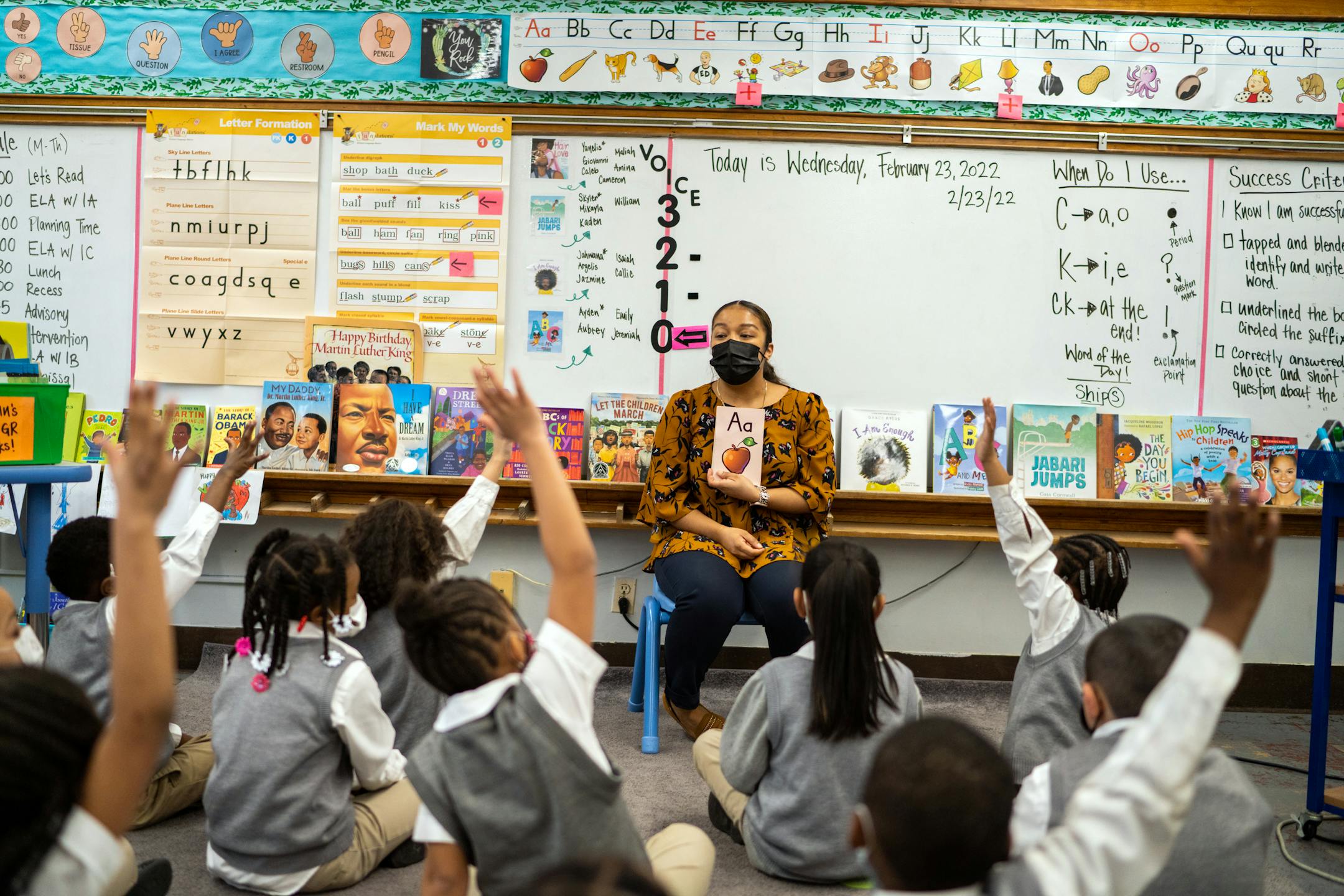
BRIDGEPORT, Conn. — The kindergarten crisis of last year, when millions of 5-year-olds spent months outside of classrooms, has become this year's reading emergency.
As the pandemic enters its third year, a cluster of new studies now show that about one-third of children in the youngest grades are missing reading benchmarks, up significantly from before the pandemic.
In Virginia, one study found early reading skills were at a 20-year low this fall, which the researchers described as "alarming."
In the Boston region, 60% of students at some high-poverty schools have been identified as at high risk for reading problems — twice the number of students as before the pandemic, according to Tiffany P. Hogan, director of the Speech and Language Literacy Lab at the MGH Institute of Health Professions in Boston.
Children in every demographic group have been affected, but Black and Hispanic children, as well as those from low-income families, those with disabilities and those who are not fluent in English, have fallen the furthest behind.
"We're in new territory," said Hogan, about the pandemic's toll on reading. If children do not become competent readers by the end of elementary school, the risks are "pretty dramatic," she said. Poor readers are more likely to drop out of high school, earn less money as adults and become involved in the criminal justice system.
The literacy crisis didn't start with the pandemic. In 2019, results on national and international exams showed stagnant or declining American performance in reading, and widening gaps between high and low performers. The causes are multifaceted, but many experts point to a shortage of educators trained in phonics and phonemic awareness — the foundational skills of linking the sounds of spoken English to the letters that appear on the page.
The pandemic has compounded those issues.


