

The annual winter finch forecast made by observers in Canada has been published. It is based mostly on the availability of various seed crops preferred by crossbills, siskins, grosbeaks and nuthatches. As usual, movement out of Canada into the U.S. is much more likely in the eastern part of the country.
A few finches looking for food always wander into Minnesota, mostly in the Arrowhead, with convenient viewing found along Hwy. 61 toward Grand Marais. There are a few feeders at homes in Grand Marais; a brief tour of residential streets sometimes is surprising.
The Sax-Zim bogs north of Duluth always are a good bet. The landscape is appropriate for finches.
A very dry spring and summer has created a tree-seed shortage west of Lake Superior; that might help us.
The forecast is made of educated predictions, no guarantees, sort of like football. The most direct comment was for red-breasted nuthatch: "Birds west of Lake Superior should be moving looking for food this fall. At feeders, this species prefers black oil seeds, suet, and peanuts." The nuthatches sometimes come as far south as the metro area. Be alert.
Buying seed for finches? Best choice is sunflower
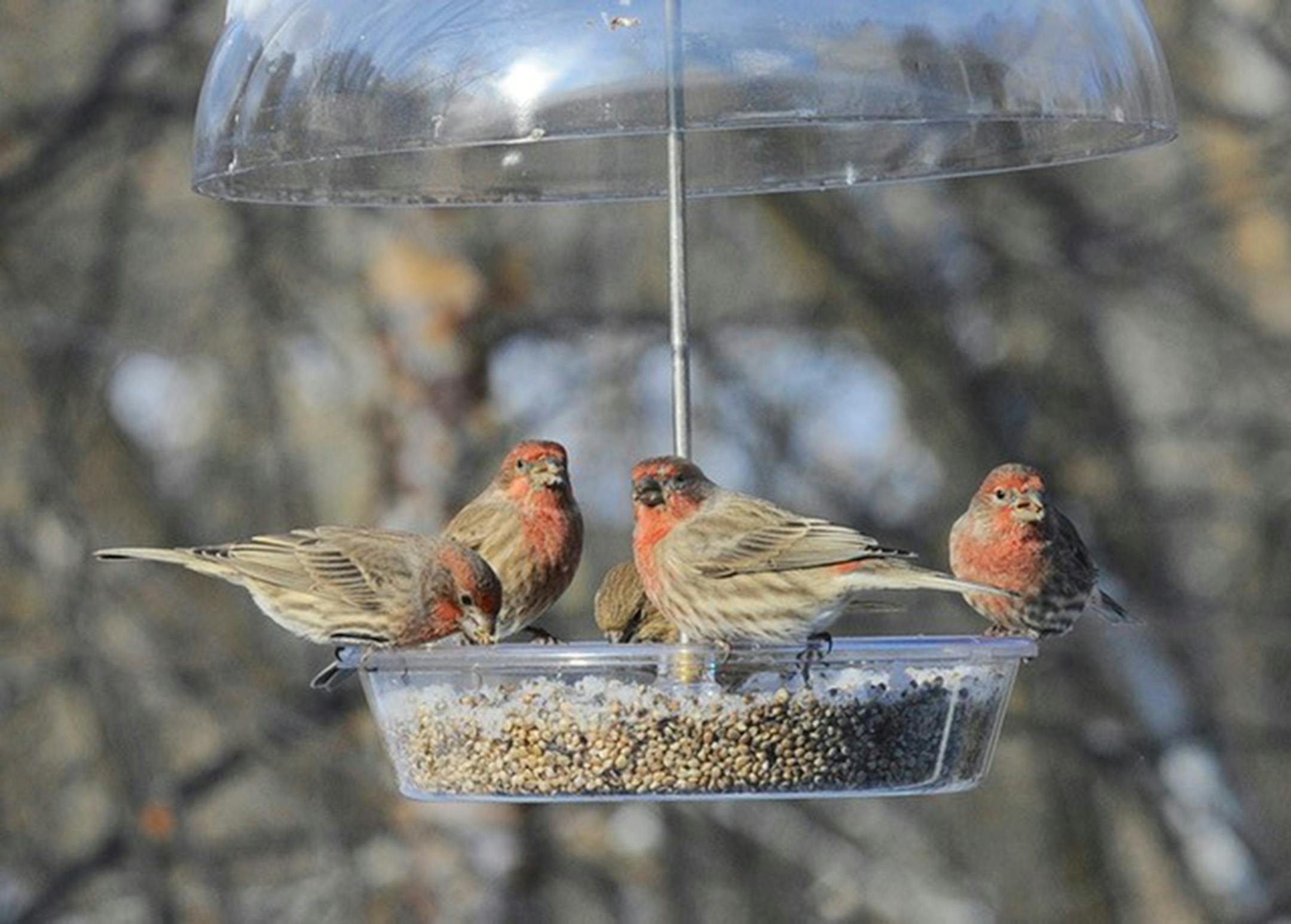
House finches are among those feeder birds preferring sunflower seeds to millet or milo seeds. The latter are tiny hard round seeds in my opinion used as filler in the inexpensive bags of seed sometimes found in hardware and grocery stores. Inexpensive or not, those assortments are likely to disappoint you if you have feeders. If you can count the sunflower seeds through the bag, find a birding store and buy black oil sunflower seeds. You will not be disappointed.
Our sunflower seed feeders entertained crowded visits by house finches hatched this year. The birds were in first-year plumage, basically brown on brown. They will return from winter migration in the colors of adult, berry red that can be accented with orange and yellow. Black oil sunflower seeds fill seven tube feeders at our house, one more devoted to niger thistle seed. And there is suet.


