

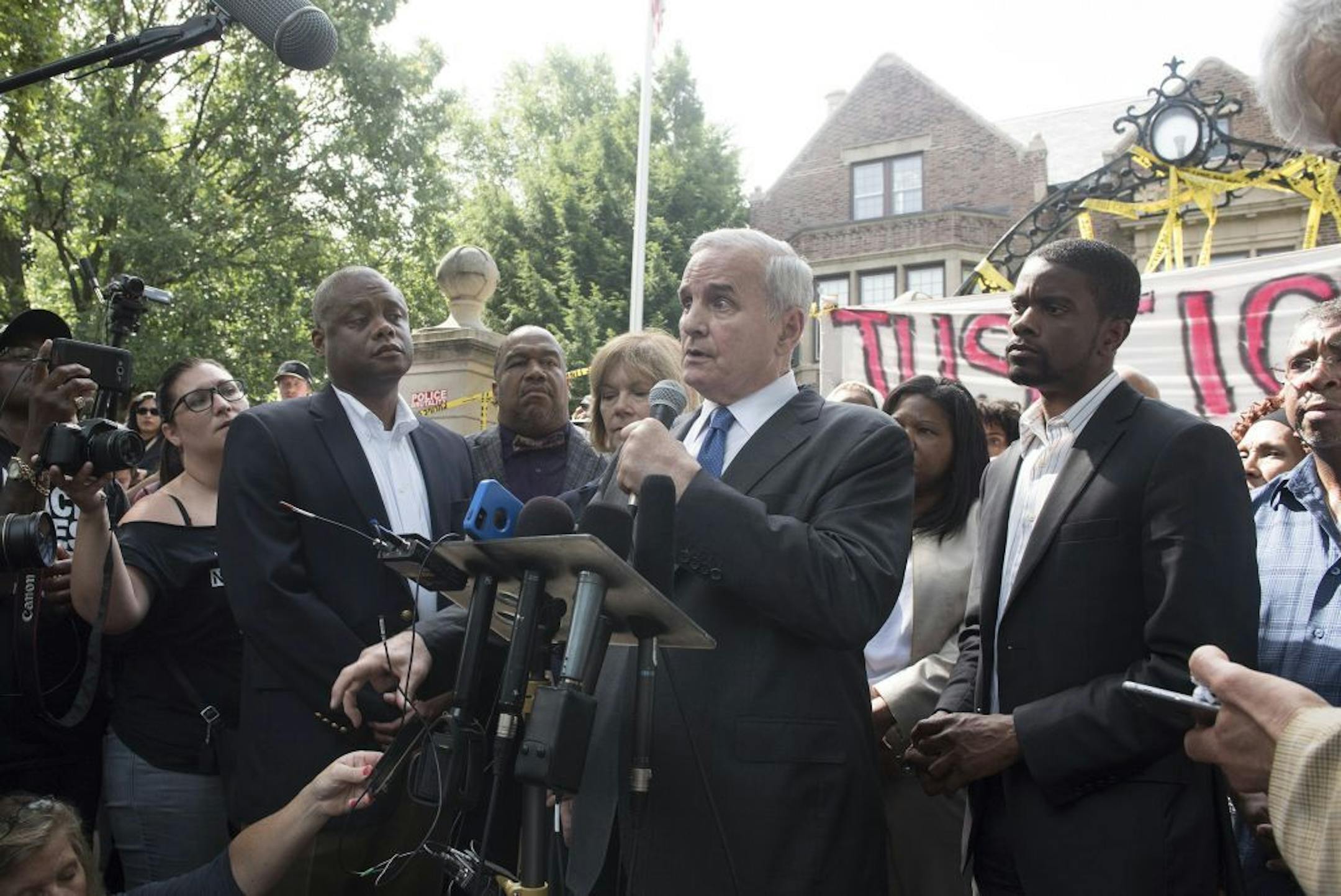
Shortly after Gov. Mark Dayton found out that a metro area police officer shot Philando Castile during a traffic stop, he did what Minneapolis Mayor Betsy Hodges did before him and what many protesters wanted: He called for a federal investigation. Some congressional leaders joined the chorus.
When local politicians call for a federal investigation, it sounds bold and aggressive. It shows your constituents that you are taking the issue very seriously. It also passes the problem on to somebody else.
In the deaths of Jamar Clark last November and now Castile, however, federal prosecutors have fewer options than prosecutors at the local level. If you think charges against an officer equal justice, you are far less likely to get that justice when a case goes federal. Demanding a federal probe may look good, but it may in fact be bad strategy.
"I'm not going to accuse anyone of trying to avoid the issue," said Thomas Heffelfinger, a former U.S. attorney for Minnesota. "But as a politician, if the first thing you do is call for the feds, yet you know how hard it is for them to prosecute, you are setting [the process] up for failure."
Take the Clark case as an example.
After Clark's death, a federal investigation was launched, bringing FBI and special prosecutors from the U.S. Justice Department Civil Rights Division to Minneapolis to work with an experienced investigator here. Their investigation was separate from that of the Minnesota Bureau of Criminal Apprehension (BCA). The latter looked into accusations of homicide, while the feds focused on whether the officers violated Clark's civil rights, as defined by federal statute.
We now know what happened. Neither found enough evidence to charge the officers in Clark's death.
But the federal investigation was actually the tougher case. To prove the shooting violated Clark's civil rights, the feds would have had to prove, without reasonable doubt, that the officers acted with specific intent to do something the law forbids — one of the highest legal standards in criminal law.


