

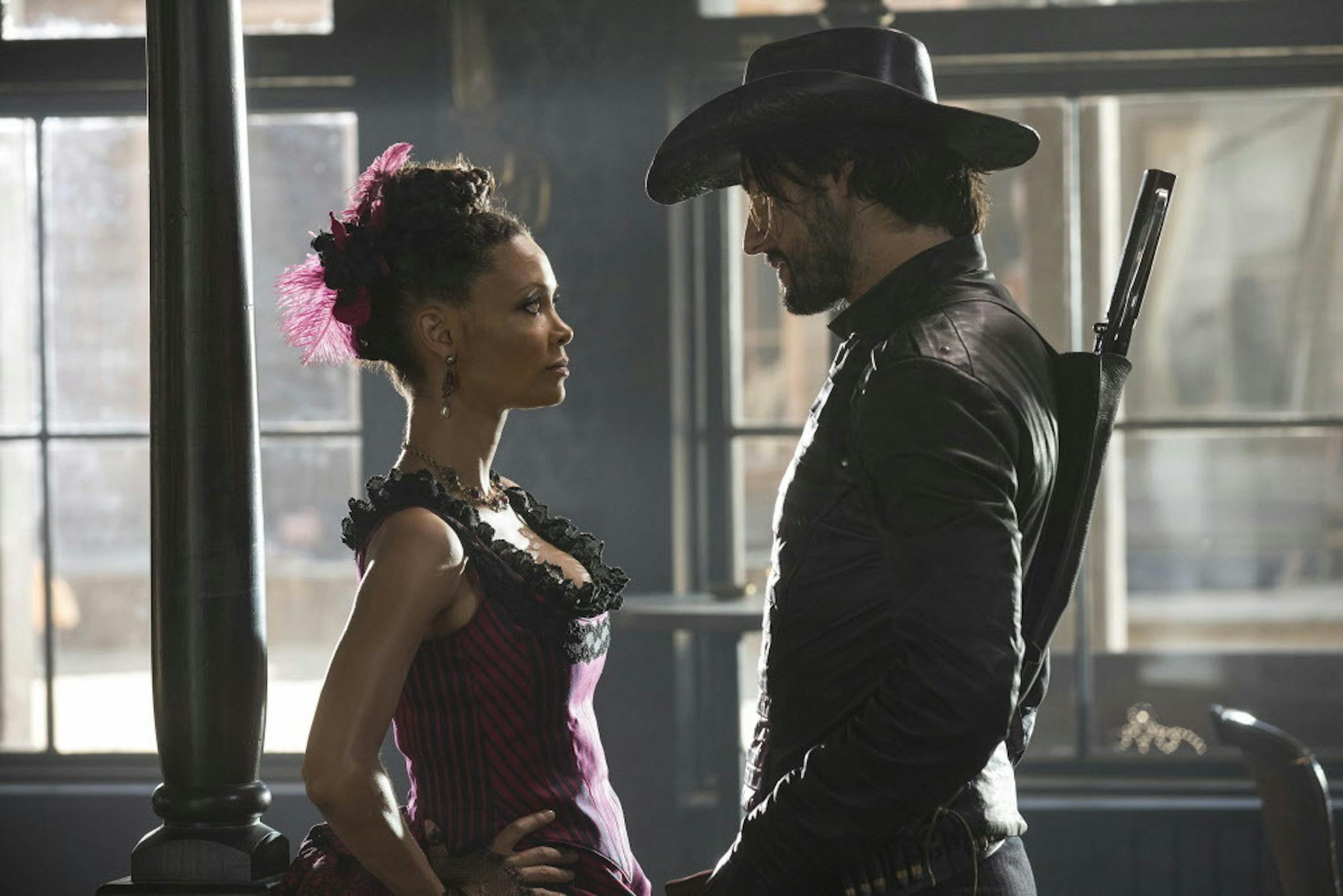
What if a Pokèmon resisted capture and suddenly decided it was your time to Go? That's roughly the premise of "Westworld," a re-imagining of Michael Crichton's 1973 film in which robots at a Wild West-inspired amusement park go rogue.
It's a star-powered, gorgeously shot philosophy class, but one that may be too stiff and ponderous for those who like their action with a little more humanity.
Sweetwater, manufactured to entertain the ravenous side of its elite visitors, looks like a town in a John Ford movie, from the rugged vistas crying out for a sunrise gallop to the player pianos tinkling away in rough-and-tumble saloons. Guests are encouraged to whet their appetites as they see fit — even if that includes gunning down a stranger at the end of the bar.
After all, their victims — or "hosts," as their watchful masters call them — were designed for sadistic pleasures. No matter how many holes are plugged into these moving mannequins, they wake up at sunrise ready to embrace the beauty of the world. It's not Groundhog Day; it's Christmas morning.
Anyone who remembers "2001: A Space Odyssey" can see where this is going. In that Stanley Kubrick classic, HAL the computer builds up enough artificial intelligence to calmly inform Astronaut Dave that there's a new boss on board.
The closest entity to HAL in "Westworld," at least in the first two episodes, is the Man in Black (Ed Harris), a sharpshooter who has figured out he's a rat in a maze and is prepared to kill, rape and torture his way to the entrance.
Other "hosts" include Delores (Evan Rachel Wood), the resort's oldest 'bot, who is slowly realizing that she's not Laura Ingalls, and Maeve (Thandie Newton), a hooker with a heart of coal that's just starting to malfunction.
"Dave" is represented by a team of scientists, most notably a perpetually glum Jeffrey Wright and his puppet-master boss (Anthony Hopkins). After an underling proposes a new adventure for the park, he rejects it, lecturing the upstart on the main reason they get so many return customers.


