

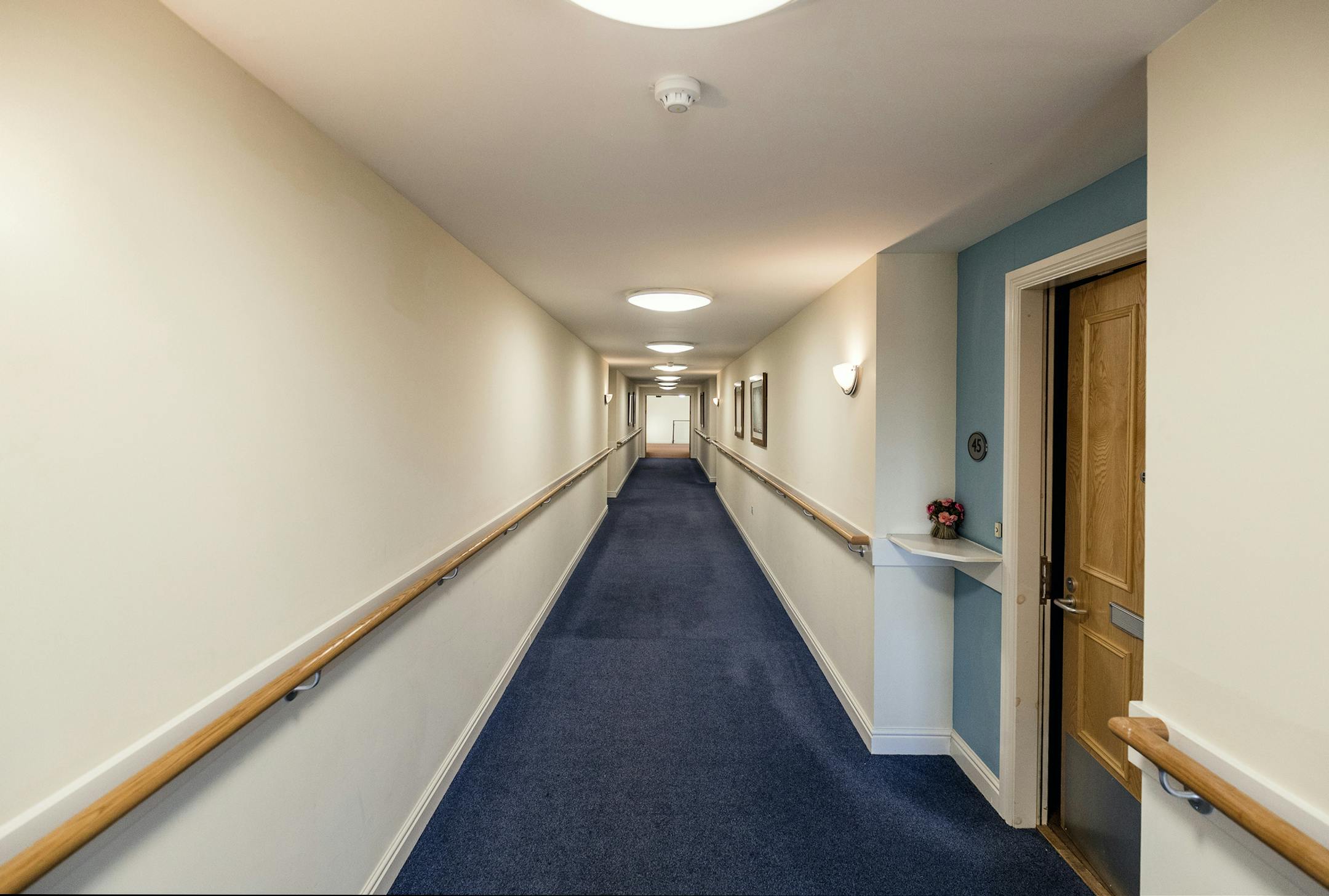
I wasn't expecting the decorated doors. But as I searched for No. 210 while trudging down the narrow hallway, lugging a carton of sheets and towels, the doors slowed me down. Each revealed the personality of the inhabitant behind it — cartoonish paper bunnies in mid-hop at varying angles, a stick-on sign with "Enter at Your Own Risk" printed above a grinning emoji, a bright yellow sun. I examined each one. After all, these would be her neighbors.
It's a common rite of passage near the end of August, parents helping teens move into freshman dorms on college campuses. But behind these particular doors weren't students. They were aging parents relocated here with a few furnishings, family photos and knickknacks, bits and pieces reminding them of their previous lives. As a mother and a daughter, I suddenly understood how much these solo ventures into the unknown share, even as they happen at near-opposite ends of the arc of life. And for me, the uneasy feeling of leaving a loved one behind a strange closed door was the same.
A whimsical feather dream catcher had instantly adorned my mother's front door the day we moved her into the apartment. I gazed at it, wondering if it really held protective powers, as I entered carrying the sheets and towels and tripped over her walker. That thing always takes me by surprise, and I often have to stifle an urge to kick it out of the way, out of her life.
My mother, who is a tad forgetful but still has her wit about her, refers to the walker as her "car." It helps to have a sense of humor when you're 86 and have to relocate from the familiarity of your two-bedroom Florida condo of 25 years to a one-bedroom in a New Jersey complex where you don't know anyone.
She's in an independent-living facility, which is actually the opposite of living independently. Instead of cooking her own meals, she eats in a communal dining room with large round tables that demand socializing. She relies on a shuttle to transport her to essential places, like the bank and the casino in Atlantic City. The facility sends a housekeeper to dust her furniture and scour her shower once a week. There's a laundry room down the hall, just steps from her apartment, but she likes hand-washing her flowered muumuus and underwear in the bathroom sink, hanging them on a spindly wooden rack in her shower to dry, as she's done for years. I'm not sure why this self-imposed chore is preferable to a washer and dryer, but I don't argue with her if it makes her feel as if she's in control.
For years, my brother and I tried to talk her into selling her condo, mostly for selfish reasons — she's there, we're here. But she's always been fiercely self-sufficient. You have to be when you're widowed at 52 and your children are grown up and on their own. So she worked until she couldn't, and she drove to the supermarket until we told her she couldn't.
"I lost my wings," she had said tearfully after she sold her Chevy Malibu to an upstairs neighbor. The Malibu, still parked in what was once her spot in the lot in front of her kitchen window, taunted her loss of freedom every day. Perhaps that was why she finally agreed to move. Before she could change her mind, my brother and sister-in-law rushed to secure an apartment 15 minutes from their house.
As I put her things away in the compact space, I remembered it wasn't too long ago that I had been unpacking my youngest child's belongings in a barren dorm room at Ithaca College. My older twins had gone together to college, so I knew they would rely on each other, as they always did, if loneliness and fear set in. Allison, six years their junior, had stayed home with me, a single mom desperate to keep the house alive and bubbly for just the two of us.


