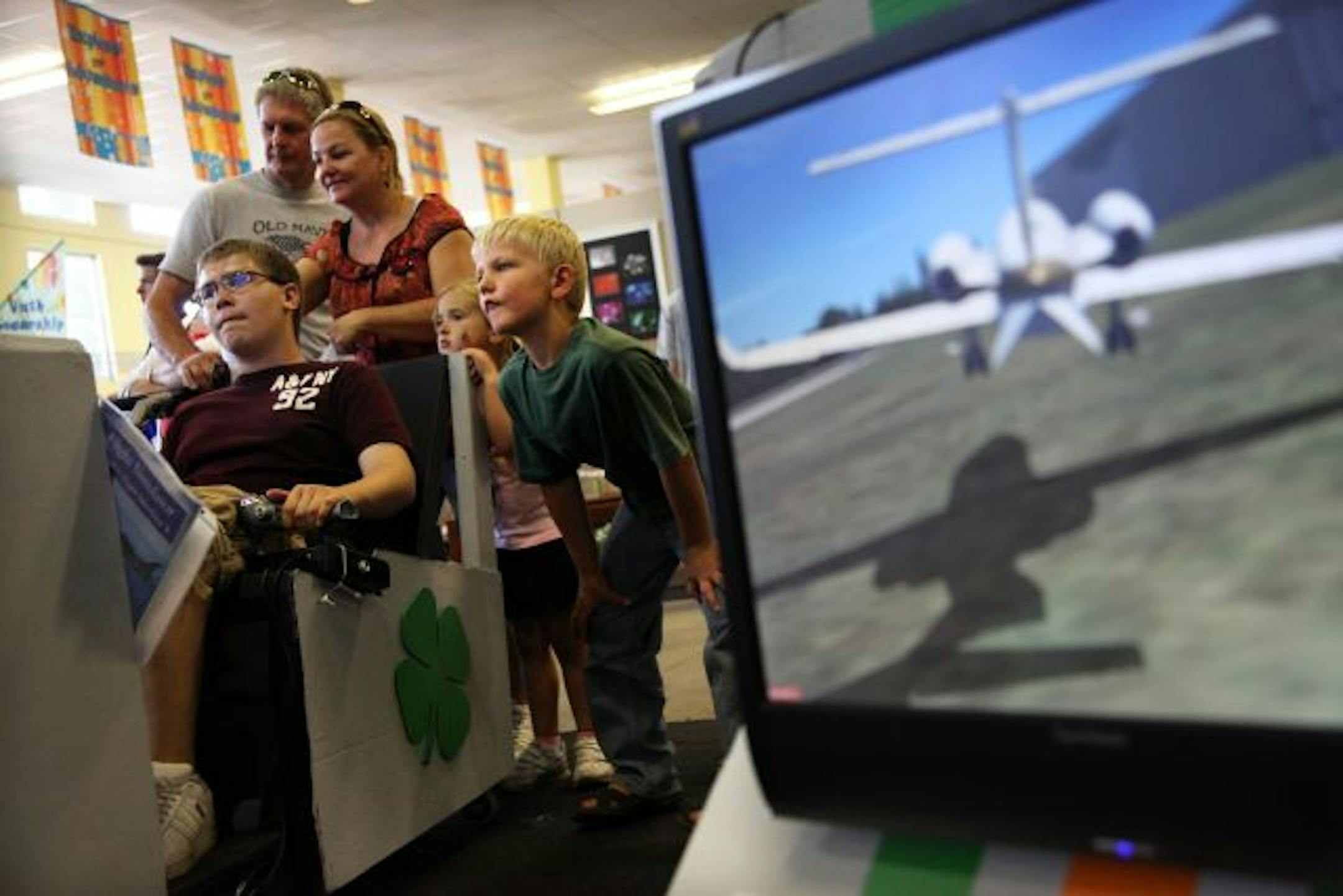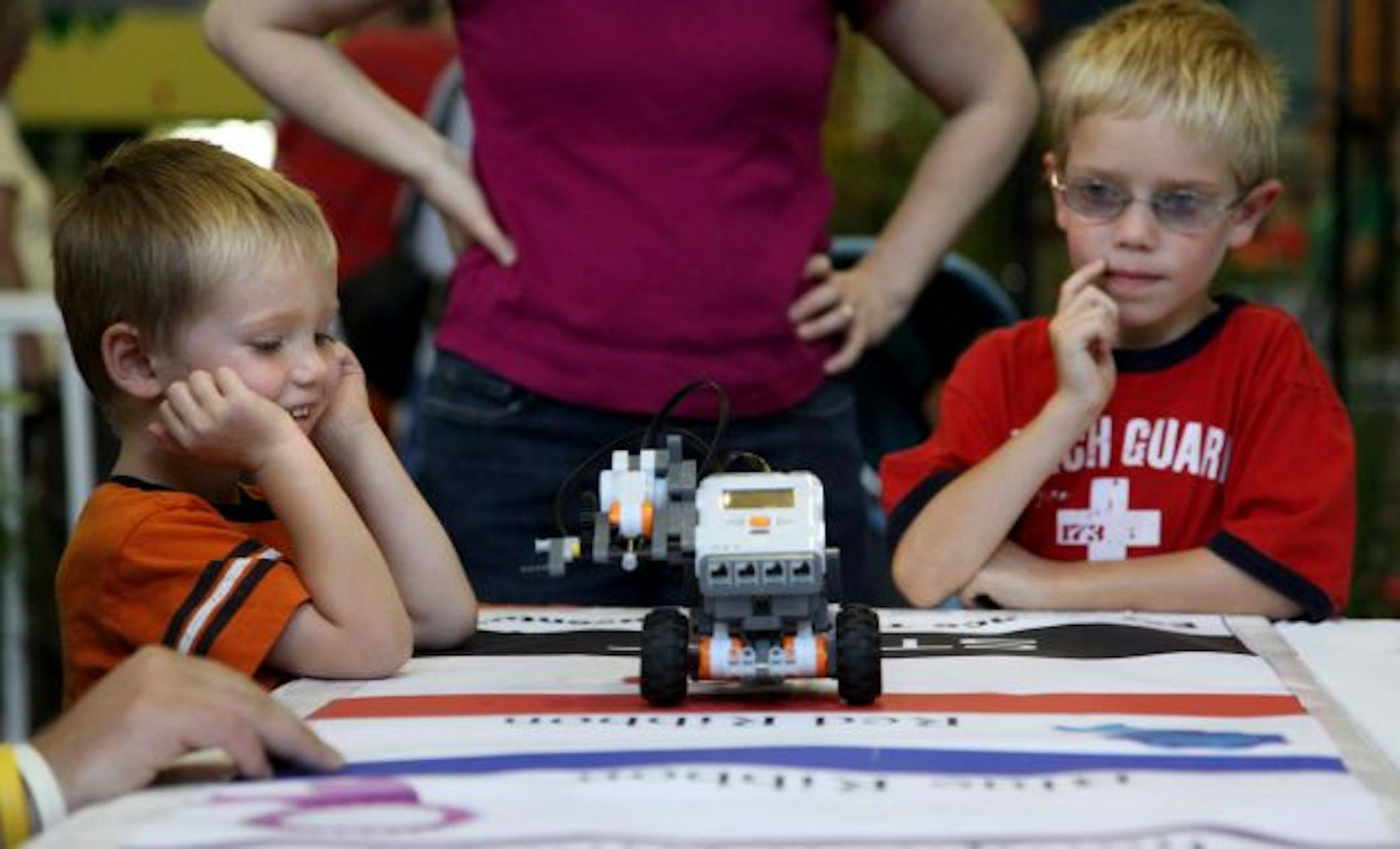
As Minnesota 4-H Club members showcase their projects at the State Fair this week, the venerable youth development organization has something else to highlight: It's growing, despite the ailing economy and some cuts in public funding.
A new commitment in recent years to city clubs, new funding partnerships and a broadened focus on science, engineering and technology have helped 4-H remain relevant, even while today's youth have far more activities and interests competing for their time and attention.
Statewide, 4-H club membership has grown 26 percent since 2004, from 26,100 to 32,898 at the end of last year, the organization reports. The numbers rose in Hennepin County by 215 percent, to 727, and Ramsey County by 471 percent, to 925, during that time, even though Hennepin's total fell last year as a large number of members graduated from the program.
While club membership is the most familiar aspect of 4-H to most people, the Minnesota organization reaches tens of thousands more young people statewide through camping, youth-teaching-youth programs and short-term activities such as get-togethers to learn about robotics and performing arts. In total, 4-H said it reached 123,746 youth in 2008.
Meanwhile, in most of the state's 87 counties, funding for 4-H has held fairly stable. By comparison, national studies show that a majority of after-school programs report funding cuts, with one in 10 losing enough to cause major changes or cancellation, said Jen Rinehart, vice president for research and policy at the Washington-based Afterschool Alliance.
State 4-H officials hope that recent diversification efforts will make the organization less reliant on government aid and help shield it from future funding threats. The organization, which has long relied on a corps of dedicated volunteers and traditionally has been linked in the public eye with agriculture, is now also pursuing private and corporate partners to provide funding and expertise for its new emphasis on science.
"It's a fundamental change in our thinking," said Dale Blyth, director of the University of Minnesota's Extension Center for Youth Development. "The way to partner and to go after that growth wouldn't have been possible with old thinking."
Projects and partners