

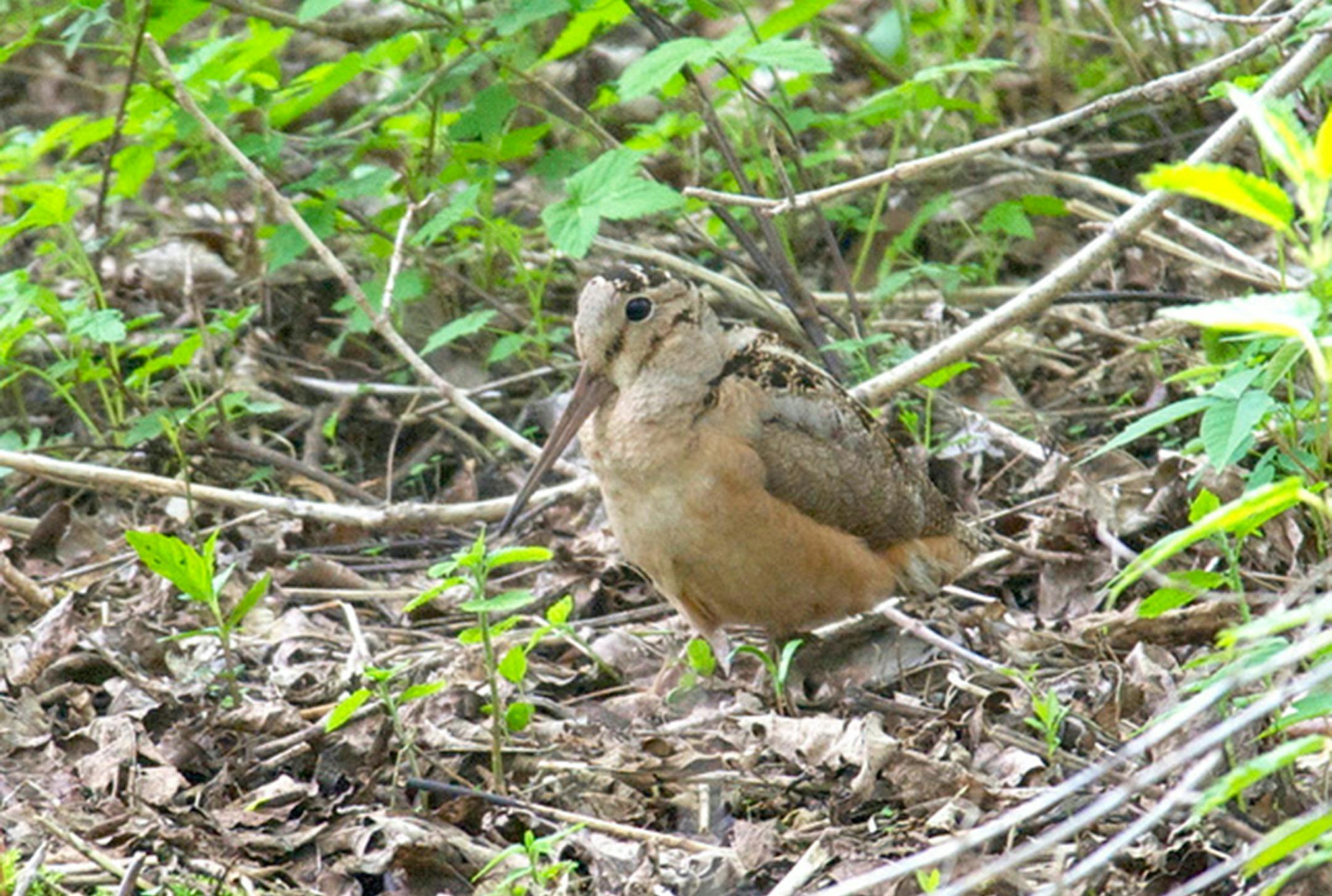
Woodcocks are birds with a very precise sense of time and landscape. This can either complicate finding them or make it simple.
They're interesting little birds, oddities of the animal world, more common than we might think, since they are rarely seen.
A search involves particular habitat and close attention to the quality and quantity of light. The birds are crepuscular, meaning they are active at twilight. It is possible to find them not far from you, wherever you are. You won't know until you take a maybe 30-minute post-supper drive.
Habitat information, key for this bird, is offered by Greg Hoch, author of "Sky Dance of the Woodcock: The Habits and Habitats of a Strange Little Bird." Recently published by the University of Iowa Press, this book is a well-written and complete portrait of the bird.
Woodcocks have a preference for young woods and wet edges (angleworms are a favorite food). Males also need a dancing ground, an open area for the beginning and end of courtship behavior.
Wooing a mate is focused on "dancing," the flight display you want to see and hear. Elaborate courtship displays abound in the bird world. In Minnesota, however, few species match the woodcock for intricate novelty.
Hoch, who lives near Cambridge, answered my question "where" by saying, "They're abundant up here. I can sometimes hear seven or eight birds from one spot, and usually have one or two in my backyard every night," he said.
"I'd think any of our nearby state parks, the Carlos Avery or Lamprey Pass or other wildlife management areas, or national wildlife refuges such as Minnesota Valley or Sherburne will have them.

