

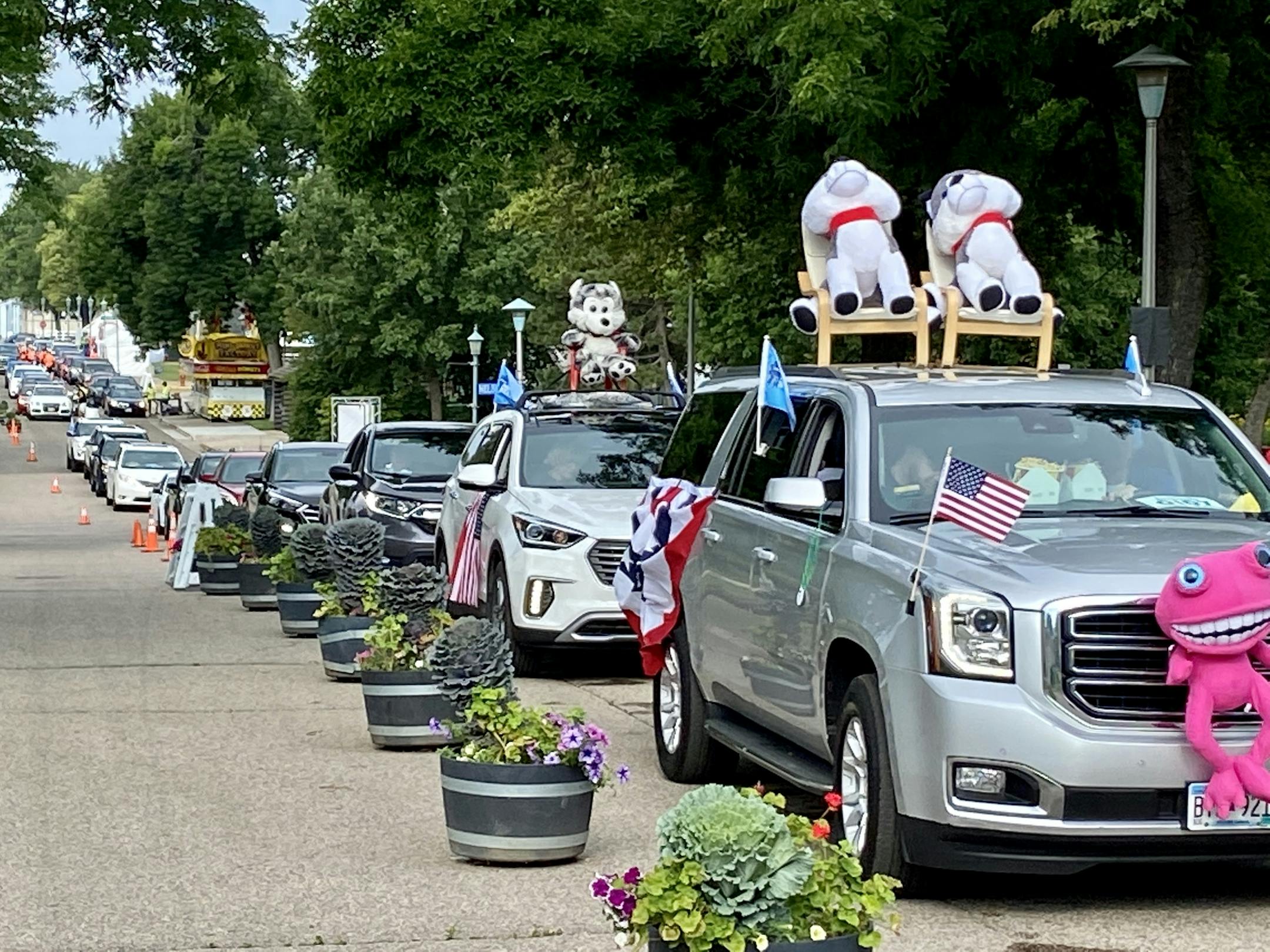
Fanciful creatures are hidden in the rows of corn stalks at Sever's Festival Grounds in Shakopee. There's a goose with moose antlers, a tiny fox and a field mouse with fairy wings.
Along with silly rhymes and jokes ("Guess who? Chicken tutu"), there are signs that caution ticket holders to stay in their vehicles and keep speeds below 3 mph.
The latest attraction from the Sever family, known for its giant corn maze, is an "adventure you can explore from the safety of your car." It's designed for people who may not feel comfortable navigating a corn maze during the pandemic, but want to take part in some sort of fall tradition.
Pull ahead, please: Much of life is being viewed from behind a windshield these days.
The Minnesota State Fair Food Parade gave would-be fairgoers a taste of the Great Minnesota Get-Together. The Dinosaur Adventure traveling exhibit retooled its animatronic show to be seen from a car. On the horizon? Drive-through holiday light shows.
For many, car-based entertainment is safe, creative and nostalgic — a throwback to Americans' earlier love affair with the automobile that sparked giant marvels from Minnesota's Paul Bunyans to the Big Fish sculpture in Bena.
Others, however, see drive-throughs as unsatisfying, poor replacements for the real thing, or worse: divisive, hostile to pedestrians and bicyclists and creating barriers between people.
"We're social animals. But what suffices as 'social'?" said Peter Norton, the author of "Fighting Traffic: The Dawn of the Motor Age in the American City." "We can gather in cars, which automatically enforce distancing and which insert protective barriers between us. We can gather together safely online. But it can't be the same.


