

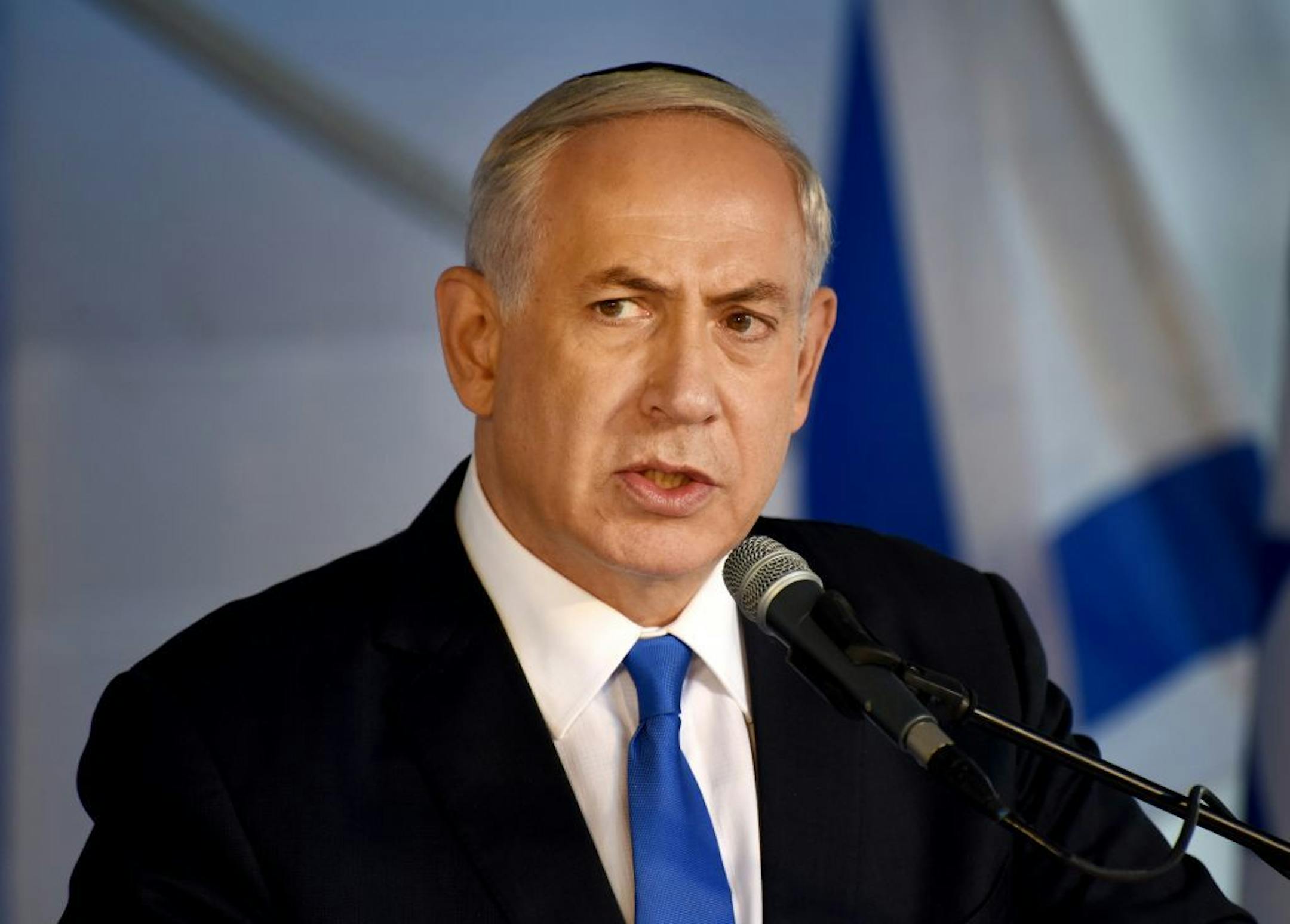
WASHINGTON – Benjamin Netanyahu is looking past his fraught relationship with President Obama to a more lasting concern as he visits Washington this week: rebuilding Israel's standing with Democrats.
While he'll meet with the president and speak at the conservative American Enterprise Institute, Israel's prime minister also has arranged an address at the Center for American Progress, an institution with ties to liberal Democratic groups and to Hillary Rodham Clinton.
The choice is no accident. Netanyahu can remind his audience of aspects of Israeli culture and law that appeal to U.S. social liberals, such as acceptance of gay rights, while rebranding Israel's security concerns as global ones and trying to put the U.S.-Israel relationship on more nonpartisan footing a year before the 2016 presidential election.
"He understands the need to reach out," said Michael Oren, a former Israeli ambassador to the U.S. and a member of the Knesset from the Kulanu party, part of Netanyahu's coalition government. "It's Israel's duty to reach out to progressives and liberals, and I don't think we've done a very good job."
Netanyahu is returning to Washington for the first time since his very public, and failed, attempt in March to block Obama's drive for approval of a multinational nuclear deal with Iran. In that effort, he explicitly sided with congressional Republicans and spoke to Congress without consulting the White House.
Obama administration officials made clear that they viewed Netanyahu's maneuver as a breach of protocol and a slap at the president.
In a poll taken after Netanyahu's speech to Congress, the Pew Research Center found that only 19 percent of Democrats had a favorable view of Netanyahu, compared with 47 percent of Republicans.
House Democratic Leader Nancy Pelosi said Netanyahu doesn't need to make amends with her. She said her support for Israel transcends individual prime ministers. Pelosi added that Netanyahu's March speech to Congress at Republicans' invitation was an "inappropriate" violation of the tradition that a foreign leader addresses Congress only with bipartisan agreement.


