

Israel's founding generation gathered on May 14, 1948, in the Tel Aviv Museum to proclaim a state. A lodestone of Israel's Declaration of Independence was the United Nations General Assembly vote of Nov. 29, 1947, approving the partition of the Palestine Mandate into Jewish and Arab states.
Immediately after the U.N. vote, the Arab world from within and without the Palestine Mandate sought to extinguish the nascent Jewish state. Nevertheless, the declaration held out a peace offer promising that "[w]e extend our hand to all neighboring states and their peoples in an offer of peace and good neighborliness …"
Seven decades later — slowly and in fits and starts but hopefully inexorably — this tender has evolved from chimerical to fundamental with peace treaties with Egypt (1979) and Jordan (1994) — building upon U.N. Resolutions 242 and 338 — and growing accommodation with Saudi Arabia and the United Arab Emirates.
The Egypt-Israel peace treaty was the first pillar to slide into place in large measure due to the successive efforts of the Nixon and Carter administrations. In the aftermath of the 1973 Yom Kippur War, Secretary of State Henry Kissinger's shuttle diplomacy secured direct Egyptian-Israeli negotiations.
After Egyptian President Anwar Sadat's transformative November 1977 journey from Cairo to Jerusalem, President Jimmy Carter spared no effort to transform the transient euphoria of the visit into a gateway for regional peace or as it evolved: a treaty between Egypt and Israel.
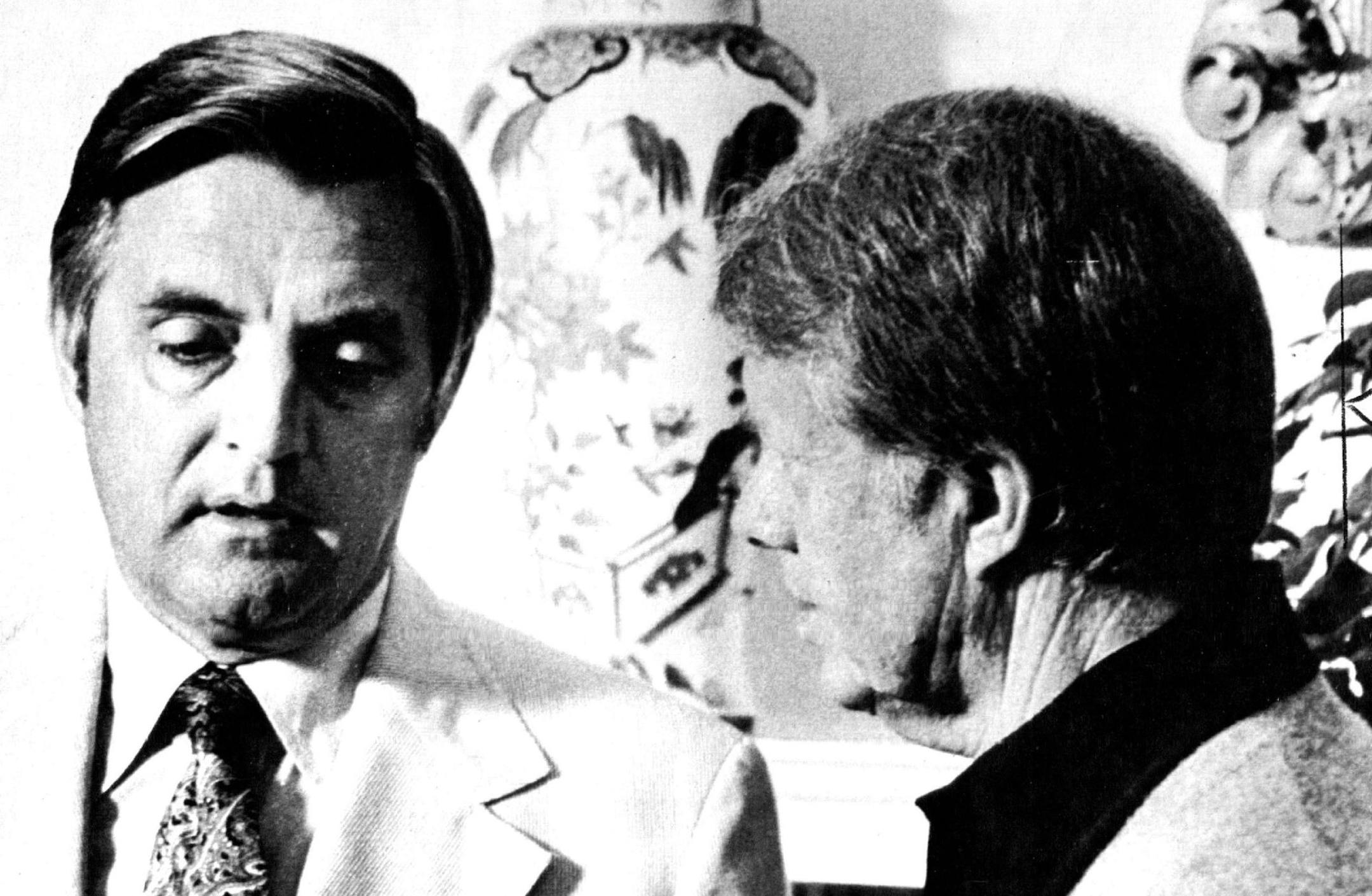
Here the influence of a Minnesota statesman — Vice President Walter Mondale — enters this story of high-stakes international deliberations.
Carter gambled in September 1978. He brought Israeli Prime Minister Menachem Begin and Sadat together under American auspices at Camp David. A breakthrough was necessary to sustain the progress represented by the Sadat visit and warm Israeli welcome but endangered by increasing recriminations between Egyptians and Israelis.
Failure would compromise American leadership in the Middle East and perhaps globally — with fighting the Cold War still the essence of American foreign policy.


