Isolated Thunderstorms Possible Saturday Afternoon - Heat Building Into Next Week

While the odds of a thunderstorm are low on Saturday, I just can't rule out the potential during the afternoon and evening. Then the heat builds into next week with several 90s expected. - D.J. Kayser

July 15, 2022 at 11:00PM
(The Minnesota Star Tribune)

Heavy Rain From Thursday Night And Friday

_______________________________________________

Sun/Cloud Mix, Slight Rain Chance Saturday
(The Minnesota Star Tribune)

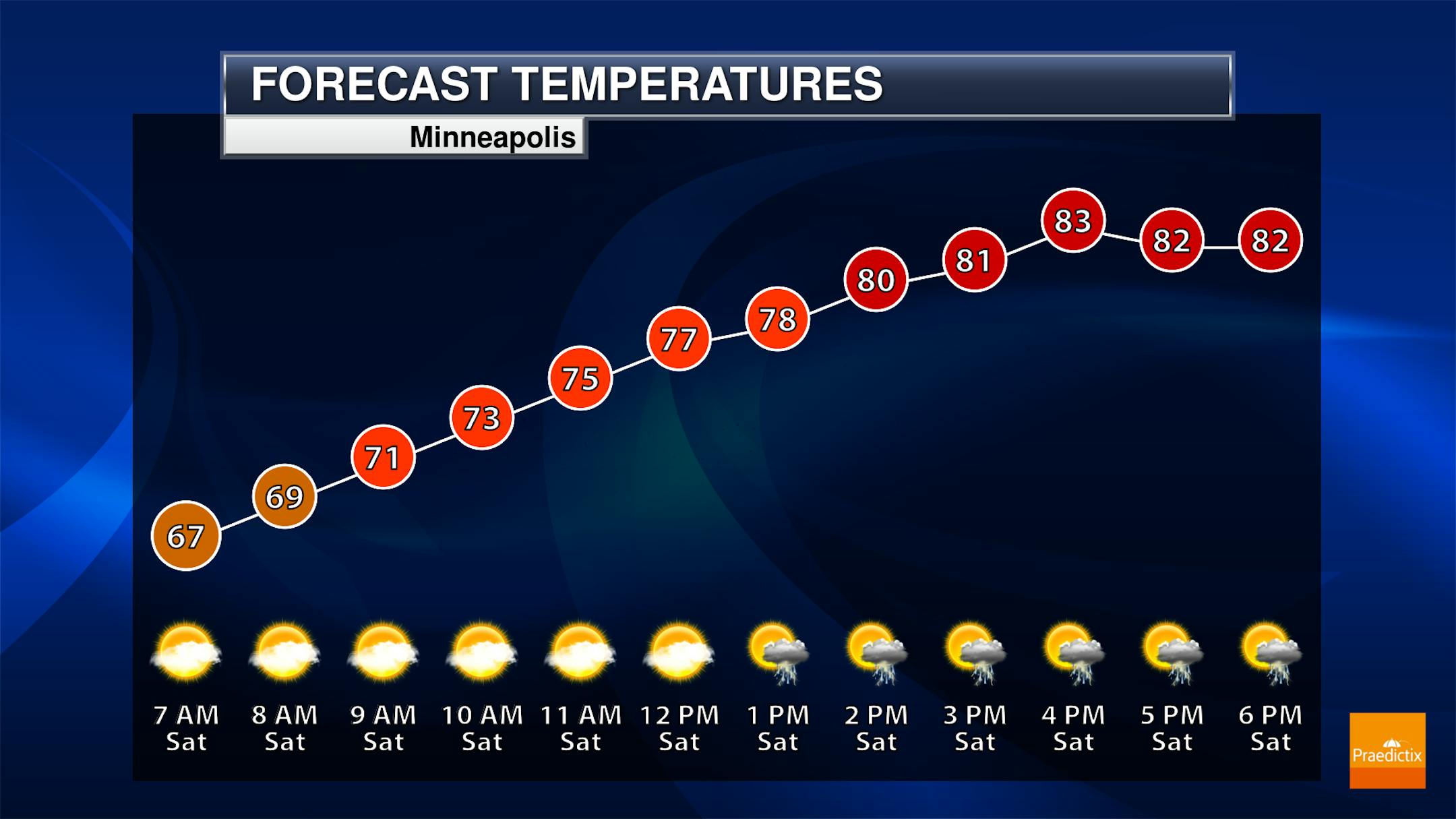
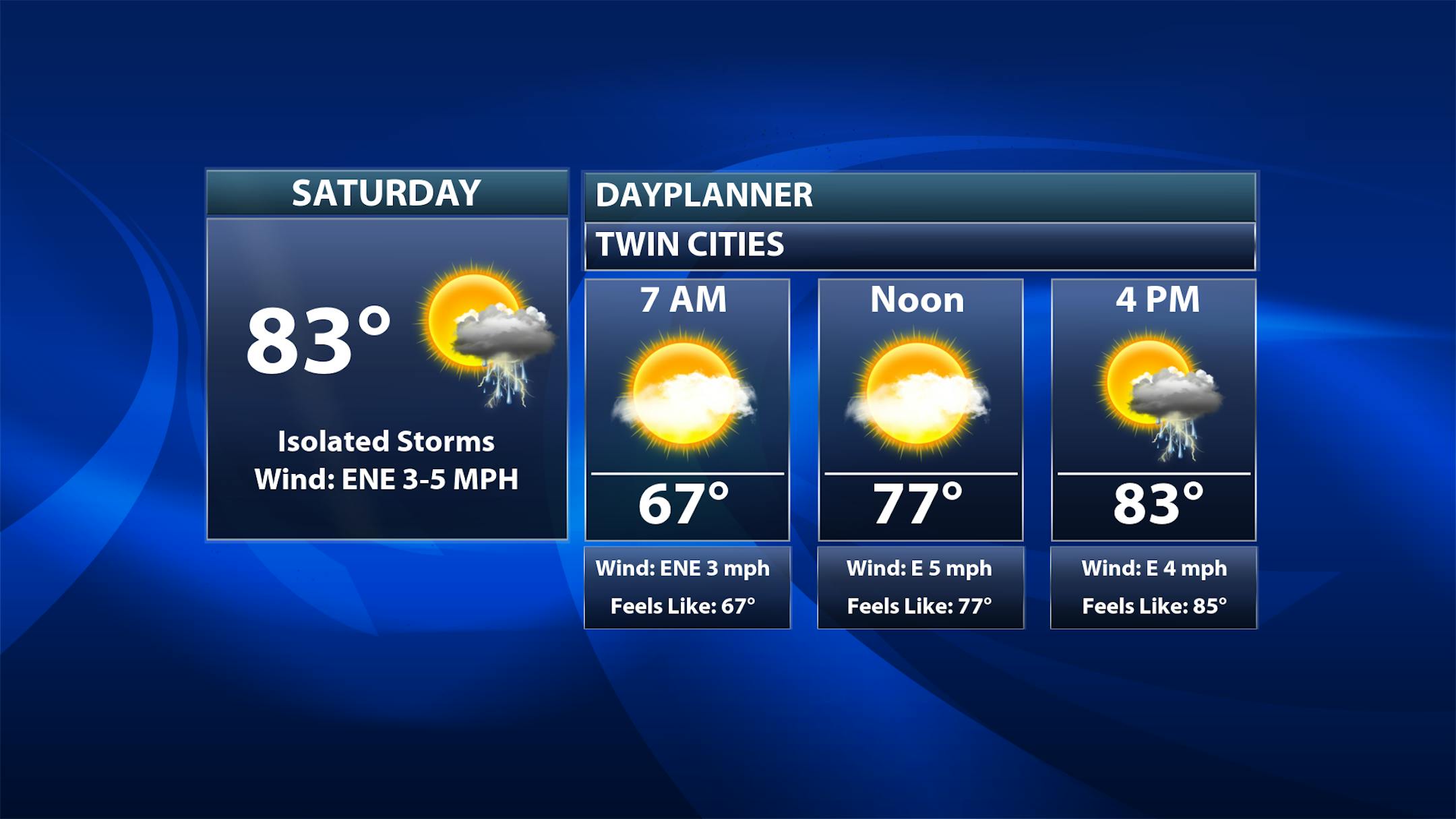
For the first day of the weekend, we do track the potential for a few pop-up showers and storms during the afternoon hours, but odds are fairly low of those occurring (20%). For the most part, the day will just feature more clouds than sunshine. Morning temperatures start off in the low to mid-60s with highs in the low to mid-80s.
(The Minnesota Star Tribune)

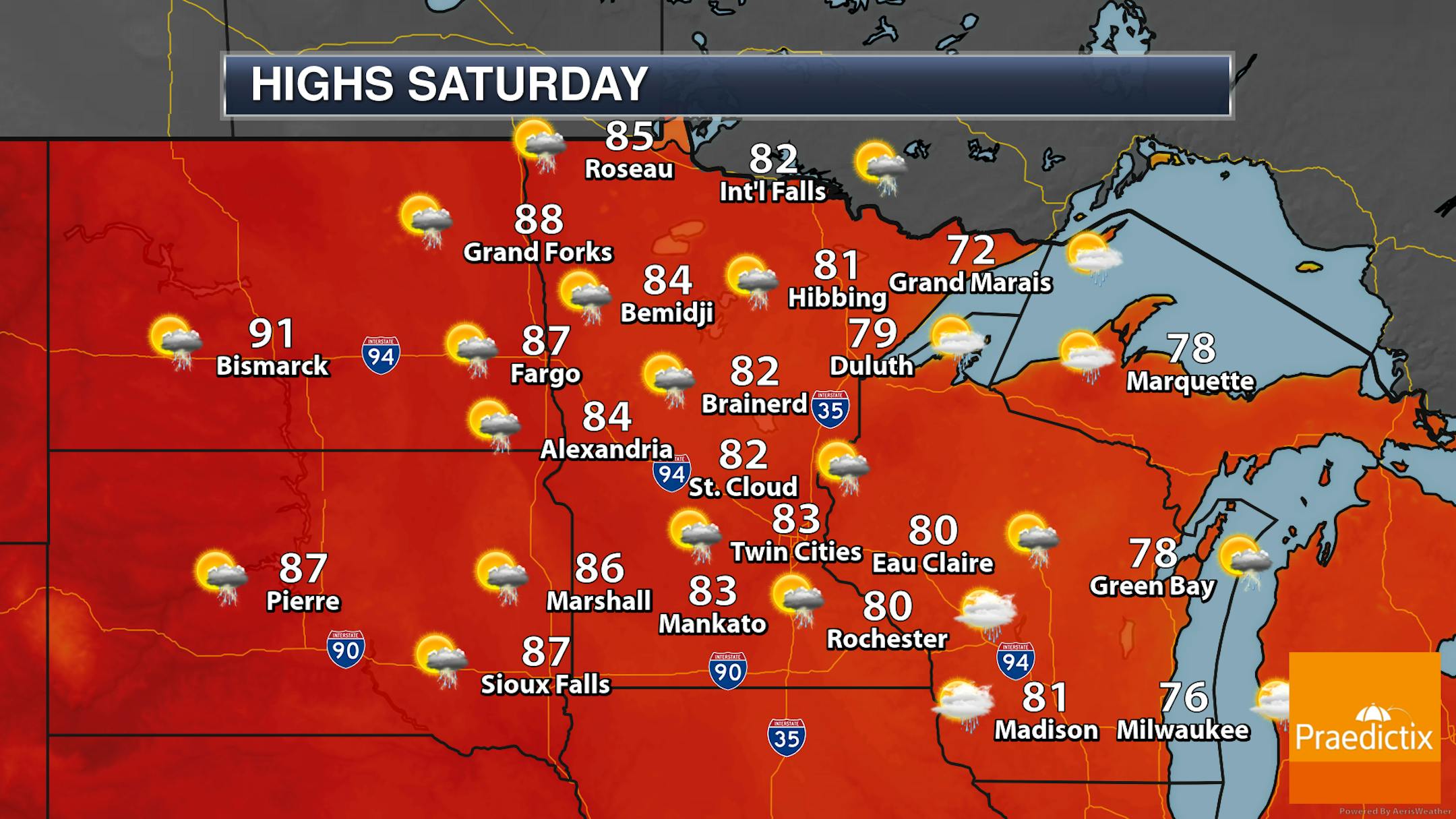
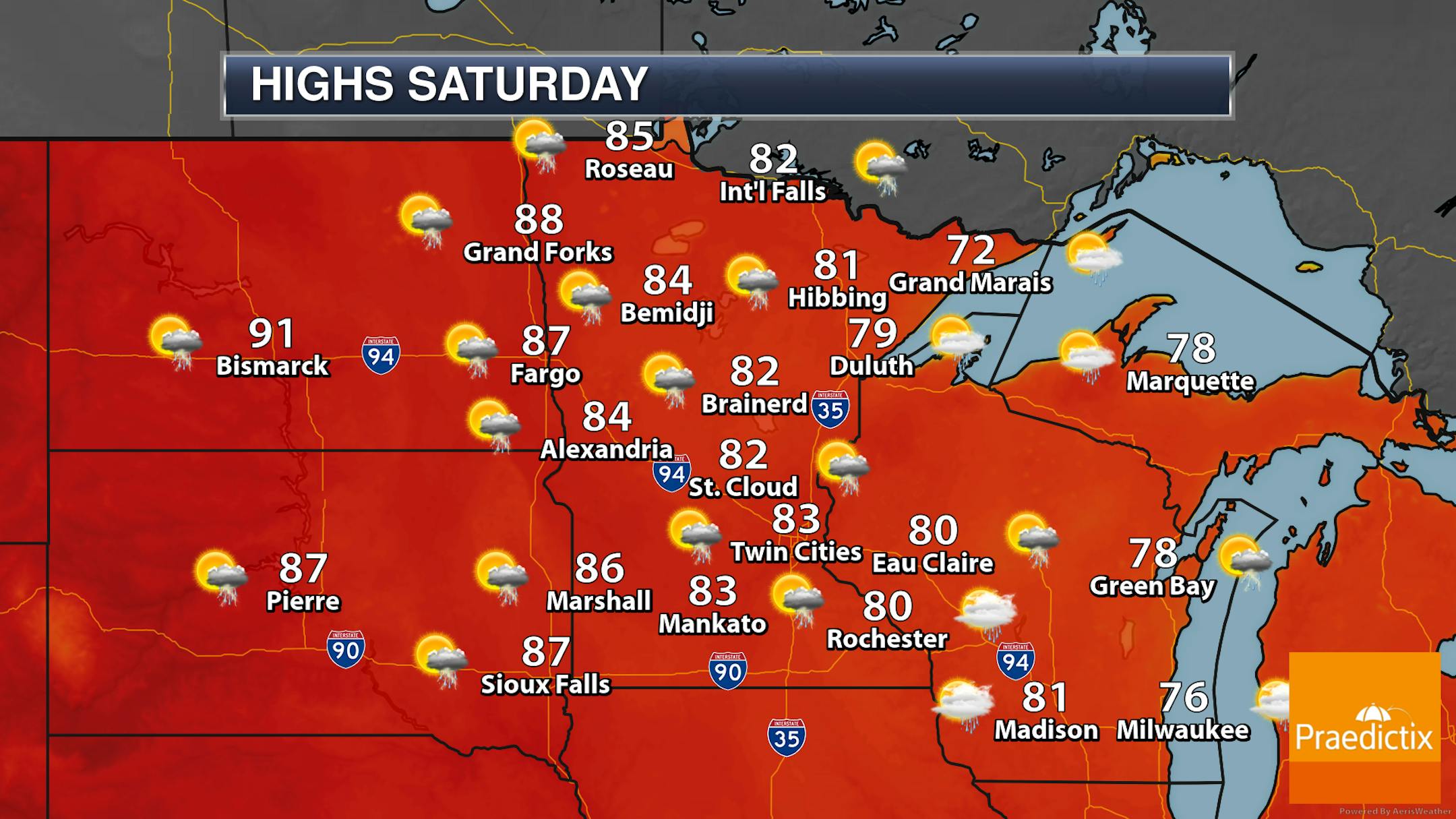
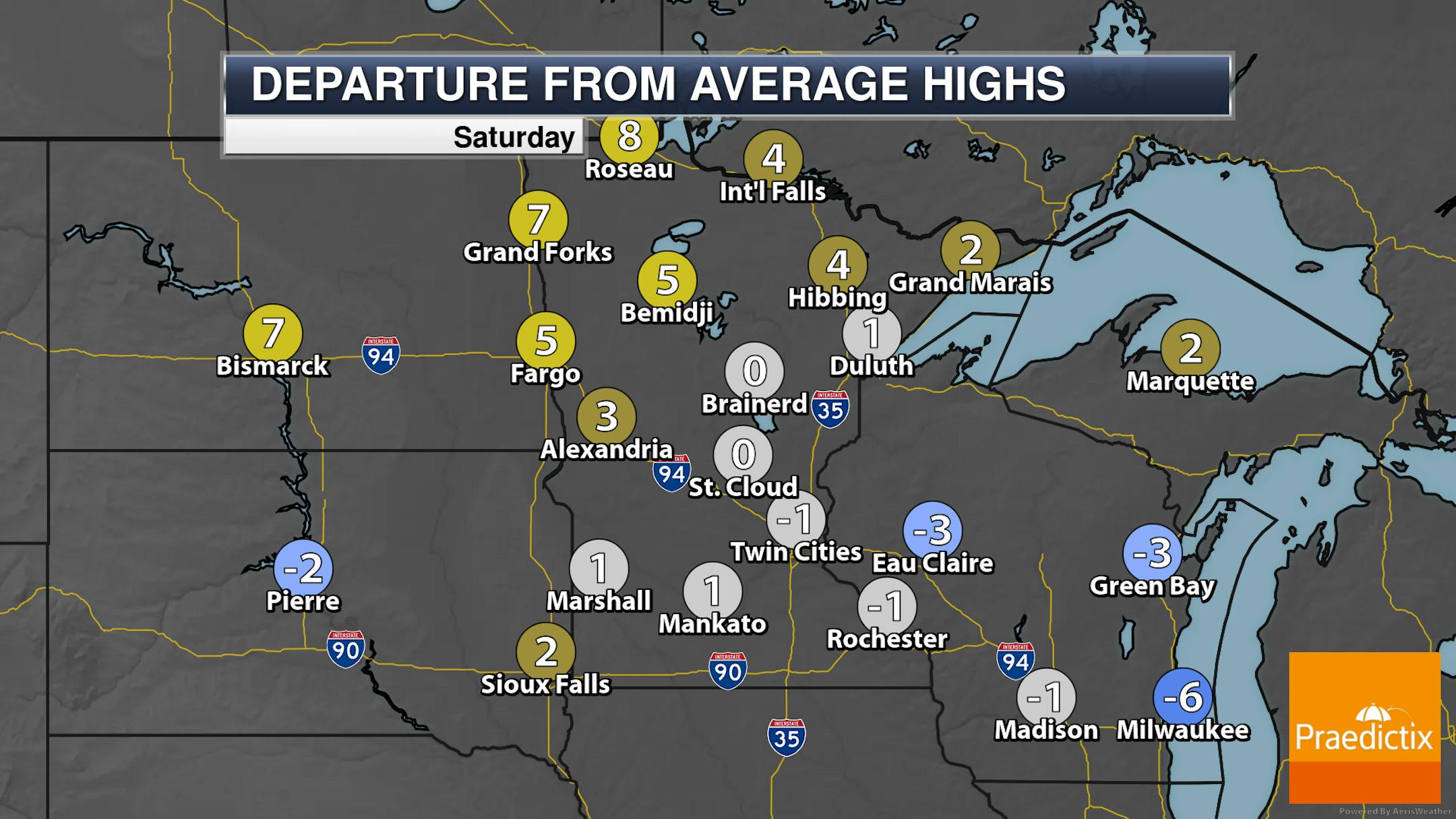
As we look statewide, I think the odds of a few showers or storms will be higher during the afternoon into the overnight hours out across portions of western and northern Minnesota. Highs will climb into the 80s across much of the state, with 70s in parts of northern Minnesota and along the North Shore.

_______________________________________________

Stretch Of Heat: Upper 80s to 90s Sunday into Next Week
(The Minnesota Star Tribune)

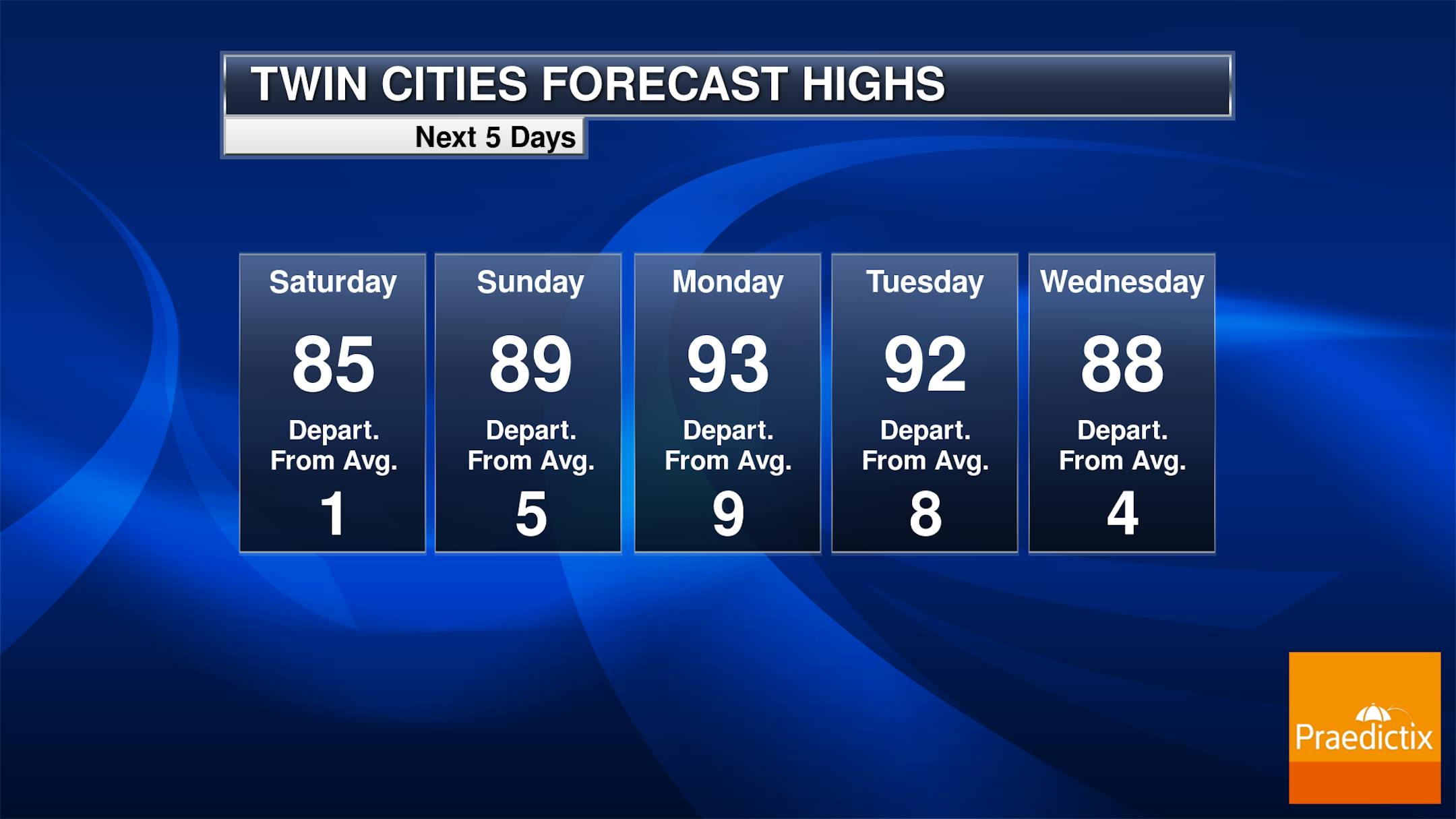
Enjoy the "coolness" of Saturday as we will start to work hotter weather back in as we head toward the second half of the weekend into next week. Highs from Sunday through at least Thursday next week will be at or around 90F, with the warmest days currently expected to be Monday and Tuesday in the low to mid-90s. Sunny skies are expected Sunday and Monday. We watch some storms potential Monday Night into Tuesday morning (mainly off to our north) and then again Tuesday Night. The storms Tuesday Night will help usher in "slightly" cooler weather Wednesday (only by a handful of degrees).

_______________________________________________

Severe Risk Tuesday
(The Minnesota Star Tribune)

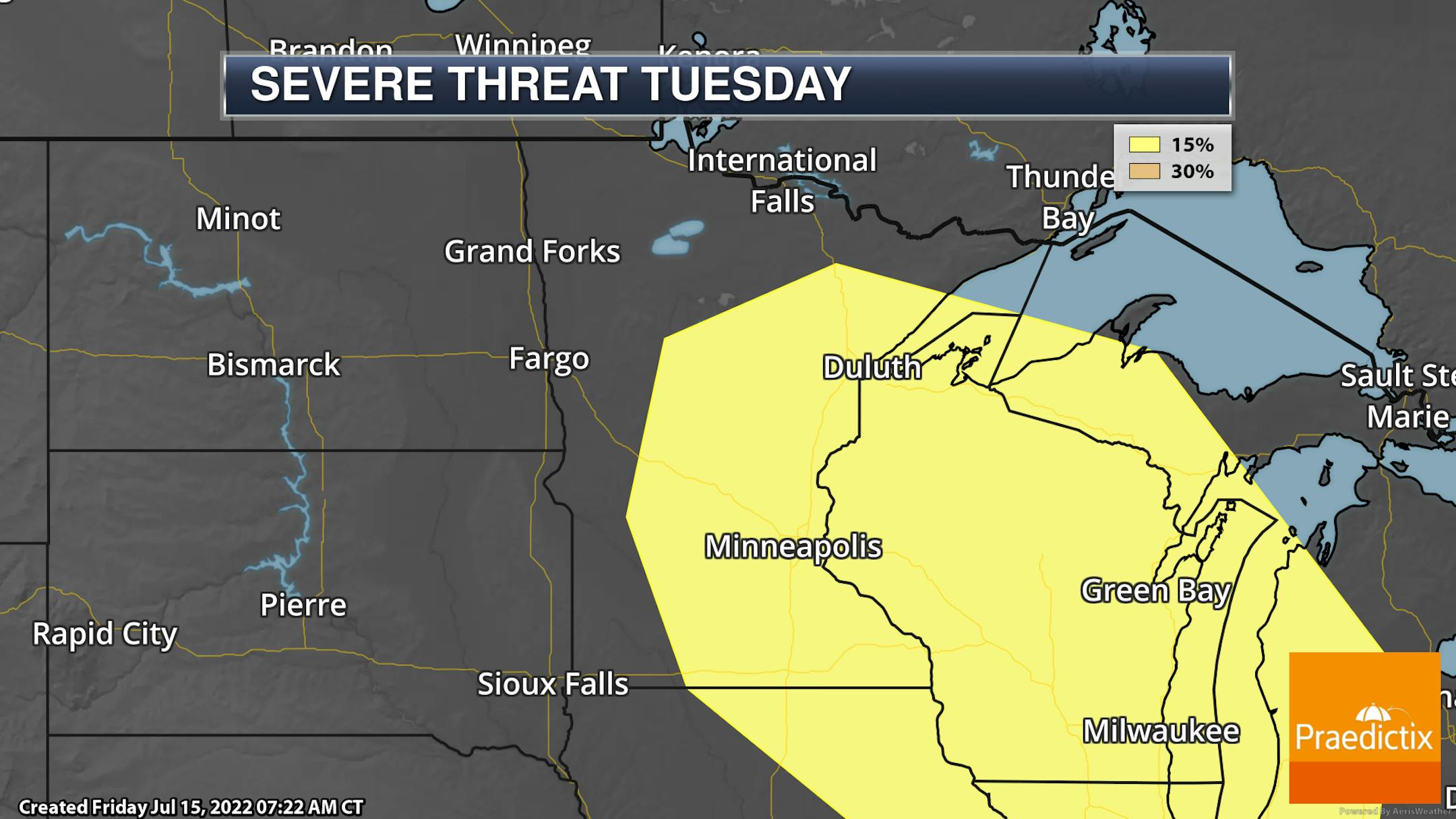
A few of the storms late Tuesday into Tuesday night could be on the strong side, with the equivalent of a Slight Risk (threat level 2 of 5) in place. Damaging winds will be the main threat at this time but stay tuned for the latest.

_______________________________________________
More Heat Brewing With Very Little Rain
By Paul Douglas

The old adage "When in a drought don't predict rain" rings true. 3% of Minnesota is in moderate drought, with a bullseye right over the Twin Cities metro. According to NOAA, June was the 5th driest on record in the Twin Cities in the last 152 years. They calculate it would take over 5" of rain falling in one month to pull out of the drought.

Most of Minnesota has been in drought for over 2 years, with a few soggy exceptions. Milaca picked up 2.3" rain from Thursday night's fickle storms with 3-5" and flash flooding over parts of western Wisconsin. All or nothing - not much in between.

An extended heatwave is brewing next week with a string of 90s and very little rain in the forecast. 100-degree heat can't be ruled out, but the core of triple-digit heat should remain just south of Minnesota. That said, factoring humidity, heat indices will easily top 100F a few days next week.

We are now at the midpoint of meteorological summer. June sizzled and late July and August will be stinking hot. Cue the Dog Days.

_______________________________________________
Paul's Extended Twin Cities Forecast

SATURDAY: Partly sunny, sticky. Wake up 68. High 86. Chance of precipitation 10%. Wind SE 5-10 mph.

SUNDAY: Sunny and hot. Wake up 71. High 90. Chance of precipitation 0%. Wind SE 5-10 mph.

MONDAY: Sunny and hotter. Wake up 72. High 94. Chance of precipitation 10%. Wind SW 8-13 mph.

TUESDAY: Sizzling heat. MSP record is 100F. Wake up 74. High 97. Chance of precipitation 20%. Wind S 10-20 mph.

WEDNESDAY: More clouds, slight relief. Wake up 70. High 89. Chance of precipitation 10%. Wind NW 15-25 mph.

THURSDAY: Sunny with a late-day T-storm. Wake up 67. High 91. Chance of precipitation 30%. Wind NW 8-13 mph.

FRIDAY: Dog Days linger. Hot sunshine. Wake up 68. High 90. Chance of precipitation 10%. Wind N 7-12 mph.

_______________________________________________
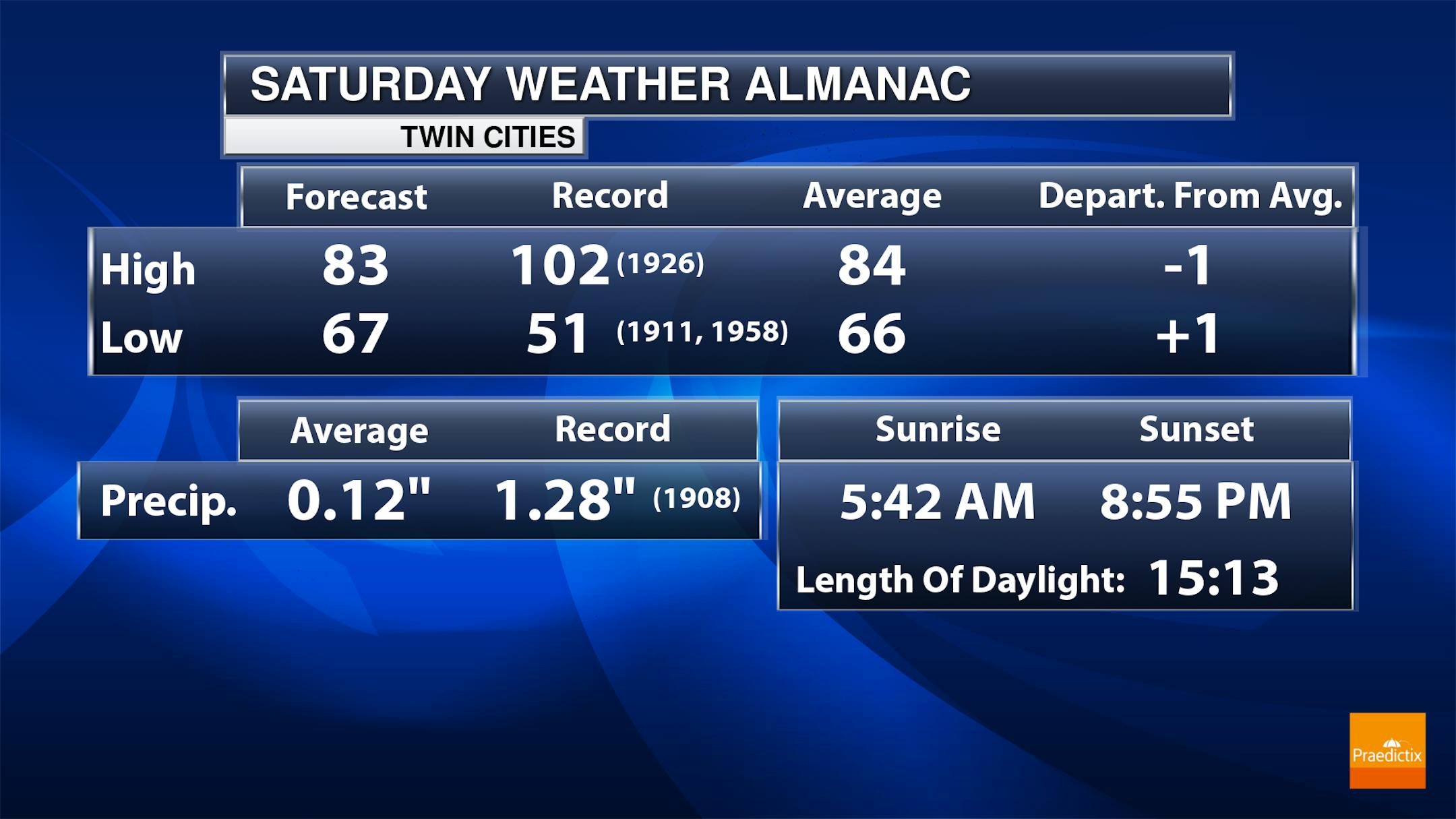
Minneapolis Weather Almanac And Sun Data
July 16th

(The Minnesota Star Tribune)

*Length Of Day: 15 hours, 14 minutes, and 07 seconds
*Daylight LOST Since Yesterday: 1 minute and 40 seconds

*When Do We Drop Below 15 Hours Of Daylight?: July 24 (14 hours, 58 minutes, 52 seconds)
*When Does The Sun Start Rising At/After 6 AM?: August 3rd (6:00 AM)
*When Does The Sun Start Setting At/Before 8:30 PM?: August 8th (8:29 PM)

_______________________________________________
This Day in Weather History
July 16th

2006: A heat burst occurs over west central and central Minnesota. The temperature at Canby jumped from 91 degrees to 100 degrees in 40 minutes from 10:35pm to 11:15pm. At the same time the dew point temperature dropped from 63 to 32 degrees. Heat bursts are caused by dying thunderstorms with very warm air aloft.

1963: A downpour falls at St. Charles, where half a foot of rain accumulates in one day.

_______________________________________________
National Weather Forecast

(The Minnesota Star Tribune)

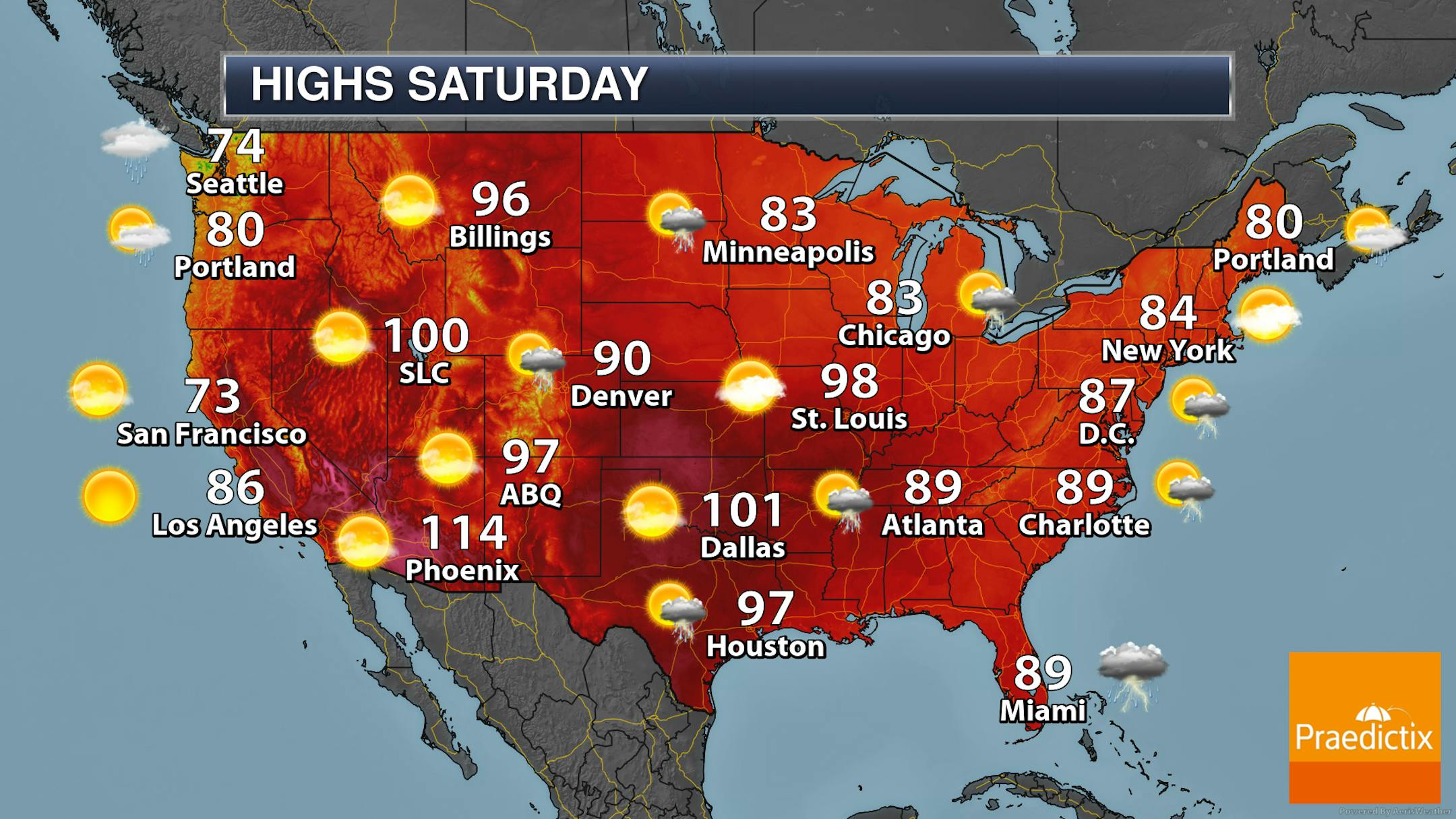
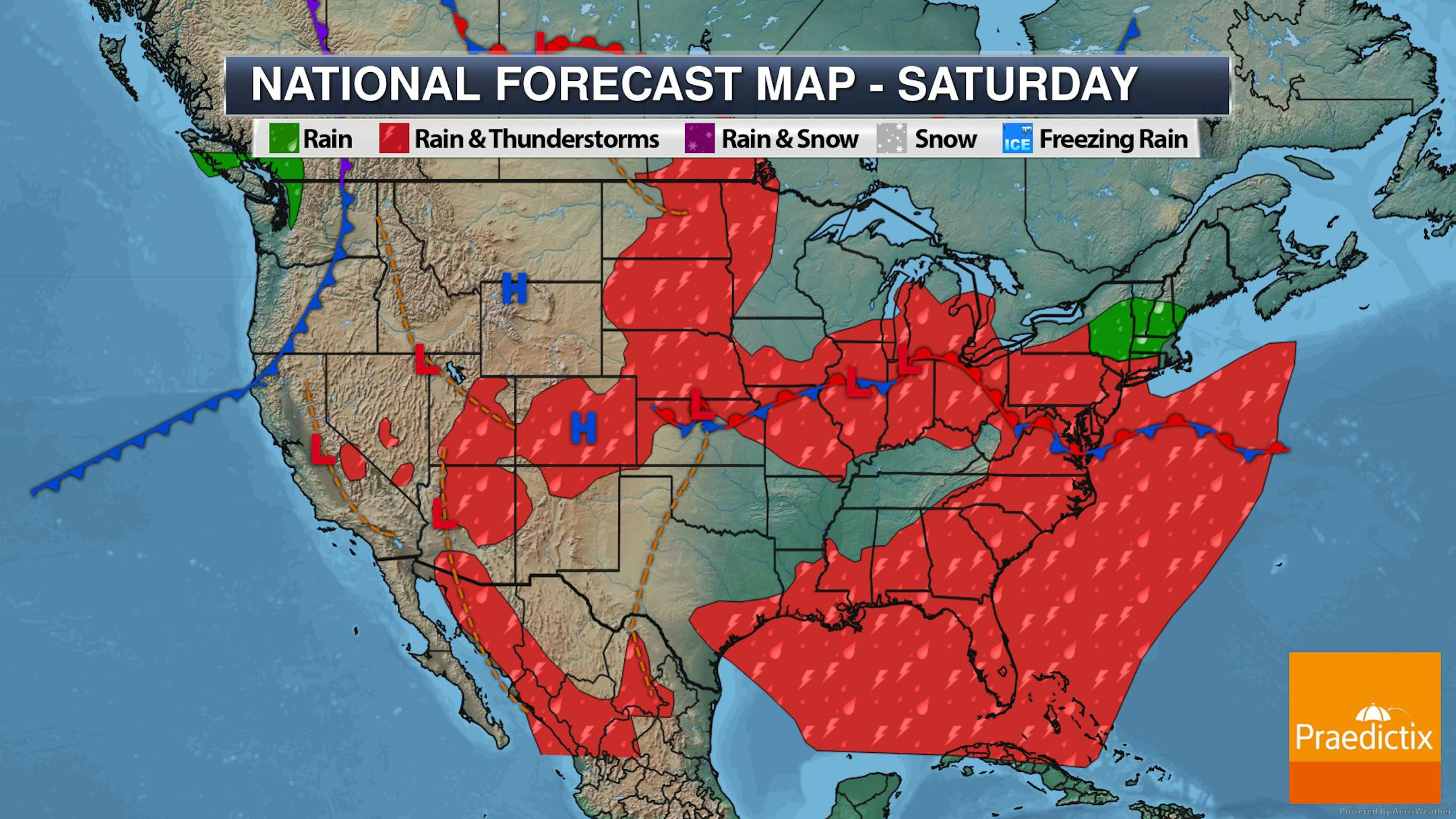
On Saturday, a frontal boundary across the central U.S. stretching to the Mid-Atlantic will help spark showers and thunderstorms. Storms will also be possible in the Southeast and Northern Plains.

(The Minnesota Star Tribune)

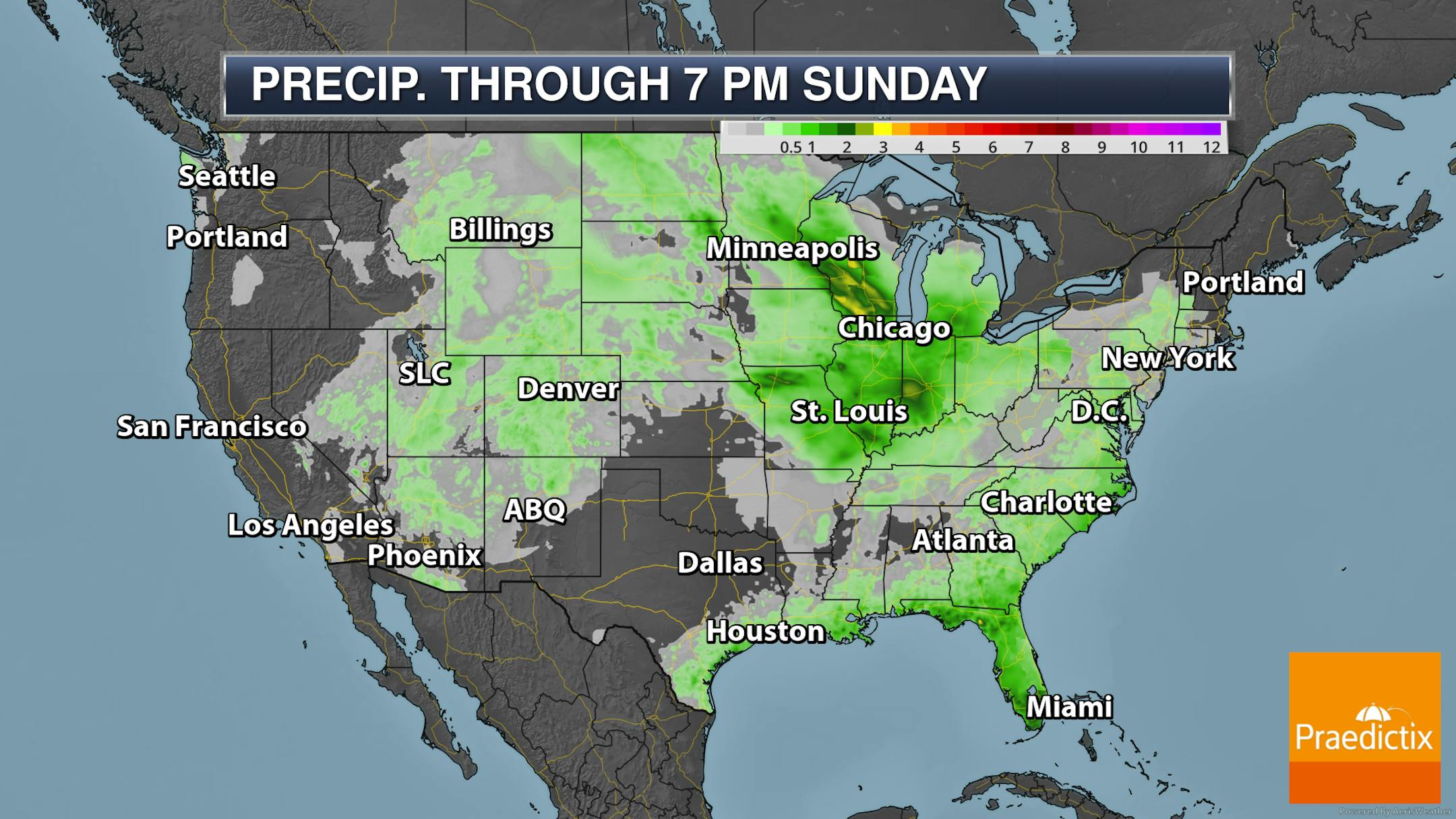
Heavy rainfall is possible from Friday through Sunday across portions of the Great Lakes and Ohio Valley, with over 3" possible for spots. Some heavier rain is also likely in the Southeast, especially along the Gulf Coast.

_______________________________________________

UK heatwave: NHS braced as minister says temperatures could hit 40C

More from The Guardian: "Ministers are preparing for a surge in demand on the NHS and other essential services ahead of a heatwave that could result in record-breaking temperatures in Britain. The Met Office has issued an amber extreme heat warning across much of England and Wales from Sunday to Tuesday, with temperatures expected to exceed 35C at their peak in southern, central and eastern areas of England. After chairing a meeting of the Cobra emergency civil contingencies committee in Whitehall, Kit Malthouse, the Cabinet Office minister, admitted that health services could come under increased pressure and warned that temperatures could hit 40C."

Heatflation: How sizzling temperatures drive up food prices

More from The Grist: "Vicious heat waves are sweeping parts of the globe this week, along with the dangers that come with blazing-hot temperatures: wildfires, dehydration, and even death. The hot weather could also push prices up for food, making inflation even worse. Western Europe is facing sweltering temperatures again this week, with the thermostat hovering around 110 degrees in Seville in southern Spain. More than 20 wildfires are burning in Spain and Portugal, and persistent drought has left rivers and reservoirs running so low that they're exposing ancient artifacts. In Italy, the hot and dry conditions are expected to destroy a third of the seasonal harvest of rice, corn, and animal fodder — at a minimum. Locusts have descended on the island of Sardinia in the worst invasion in three decades, hurting the production of hay and alfalfa. The European Commission recently downgraded its soft-wheat harvest estimates from 130 million tons to 125 million tons — more bad news amid a food shortage precipitated by Russia's blockade on exports from Ukraine. (Russia and Ukraine are among the world's biggest exporters of grain.)"

How Tagged Turtles Are Boosting Tropical Cyclone Prediction

More from Hakai Magazine: "Even with good data, it's hard to predict tropical cyclones, which often appear with little warning and wander drunkenly around the world's oceans. But five years ago, Olivier Bousquet, now the research director for France's Ministry of Sustainable Development, was tasked with forecasting storms' strengths and paths in the cyclone-infested southwest Indian Ocean. The need for better predictions was great. The area gets nine or 10 cyclones a year, and the storms are getting stronger. Tropical Cyclone Idai, in 2019, killed more than 1,000 people in Mozambique and 2014's Gafilo killed 350 in Madagascar. Unlike in some other parts of the ocean—like the North Atlantic, where the US National Oceanic and Atmospheric Administration flies weather drones—Bousquet had almost no data to work with. Sure, there are satellites that spy on the ocean's surface, but those are biased around coastlines and blind in clouds, which storms have in spades. Just a handful of floating oceanographic buoys collected temperature, depth, and salinity information where Bousquet needed it. So he set out to find a new source of data."

_______________________________________________

Thanks for checking in and have a great day! Don't forget to follow me on Twitter (@dkayserwx) and like me on Facebook (Meteorologist D.J. Kayser).

- D.J. Kayser

(The Minnesota Star Tribune)
about the writer

about the writer

D.J. Kayser

See Moreicon