

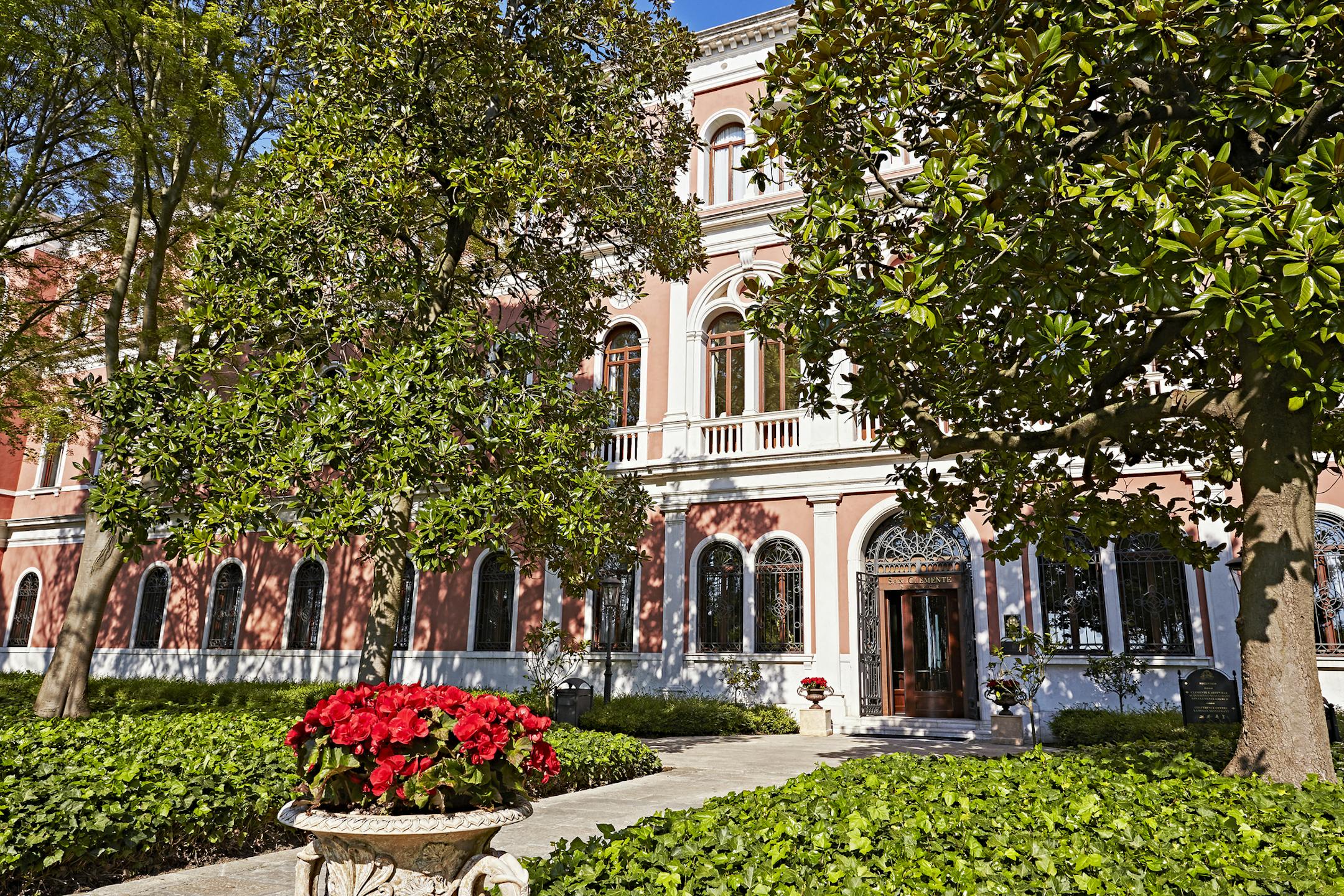
The San Clemente Palace Kempinski offers everything you'd expect from a stylish European retreat. There is a mega-spa specializing in aromatherapy massages, a cabana-fringed pool and a sprawling sculpture garden. The rooms, situated in a renovated dusky rose palazzo, are all Murano chandeliers and creamy marble.
But there is one added amenity, by far the property's most impressive. Although the San Clemente sits on its own private island, it isn't floating far out to sea. Ten minutes away by boat shuttle is nothing less than Europe's most sustained masterwork. Step off the boat, and you're in La Serenissima, which is pretty much Italian for Venice.
The enticing double act — a state-of-the-art resort hanging off a venerable city — is part of a fairly recent boon that adds the one thing that Venice had been missing: island hotels that serve as tranquil refuges. Sure, the city is an overflowing treasure box. But it has also become a cruise-ship dump, clogged with tourists by day and boozy bachelorette parties by night. The unlikely mix of selfie sticks and gilded elegance can ultimately prove overwhelming if you can't catch your breath. Now you can.
The classic Cipriani (opened in 1958, with exorbitant nightly rates) was one of the first properties lying safely off in the Venetian Lagoon. Recently, it has been joined by a new wave of island hotels that allow the best of both universes: the busy grandeur of Venice by day, and the lulling detox of a resort that lets you relax by night. Call it the best of the Old World and the new.
When I checked into the San Clemente for a fall weekend stay, I wasn't yet ready to navigate Venice's singular magic. Jet lag necessitates its own kind of detox, so I wandered through the sprawling garden, downed a Bellini, and slept off the red-eye flight.
I was fully alert the next morning for my big entrance into the whirl of Venice. And you need to be prepared. Approaching Italy's jewelbox means accepting a kind of fever dream of unapologetic, defiantly baroque opulence. Though there's another seam at work, as well. A city famous for the courage of its half-cracked convictions — even if that means planting itself on water — Venice offers more than old-school posturing. Imbued with a sense of theatricality, it also knows how to put on a flamboyant show, and just about every water-licked corner offers a performance designed to dazzle. Musicians bang away on grand pianos in the middle of the piazza. Waiters glide by in tuxedo jackets, ducking pigeons. Gondoliers artfully lounge against marble arcades like masters of chic, ribbons hanging from their straw boaters.
Glorious beauties
Piazza San Marco, the main square and one epic stage set, is the city's most impressive first act, but then it's best to shake the mobs and just wander. Because the city is really one running artwork, it's hard to make a wrong turn; you're never going to bump into some brutalist building that deflates the fantasy. But I like to map a route that follows some of the best Venetian masterworks, and that usually entails starting with a church because even the spiritual becomes a theatrical display of beauty in Venice.
This trip I stopped first at the Basilica of Santa Maria della Salute, a 17th-century showpiece built in somewhat begrudging gratitude for the fact that the plague had decimated only a third of the city's population. The running puzzle in Venice is how many angels you can fit on a cathedral rooftop, though it's easy to lose count at Santa Maria, where the facade is crusted with nymphs, seraphs and cherubs, plus plenty of saints for good measure. Inside there is one High Baroque gilded high altar and a Titian mural, depicting the descent of the Holy Ghost.


