

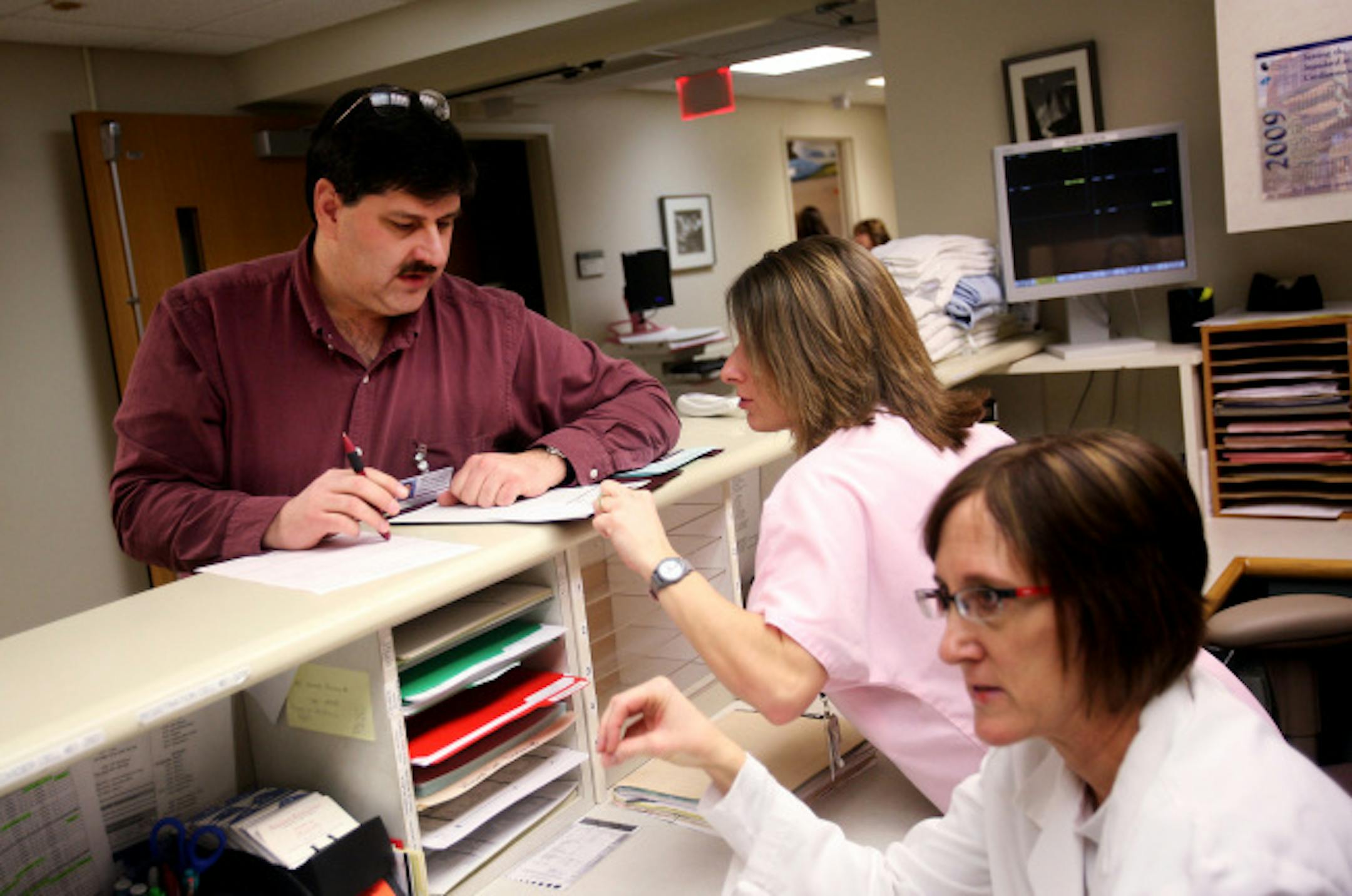
WASECA -- It's easy to mistake Rhonda Wallace, in her white coat and stethoscope, for a doctor.
Many patients do, the first time they see her in the emergency room at Waseca Medical Center.
She's the one who patches their wounds, reads their X-rays and diagnoses their pneumonia. But she's always careful to correct any misconceptions.
The fact is, there are no doctors at Waseca's emergency room, at least most of the time.
Two years ago, the hospital gave up trying to find physicians for its small ER in southern Minnesota. Instead, it hired what it calls "midlevels" -- nurse practitioners and physician assistants such as Wallace -- to staff it around the clock.
"For the most part, we're it," said Wallace, a former nurse. Whether it's a cut finger or a heart attack, she said, "We do what we're required to do."
In Waseca and elsewhere, a chronic shortage of doctors is forcing rural hospitals to "be creative," as one expert put it, to keep their emergency rooms alive. In this case, the answer was to hire other medical professionals and put them on the front lines.
By law, physician assistants and nurse practitioners are allowed to do much of what doctors do -- diagnose and treat patients -- as long as they have a doctor's supervision. In Waseca, local doctors serve as backup, mostly by phone, said Michael Milbrath, the hospital's executive vice president. But they can be there in minutes if needed.


