

Here's a question I've been mulling in recent months: Is Alex Tabarrok right? Are people dying because our coronavirus response is far too conservative?
I don't mean conservative in the politicized, left-right sense. Tabarrok, an economist at George Mason University and a blogger at Marginal Revolution, is a libertarian, and I am very much not. But over the past year, he has emerged as a relentless critic of America's coronavirus response, in ways that left me feeling like a Burkean in our conversations.
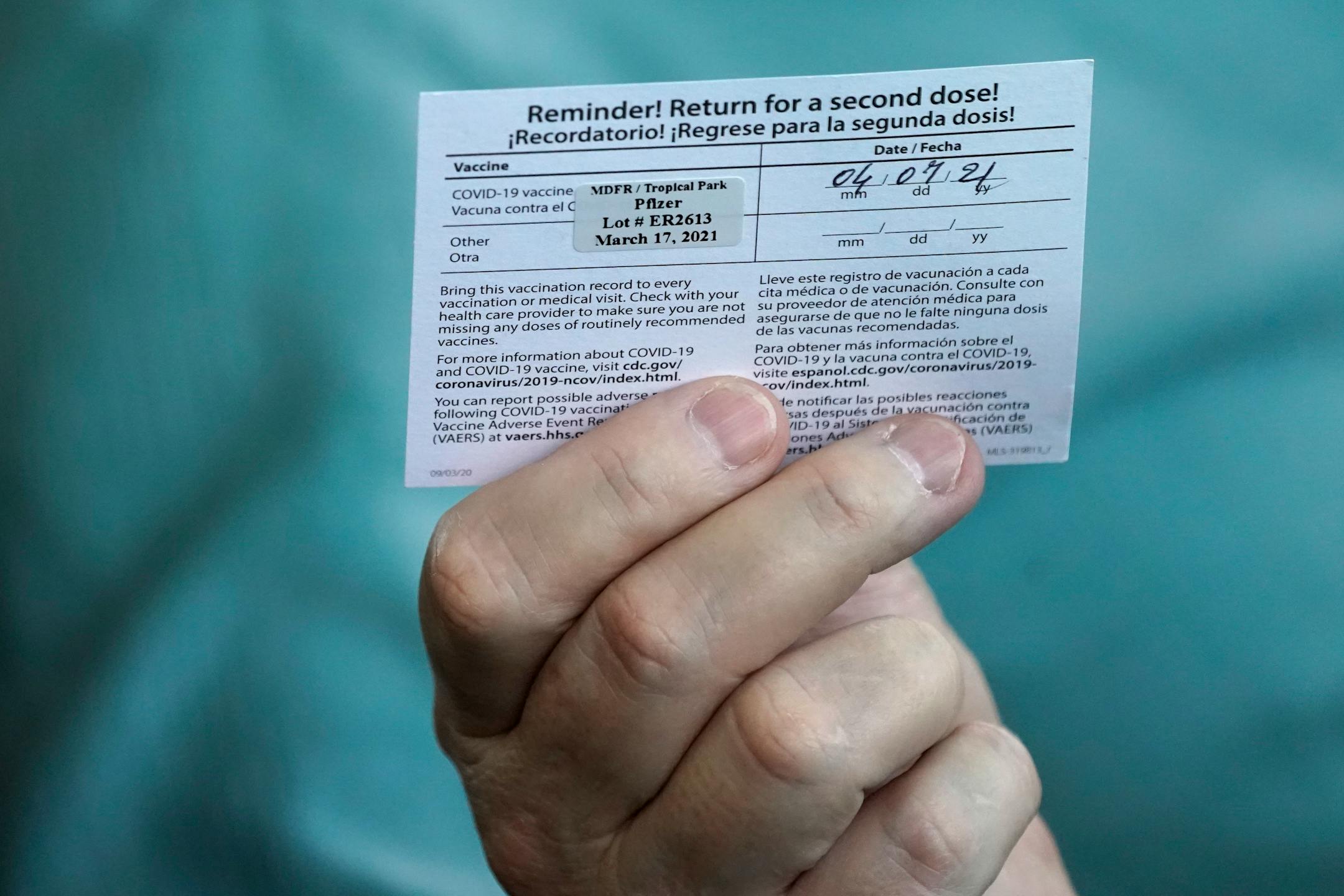
He called for vastly more spending to build vaccine manufacturing capacity, for giving half-doses of Moderna's vaccine and delaying second doses of Pfizer's, for using the Oxford-AstraZeneca vaccine, for the Food and Drug Administration to authorize rapid at-home tests, for accelerating research through human challenge trials. The through line of Tabarrok's critique is that regulators and politicians have been too cautious, too reluctant to upend old institutions and protocols, so fearful of the consequences of change that they've permitted calamities through inaction.
Tabarrok hasn't been alone. Combinations of these policies have been endorsed by epidemiologists, like Harvard's Michael Mina and Brown's Ashish Jha; by other economists, like Tabarrok's colleague Tyler Cowen and the Nobel laureates Paul Romer and Michael Kremer; and by sociologists, like Zeynep Tufekci. But Tabarrok is unusual in backing all of them, and doing so early and confrontationally. He's become a thorn in the side of public health experts who defend the ways regulators are balancing risk. More than one groaned when I mentioned his name.
But as best as I can tell, Tabarrok has repeatedly been proved right, and ideas that sounded radical when he first argued for them command broader support now. What I've come to think of as the Tabarrok agenda has come closest to being adopted in Britain, which delayed second doses, approved the Oxford-AstraZeneca vaccine despite its data issues, is pushing at-home testing and permitted human challenge trials, in which volunteers are exposed to the coronavirus to speed the testing of treatments. And for now it's working: Britain has vaccinated a larger percentage of its population than the rest of Europe and the United States have and is seeing lower daily case rates and deaths.
Many of these policies could still help America and the world — particularly with the more contagious, and more lethal, B.1.1.7 variant spreading. Just this week, Atul Gawande, who served on President Biden's Coronavirus Task Force, endorsed delaying second doses in order to accelerate initial vaccinations and slow the rise in cases. But there's no evidence that the FDA, the Biden administration or global health authorities are any closer to doing so. At this point, it's worth asking why.
At the core of this debate sit two questions: How much information do regulators need to act? And how should regulators balance the harms of action against the harms of inaction? The FDA's critics feel the agency demands too much information before it moves and is too comfortable with the costs of not making decisions, even in an emergency. "Not doing something is a choice," said Emily Oster, a health economist at Brown. "It's not a safe harbor."
Daniel Carpenter is a professor of government at Harvard, and an expert on the FDA, and he thinks its critics underestimate the costs of a mistake. "Effective therapies depend upon credible regulation," he told me. Mass vaccination campaigns work only if the masses take the vaccines. "In this way, it's a deeply social technology, and so the credibility is everything."


