

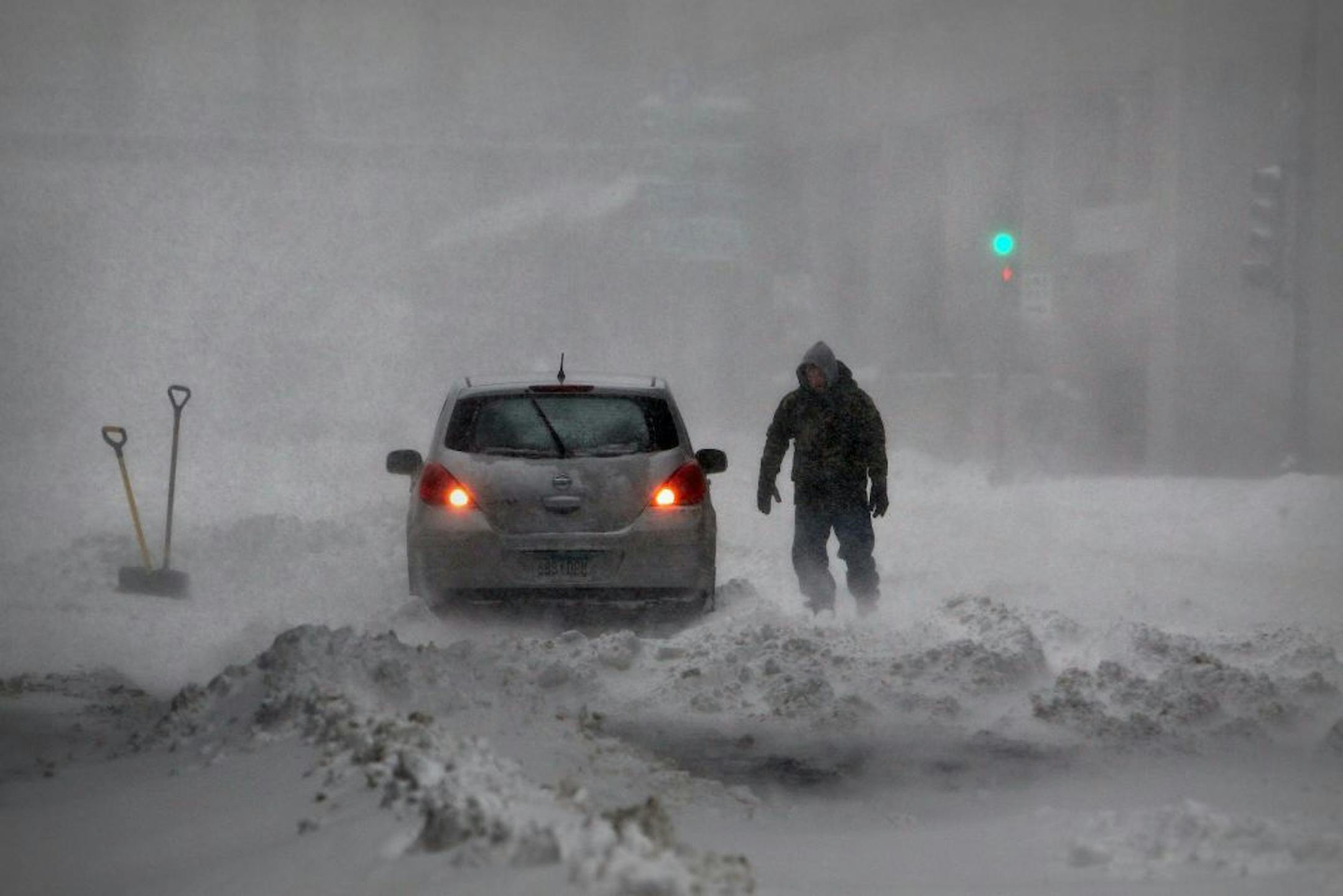
For Minnesotans who might be welcoming global warming, Bob Henson has a message: Don't sell your snowblower.
A warming climate might actually mean more snow across the northern Great Plains, said Henson, author of "The Rough Guide to Climate Change," who will be the keynote speaker Monday at the sixth annual Northern Plains Winter Storms Conference at St. Cloud.
Henson's address will be well-timed.
Friday brought the first official autumn frost to the Twin Cities -- a 32-degree reading at Minneapolis-St. Paul International Airport at 6:15 a.m. -- two weeks later than the long-term median date. At the same time, however, the national Climate Prediction Center added a strong likelihood of above-normal snow to its winter outlook for the Upper Midwest, accompanying strong chances of below-normal temperatures.
"One of the big messages is that snowfall is increasing across parts of the far northern plains," said Henson, a media relations associate for the University Corporation for Atmospheric Research in Boulder, Colo. "It appears to be decreasing toward the central plains. The natural north-south divide in snowfall is becoming even more pronounced."
For the near future, that appears to be a case of the region's climate legacy -- cold -- mixing with the ongoing warming trend. A warmer climate means more water vapor in the air, and in the Twin Cities, the steepest increases in normal temperatures, as measured over 30 years, have been in some of the coldest months: January, November and December. But those months are still colder than most of the others.
"Because it's so cold in the middle of winter, there's a lot of room for warming up and still having a lot of snow," Henson said.
The storms conference, sponsored by St. Cloud State University, attracts meteorologists and other weather aficionados. In addition to reviews of some of the more memorable episodes from last winter -- the fourth-snowiest on record in the Twin Cities -- several workshops will focus on how people perceive and respond to winter weather warnings and on ideas for new "misery" indexes to describe conditions. The two-day event at the Holiday Inn in St. Cloud costs $75, but $25 for students.


