
Iran airstrikes mark shift in strategy

The White House welcomed Iran's efforts, but it also said the two countries do not coordinate

The New York Times
December 4, 2014 at 5:37AM
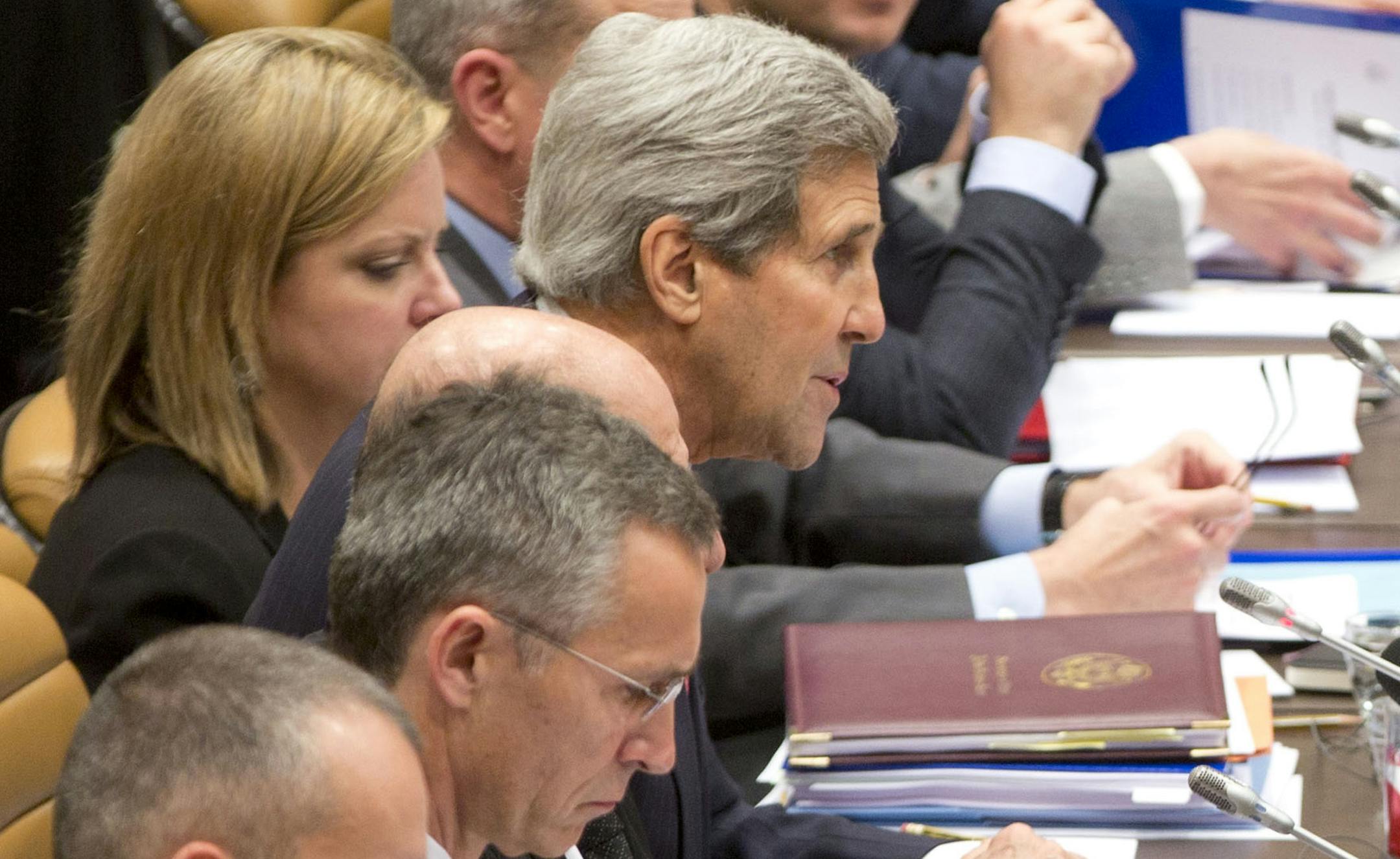
U.S. Secretary of State John Kerry, front center, chairs a round table meeting of the global coalition to counter the Islamic State militant group at NATO headquarters in Brussels on Wednesday, Dec. 3, 2014. U.S. Secretary of State Kerry opened on Wednesday a high-level meeting at NATO headquarters of countries participating in the campaign against the Islamic State organization to assess whatís been accomplished and what remains to be done. (AP Photo/Virginia Mayo) ORG XMIT: MIN2
Secretary of State John Kerry, center, chaired a round table meeting of the global coalition to counter the ISIL at NATO headquarters in Brussels on Wednesday. (The Minnesota Star Tribune)

BAGHDAD – When Iranian fighter jets struck extremist targets this week in Iraq, enforcing a self-declared buffer zone along the border, it was only the latest display of Tehran's new willingness to conduct military operations openly on foreign battlefields rather than covertly and through proxies.

The shift stems in part from Iran's deepening military role in Iraq in the war against the Sunni extremists of the Islamic State in Iraq and the Levant (ISIL). But it also reflects a profound shift in Iran's strategy, a new effort to exert Shiite influence around the region and counter Sunni powers such as Saudi Arabia.

Analysts also say it follows a calculation that Iran's overt military activities will be tolerated or even encouraged by what its rulers see as a less-engaged United States.

Although there is no direct coordination with the U.S. military in the region, there is what might be characterized as a de facto nonaggression pact, in which the two sides stay out of each other's way, just as the Syrian government and the Americans do in managing airstrikes in Syria.

Other support

Iran has offered weapons to the Lebanese army and supported the Shiite Houthi rebels in Yemen that have taken over the capital, Sanna, where on Wednesday a car bomb struck the Iranian ambassador's residence.

In Syria, Hezbollah, the Iranian-supported Shiite militant movement, and the Iranian paramilitary Quds force, have kept President Bashar Assad in power. And in Iraq, Iran is cooperating at arm's length with the United States, as the two rivals focus on fighting ISIL.

The Obama administration has made clear that while it welcomes Iran's help in fighting the ISIL extremists, there is no actual coordination.

"I think it's self-evident that if Iran is taking on ISIL in some particular place and it's confined to taking on ISIL and it has an impact, it's going to be — the net effect is positive," Secretary of State John Kerry said Tuesday in Brussels, where he was attending meetings with other members of the coalition against ISIL. "But that's not something that we're coordinating."
Iran's once elusive spymaster, Maj. Gen. Qassem Suleimani, commander of the Quds force who has spent a career in the shadows orchestrating terrorist attacks — including some that killed U.S. soldiers in Iraq — has emerged as a public figure, with pictures of Suleimani on Iraq's battlefields popping up on social media.

The apparent shift in Iran's strategy has been most noticeable in Iraq, where even U.S. officials acknowledge the decisive role of Iranian-backed militias, particularly in protecting Baghdad from an assault by ISIL.

Although Iran's growing military role has proved essential in repelling the advances of ISIL, U.S. officials worry that it could ultimately destabilize Iraq by deepening sectarian divisions. Iraq's Sunnis blame the Iranian-backed Shiite militias for sectarian abuses and are reluctant to join with the Iraqi government in the fight against extremists because of Iran's influence.

"Our message to Iran is the same today as it was when it started. And as it is to any neighbor in the region that is involved in the anti-ISIL activities, and that's that we want nothing to be done that further inflames sectarian tensions in the country," said Rear Adm. John F. Kirby, the Pentagon's press secretary.

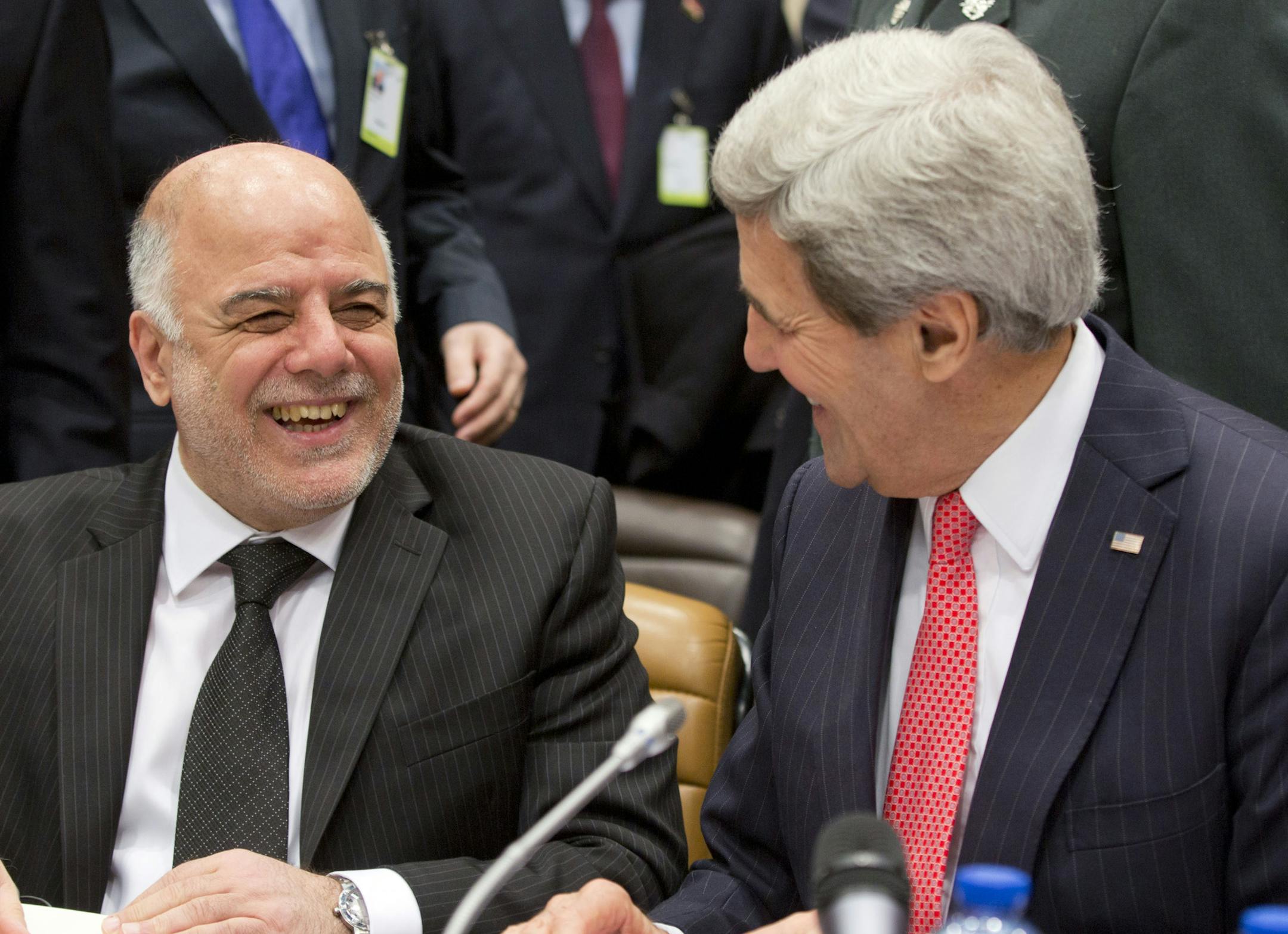
U.S. Secretary of State John Kerry, right, and Iraqi Prime Minister Haider al-Abadi, left, speak during a round table meeting of the global coalition to counter the Islamic State militant group at NATO headquarters in Brussels on Wednesday, Dec. 3, 2014. U.S. Secretary of State John Kerry opened on Wednesday a high-level meeting at NATO headquarters of countries participating in the campaign against the Islamic State organization to assess what’s been accomplished and what remains to be d
U.S. Secretary of State John Kerry, right, and Iraqi Prime Minister Haider al-Abadi, left, speak during a round table meeting of the global coalition to counter the Islamic State militant group at NATO headquarters in Brussels on Wednesday, Dec. 3, 2014. U.S. Secretary of State John Kerry opened on Wednesday a high-level meeting at NATO headquarters of countries participating in the campaign against the Islamic State organization to assess what’s been accomplished and what remains to be done. (AP Photo/Virginia Mayo) (The Minnesota Star Tribune)
about the writers

about the writers

TIM ARANGO

THOMAS ERDBRINK

More from No Section

See More
FILE -- A rent deposit slot at an apartment complex in Tucker, Ga., on July 21, 2020. As an eviction crisis has seemed increasingly likely this summer, everyone in the housing market has made the same plea to Washington: Send money — lots of it — that would keep renters in their homes and landlords afloat. (Melissa Golden/The New York Times) ORG XMIT: XNYT58
Melissa Golden/The New York Times

It’s too soon to tell how much the immigration crackdown is to blame.