
Investing at market highs can be scary. Do it anyway.

The goal is to buy low and sell high, but don’t let markets being at all-time highs prevent you from starting your investment portfolio.

For the Minnesota Star Tribune
September 20, 2025 at 12:01PM
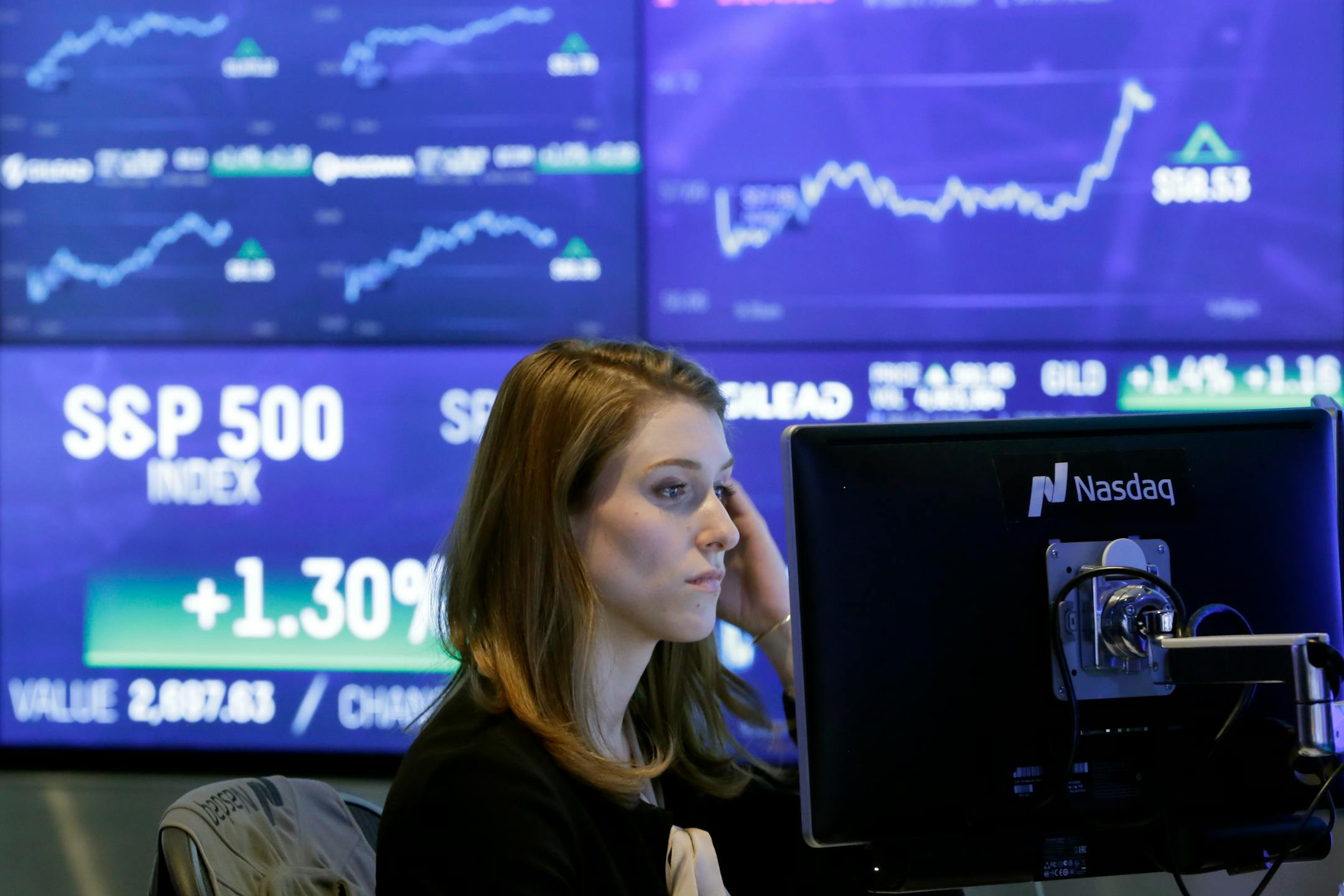
If you are worried about adverse market timing, then divide your investment dollars into three or four slices and implement multiple purchases through weeks or months. (Richard Drew/The Associated Press)

If you have money invested in the stock market, you are thrilled to see the S&P 500 trading at all-time highs.

If you have money sitting in cash you would like to invest, then buying at all-time highs is not nearly as exciting.

No one wants to invest near a peak only to suffer a steep decline. Our brains tend to vividly recall the pain of sharp corrections while forgetting any experience associated with gradual gains. Selloffs stick with us emotionally whereas long, steady climbs are “too normal” to notice.

Here’s the conundrum: If the goal is to buy low and sell high, you are immediately wrong on one of those if you buy when stocks have never been higher. That conclusion might seem correct but will lead to missed opportunities.

It might feel scary to buy when markets are at all-time highs. Long-term investors should do it anyway. Here are a few reasons why:

Fed cuts at all-time highs are bullish

The Federal Reserve cut interest rates by 0.25% this past Wednesday and forecasted two more cuts before year-end. In 20 previous instances of Fed cuts when the S&P 500 traded at all-time highs, the S&P was higher one year later every time, with average returns of 14%.

All-time highs are normal

As of Sept. 15, the S&P 500 had set 25 all-time highs this year. That follows 57 all-time highs in 2024. Since 1975, the S&P 500 has averaged 19 new all-time highs per calendar year. Since 2012, it has averaged 33 new highs per year.

In other words, new highs inevitably lead to more new highs, which has meant positive returns on the horizon. It might also surprise you that since 1952, the S&P 500 has spent nearly 45% of its trading days within 5% of an all-time high.

You can reduce risk by dollar-cost-averaging

If you are worried about adverse market timing, then divide your investment dollars into three or four slices and implement multiple purchases through weeks or months. This mitigates the chance of investing all your cash near a market peak. It also reduces the pressure of guessing the perfect day to buy stocks. Only two outcomes can happen: Stocks go up, and you feel good about investing that first chunk. Or stocks go down, and you buy more at a better price.

Even bad timing will lead to attractive returns

Think for a moment about what would happen if you invested in stocks at the worst-possible time: immediately before precipitous declines. What events come to mind? Black Monday (October 1987). The Dot-Com Bubble (March 2000). The COVID-19 pandemic (February 2020).

Dollars invested into the S&P 500 in 1987 (before Black Monday) have returned roughly 11% per year since then. Money invested in early 2000 around the peak of the dot-com bubble has returned around 8% per year. Cash invested immediately before the COVID-19 panic has earned almost 15% per year. In all cases, the long-term returns have still been impressive.

You don’t have to buy the index

Just because the S&P 500 is near all-time highs doesn’t mean every company in the benchmark is as well. Remember the largest seven companies, which comprise 35% of the benchmark, skew S&P performance. There are plenty of stocks trading well below their high-water marks. We prefer targeting individual stocks with high earnings growth but lower debt levels and less expensive valuations than the S&P. That allows us to hunt for value even when the major benchmarks are so elevated.

Cash is a drag on real returns

Here’s what Warren Buffett said about holding cash: “People who hold cash feel comfortable. They shouldn’t. They have opted for a terrible long-term asset, one that pays virtually nothing and is certain to depreciate in value.”

The depreciation Buffett refers to comes from inflation. One dollar invested 30 years ago into the S&P 500 would be worth nearly $20 today. Adjusted for inflation, the same $1 left in cash for 30 years would be worth 47 cents. Hold only enough cash in your portfolio to provide peace of mind and invest the rest.

Ben Marks is chief investment officer at Marks Group Wealth Management in Minnetonka. He can be reached at ben.marks@marksgroup.com. Brett Angel is a senior wealth adviser at the firm.

about the writers

about the writers

Brett Angel

Ben Marks

More from Business

See More
card image
Leila Navidi/The Minnesota Star Tribune

Dan Florness is known for being frank, and also for facing problems before they show up in results.

573509657
card image